
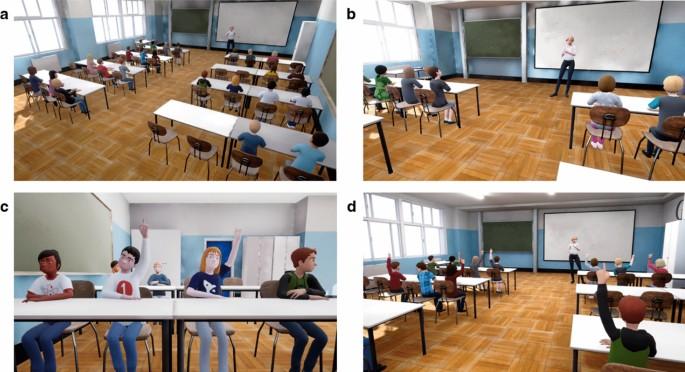
Affordable VR Solutions for Schools: Cost-Effective Options for Classroom Learning
Virtual reality (VR) technology is rapidly transforming the landscape of education, bringing immersive, interactive experiences into the classroom. However, the perception that VR is prohibitively expensive can deter schools from embracing this innovative technology. In reality,affordable VR solutions for schools are more accessible than ever,offering cost-effective options for enhancing classroom learning and engagement. In this extensive guide, we’ll explore the benefits of VR in education, budget-friendly VR platforms, practical implementation tips, and real-world case studies to help educators make informed decisions about integrating VR into their teaching environments.
Why VR Matters in Modern Education
VR opens up new dimensions for teaching and learning, enabling students to explore distant places, historical events, or complex scientific concepts in a controlled, interactive environment—without leaving the classroom. By utilizing virtual reality, schools can:
- Enhance student engagement through interactive lessons.
- Facilitate deeper understanding of challenging subjects.
- Provide safe simulations for practical learning (e.g., science experiments, field trips).
- Support diverse learning styles and needs.
- Foster collaboration and creative problem solving.
Challenges and misconceptions About VR in Schools
despite its advantages, VR adoption sometimes faces hurdles:
- Budget constraints – Many educators worry that VR requires important investment.
- Lack of technical expertise – Implementing and maintaining VR solutions may seem daunting.
- Limited curriculum integration – Teachers may not know how to connect VR with learning objectives.
Fortunately, modern VR platforms and devices have addressed many of thes concerns, making affordable VR solutions more realistic for schools of any size.
Top Affordable VR Solutions for Schools
From standalone headsets to mobile-based VR kits, several cost-effective options now exist for educational settings. Here are some of the best affordable VR platforms and devices:
1. Google Cardboard
- Price: $10–$20 per viewer
- Description: Google Cardboard is one of the simplest and most budget-friendly VR options. Made from sturdy cardboard,these viewers work with most smartphones,instantly turning them into VR devices.
- Content: Compatible with free and low-cost apps like Google Expeditions, which offer virtual field trips and 3D science models.
- Ideal For: Introductory VR experiences in elementary and middle schools.
2.Oculus Quest 2 (Meta Quest 2)
- Price: Starting at $299
- Description: Oculus Quest 2 is a standalone VR headset—meaning no seperate computer needed. It offers high-quality immersive experiences and a vast educational library.
- content: Apps such as Engage, ClassVR, and zSpace compatible, offering interactive science labs, history tours, and more.
- Ideal For: Middle and high schools looking for powerful, yet affordable, VR tools.
3. Merge VR Headset & merge Cube
- Price: Headset around $49.99, Merge Cube around $19.99
- Description: The Merge VR headset is soft, durable, and works with smartphones. The Merge Cube brings AR/VR objects into the classroom, letting students “hold” digital 3D models in their hands.
- Content: Merge EDU platform includes a library of interactive STEM experiences.
- Ideal For: STEM classes, science labs, and younger students.
4. ClassVR
- Price: Around $400 per headset; educational bundles available
- Description: Built specifically for schools, ClassVR offers standalone VR headsets and a user-friendly curriculum management portal for teachers.
- Content: Over 500 pre-loaded lesson plans, VR/AR content, and easy classroom controls.
- Ideal For: Schools seeking out-of-the-box VR solutions with robust teacher support.
5. Smartphone-Based VR and Tablet Apps
- Price: Varies; use existing classroom devices
- Description: Many VR and AR apps work on standard smartphones or tablets—reducing hardware costs. Platforms like ExpeditionsPro and Nearpod VR offer interactive lessons without dedicated headsets.
- Ideal For: Schools with limited technology budgets.
Benefits of Affordable VR Solutions in Classroom Learning
Adopting cost-effective VR solutions unlocks numerous educational benefits:
- Inclusivity: Budget VR allows more students to participate, supporting equity in technology access.
- Scalability: Schools can start small with a few VR headsets and expand as needed.
- Teacher Empowerment: Pre-designed lesson plans and simple management portals reduce the learning curve for educators.
- Student Motivation: Gamified and interactive experiences increase engagement and retention.
- Real-World Skills: VR encourages critical thinking, collaboration, and application of knowledge in simulated environments.
Practical Tips for Implementing VR Cost-Effectively in Schools
Successful VR integration hinges on planning, training, and sourcing the right content.Here are key tips:
- Start with pilot programs: Begin with one classroom or grade before district-wide rollout.
- Leverage existing devices: Use school-owned tablets or smartphones with VR viewers to minimize upfront costs.
- Tap into free/low-cost content: Explore platforms like Google Expeditions, ExpeditionsPro, and Nearpod that offer free educational VR content.
- Seek grants and funding: Apply for technology grants,crowdfunding,and partnerships with local businesses or organizations.
- Provide teacher training: Host workshops and share best practices for VR lesson integration; most providers offer professional development resources.
- Monitor and evaluate: Regularly assess the impact of VR on student learning and engagement for continuous improvement.
Case Studies: Affordable VR Transforming School Learning
Case Study 1: Urban elementary School Adopts Google Cardboard
An elementary school in Chicago implemented Google Cardboard viewers across 4th and 5th grade classrooms, introducing students to virtual field trips and 3D visualizations of science topics. The project cost under $300 and led to:
- 30% increase in science test scores
- Heightened student curiosity and engagement
- Positive teacher feedback about ease of use
Case Study 2: Rural High School Integrates Meta Quest 2 for Career Training
A rural high school invested in five Meta Quest 2 headsets to simulate health care and engineering career experiences. By partnering with local businesses for funding, the school:
- Enabled students to practice hands-on skills in a safe virtual space
- Boosted interest in STEM vocational courses
- Received recognition for innovative technology integration
Case Study 3: Middle School STEM lab Uses Merge Cube
A middle school STEM program incorporated Merge Cubes and smartphones to allow students to explore anatomy, chemistry, and physical science apps. This affordable setup:
- Supported project-based learning with interactive models
- Increased collaboration and discussion among students
- Reduced reliance on costly conventional lab equipment
First-Hand Experience: Teacher and Student Perspectives
ms. Lopez, Science Teacher: “Affordable VR tools like Google Cardboard changed the way my students view science. Our virtual field trip to Yellowstone gave students a sense of wonder that textbooks couldn’t deliver.”
Jordan, 7th Grade Student: “Using Merge Cube was like holding a mini universe in my hand. The volcano model helped me actually understand how eruptions work.Learning with VR makes school exciting!”
Conclusion: Making VR Accessible for Every Classroom
Virtual reality has the power to rejuvenate classroom instruction and inspire students to become active learners. Today’s affordable VR solutions for schools mean educators don’t need big budgets to start reaping these benefits. Whether using simple viewers like Google Cardboard or robust platforms like Meta Quest 2 and ClassVR, there are cost-effective options for every educational setting. With strategic implementation,continued teacher training,and a focus on equity,VR can be a practical and impactful addition to classroom learning—bringing the future of education within reach for all students.
Frequently Asked Questions
- What is the most affordable VR headset for schools?
Google Cardboard and Merge VR headsets are among the most budget-friendly, frequently enough costing less than $50 per device. - Can VR content be customized for curriculum needs?
yes. Many platforms like ClassVR and Nearpod allow teachers to create or adapt VR lessons for specific subjects. - Is VR safe and suitable for all students?
Most VR experiences can be tailored for different age groups. Always follow manufacturer guidelines and provide supervision for younger students.
Ready to equip your school with immersive, affordable VR solutions? Research your options, start small, and inspire a new generation of learners today.