
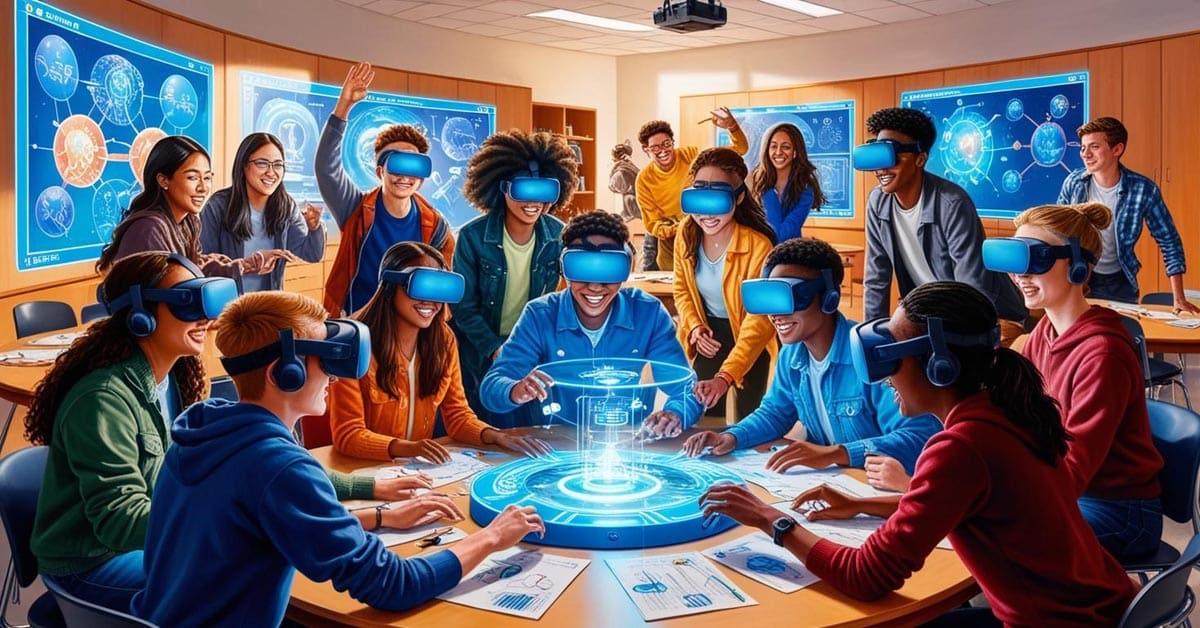
Affordable VR Solutions for Schools: Transforming Classroom Learning on a Budget
Virtual Reality (VR) is rapidly changing the educational landscape,offering immersive learning experiences that engage students in ways conventional methods simply can’t. But for many schools, budget constraints pose a challenge. The good news is that affordable VR solutions for schools are now widely available, enabling educators to bring innovative, interactive learning to their classrooms without breaking the bank. In this article, we’ll explore how schools can integrate VR on a budget, highlighting cost-effective tools, practical tips, real-world case studies, and the benefits of VR in education.
Why Schools Should Embrace VR Technology
Virtual reality in education offers a unique way to enhance student engagement, understanding, and motivation. Here are some compelling reasons why implementing VR technology, even on a limited budget, makes sense for schools:
- enhanced Engagement: Immersive visuals and interactive content make lessons memorable.
- Experiential Learning: Students learn by experiencing, not just observing, bringing abstract concepts to life.
- Global Exploration: VR field trips allow students to visit far-off places, museums, and historical events from their classroom.
- Inclusive Learning: VR can accommodate different learning styles and needs, ensuring all students benefit.
- Safe Simulations: Hazardous science experiments or complex engineering tasks can be safely explored virtually.
Affordable VR Solutions for Schools
Many assume that virtual reality for education requires expensive hardware – but that’s not the case. Today, there are a range of budget-friendly VR tools and platforms available for educators. Here’s a breakdown of some of the most effective and low-cost VR options for schools:
1. Google Cardboard
- Cost: Starts at just $6 per headset.
- Compatibility: Works with most smartphones (iOS/Android).
- Content: Access thousands of 360-degree educational apps, including google Expeditions, YouTube VR, and more.
2. Oculus Quest 2
- Cost: Around $300 per unit – more robust and versatile than basic mobile VR.
- Features: Standalone operation, wireless, easy to set up. Suitable for more advanced simulations and interactive content.
- Educational apps: ClassVR, Engage, and more.
3. Smartphone-based VR Solutions
- Use existing school devices: Many schools already have tablets or smartphones that can be used for VR.
- Free and paid apps: options like Titans of Space, Molecule VR, and National Geographic apps provide subject-specific content.
4. VR Kits for Education
- Companies like ClassVR and Merge: Offer school-friendly packages with headsets, lesson plans, and tech support.
- Pricing: Bundled packages often provide volume discounts and lesson integration resources.
Case Studies: How Schools are Transforming learning with Affordable VR
Real-world examples illustrate the impact of affordable VR in classrooms and inspire others to begin their own VR journey.
Case Study 1: Virtual Field Trips in an Urban Elementary School
Using a set of Google Cardboards and donated smartphones, a Chicago elementary school took students on regular virtual field trips to the Smithsonian, Ancient Egypt, and the Great Barrier Reef. These experiences engaged students above and beyond normal field trips,with measurable improvements in retention of facts and details.
Case Study 2: Rural High School STEM Labs
A rural North Carolina high school piloted low-cost smartphone-based VR apps in science labs,allowing students to walk through the human circulatory system and participate in chemistry experiments virtually. Teachers reported a 35% uptick in class participation and clearer understanding of complex systems.
Case Study 3: Special Education and VR Accessibility
A middle school in Texas used Merge VR headsets to create interactive social stories for students with autism. The immersive experiences helped students practice social interactions in safe, controlled environments, showing significant improvements in social skills assessments.
practical Tips for Successful VR Integration in Schools
Implementing affordable VR solutions in schools requires planning, creativity, and strategic use of resources. Here are key steps and actionable tips:
- Start Small: Begin with one or two headsets,share among groups,and scale as resources allow.
- Leverage Existing Devices: Use school-owned or student smartphones/tablets for mobile VR to minimize costs.
- Choose Free or Low-cost educational Apps: Focus on apps and platforms with strong educational value available for free or minimal cost.
- Grant Funding and Partnerships: Apply for technology grants or partner with local businesses and organizations to sponsor VR equipment.
- Professional Development: Encourage teachers to attend VR workshops or online training to maximize technology benefits in instruction.
- Integrate with Curriculum: Connect VR experiences directly to lesson goals to reinforce subject matter.
- Involve Students in Content Creation: Allow students to create VR content (e.g., 360-degree photos or videos) to foster creativity and ownership.
Benefits of Affordable Classroom VR: Transforming Learning Outcomes
Budget-friendly VR solutions for classrooms create numerous advantages for schools, educators, and students:
- Improved Understanding: Visual and experiential learning lead to deeper comprehension of subjects like science, history, and art.
- Increased Motivation: Students become more enthusiastic about their studies when learning is engaging and interactive.
- Critical Thinking: VR scenarios encourage problem-solving, collaboration, and decision-making skills.
- Accessibility: VR can reduce barriers, making complex subjects or inaccessible locations reachable for every student.
- future-Readiness: Exposure to cutting-edge technology prepares students for STEM careers and the modern workforce.
First-Hand Experience: Teacher and Student Insights
feedback from teachers and students who have used affordable VR solutions in schools is overwhelmingly positive:
“Our science classes have come alive! Students are more curious and ask better questions after experiencing lessons in VR.”
– Mr.Lee, Middle School Science Teacher
“I actually feel like I’ve traveled the world without leaving my classroom.”
– Regan, 6th Grade Student
These testimonials underscore the transformative power of affordable VR technology in education, making learning fun, memorable, and effective.
Conclusion: VR in Schools is Possible on Any Budget
As we’ve explored, affordable VR solutions for schools are not only feasible but can profoundly enhance learning outcomes, motivation, and accessibility for students everywhere. By leveraging budget-friendly devices, strategic app choices, and classroom planning, educators can introduce immersive experiences that ignite curiosity and deepen understanding. Start small,tap into grants and partnerships,and make every lesson an adventure. The future classroom is immersive—thanks to virtual reality technology that fits every school’s budget.
Ready to transform your classroom? Explore affordable VR solutions today and unlock a new world of educational possibilities!