
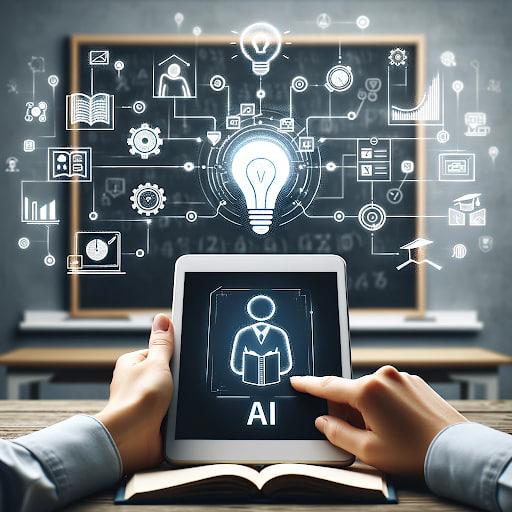
AI-Powered Assessment: How AI Is Revolutionising Student Evaluation in Education
Artificial Intelligence (AI) is no longer a distant concept for the education sector; it is an integral part of classrooms and learning management systems around the globe. Among the most notable advancements is AI-powered assessment, which is radically changing how educators evaluate student progress and personalize learning experiences.In this complete article, we’ll explore how AI is revolutionizing student evaluation, share practical benefits and implementation tips, and highlight real-world case studies where AI-based assessment is already delivering remarkable results.
Understanding AI-Powered Assessment
AI-powered assessment refers to the use of advanced algorithms and machine learning to automate and enhance the process of student evaluation. Unlike customary methods, which rely heavily on standardised tests and manual grading, AI-enabled assessments analyze diverse data sources—including written assignments, multiple-choice questions, and even spoken language—and deliver timely, accurate, and actionable feedback.
- Automated Essay Grading: Natural Language Processing (NLP) algorithms can assess written responses, evaluating grammar, structure, argumentation, and even creativity.
- Adaptive Testing: AI customizes test questions based on real-time student responses,ensuring assessments are at an appropriate difficulty level for each learner.
- Real-Time Feedback: Intelligent systems provide instant feedback, enabling students to understand mistakes and improve learning outcomes instantly.
Benefits of AI-Powered Student Evaluation
AI-based assessments bring a host of advantages for educators, students, and educational institutions alike.Here’s how AI is transforming the process of student evaluation in education:
1. Enhanced Objectivity and Accuracy
- Elimination of Human Bias: AI assessment tools provide consistent evaluation, minimising subjectivity and favoritism.
- Standardization: Every student is assessed using the same criteria and metrics, ensuring fairness.
2. Time and Resource efficiency
- Automated Grading: saves significant teacher hours that can be redirected toward personalized instruction.
- Large-Scale Assessments: AI systems can process thousands of submissions together, ideal for large institutions.
3. Personalised Learning Paths
- Adaptive Assessments: AI customizes questions and feedback to suit each student’s strengths and weaknesses, promoting individual growth.
- Data-Driven Insights: Teachers receive actionable analytics to identify learning gaps and tailor their teaching approach accordingly.
4. Immediate Feedback and Continuous Improvement
- real-Time Performance Tracking: Students receive instant feedback, enabling a continuous learning loop.
- Early intervention: AI quickly identifies struggling students, allowing educators to intervene early and provide targeted support.
Case Studies: Real-World Impact of AI in Student Evaluation
Several pioneering educational organisations have successfully integrated AI-powered assessments with notable outcomes:
Case Study 1: EdX and Automated Essay Scoring
the global online learning platform edX employs AI-driven automated essay scoring as part of its massive open online courses (MOOCs). The system uses sophisticated NLP algorithms to evaluate essays for content accuracy, grammar, and coherence. As a result, students receive faster feedback, while instructors handle increased course loads efficiently.
Case Study 2: Carnegie Learning Adaptive math Platform
Carnegie Learning,a leader in educational technology,leverages AI to deliver personalized math assessments.The platform analyzes student responses in real-time and adapts question difficulty accordingly. Schools utilizing this technology report improved test scores and higher student engagement levels.
Case Study 3: Duolingo’s AI-Based Language Testing
Duolingo’s English Test harnesses AI to assess spoken and written language proficiency. The AI system evaluates pronunciation, vocabulary, fluency, and grammatical accuracy, providing instant, unbiased results—making the test accessible and reliable for a global audience.
Practical Tips: Implementing AI Assessment in Schools and Universities
Thinking of embracing AI-powered student evaluation in your institution? Here are some practical tips to ensure successful implementation:
- Start small and Scale Gradually: Begin with AI-enabled formative assessments before expanding to high-stakes summative testing.
- Provide Teacher Training: Invest in professional progress to help educators understand AI technology and interpret assessment data effectively.
- Ensure Data Privacy and Ethics: Choose AI solutions that comply with privacy regulations (such as GDPR) and have clear algorithms.
- Combine Human and AI Insights: Use AI to augment, not replace, teacher judgment. The best results come from blending automated insights with human expertise.
- Monitor and Evaluate Outcomes: Regularly review student performance and adjust AI assessment parameters to ensure continual improvement.
Challenges and Considerations
As promising as AI-powered assessment is,it’s vital to be aware of challenges and potential pitfalls:
- Algorithmic Bias: AI systems are only as unbiased as the data they’re trained on. Rigorous testing and ongoing monitoring are essential to prevent unfair outcomes.
- Student Privacy: Educational data must be securely handled, stored, and processed to maintain confidentiality.
- Access and Equity: Not all students have the same level of digital access; institutions must strive for inclusive AI implementation.
- Oversight and Regulation: Clear guidelines and oversight are needed to ensure ethical use of AI in education.
First-Hand Experiences: Teachers and Learners Share Their stories
“Integrating AI-powered assessment in my classroom has dramatically reduced the time I spend grading essays. The instant feedback also motivates students to revise their work, fostering a growth mindset.”
— Sarah L., High School English Teacher
“When I did my math homework with AI-based platforms, I received helpful hints when I was stuck. it helped me understand new concepts much faster than waiting for the next class.”
— Daniel R., High School Student
Future Trends in AI Assessment for Education
The future of AI in educational assessment promises further innovation, such as:
- Emotion Recognition: AI systems able to detect student engagement and emotions for more holistic evaluation.
- Project-Based and Collaborative Assessments: Assessing real-world skills and teamwork with AI-driven analytics.
- Greater multimodal Assessment: Incorporation of audio, video, and interactive responses to gauge a broader range of abilities.
Conclusion: A Smarter Path to Student Success
The era of AI-powered assessment in education is already upon us, offering greater accuracy, efficiency, and personalized learning than ever before. While the technology brings challenges, the potential benefits for students, educators, and institutions are profound. By embracing artificial intelligence as a tool for student evaluation, the education sector moves closer to a future where every learner’s potential can be unlocked, guided by data-driven insights and continuous feedback.
Ready to explore AI assessment tools for your classroom or institution? Start small, stay informed, and let technology help pave the way for improved student outcomes and a brighter educational future.