
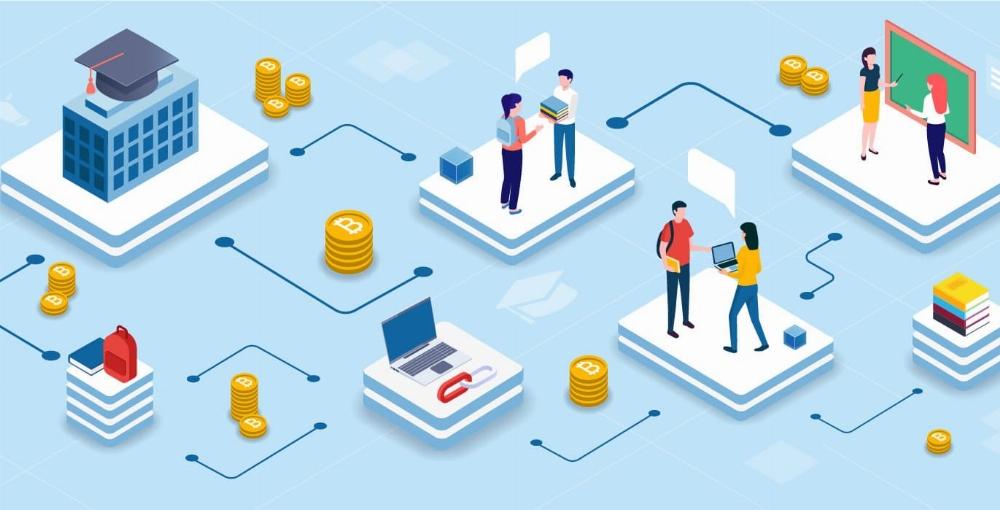
Blockchain in Education: How Blockchain is Revolutionizing Verifying Qualifications
The digital revolution is transforming industries worldwide,and education is no exception. Among the most groundbreaking changes is the integration of blockchain technology in verifying qualifications. By leveraging blockchain in education, institutions and learners benefit from secure, transparent, and easily verifiable academic credentials. But how exactly is this change taking place? Read on to discover the ways blockchain is revolutionizing the verification of educational qualifications—and how you can benefit from this exciting technology.
Understanding Blockchain Technology
To appreciate blockchain’s impact on education, it’s helpful to grasp its fundamentals. Blockchain is a decentralized, digital ledger that records facts in a secure, immutable, and tamper-proof manner. Every transaction is encrypted and linked to previous entries (blocks), forming an unalterable chain that is publicly accessible but protected from unauthorized alterations.
- Decentralization: No single entity controls the data, reducing the risk of centralized corruption or fraud.
- Openness: Transactions are visible to all participants, ensuring accountability.
- Immutability: Entries cannot be changed or deleted, providing trustworthy records.
The Traditional Challenges of Verifying Academic Qualifications
Verifying educational credentials has historically been plagued by several challenges:
- Time-consuming processes: Manual verification requires contacting multiple institutions, taking days or even weeks.
- Risk of forgery and fraud: Fake diplomas and manipulated transcripts undermine trust in academic qualifications.
- lack of interoperability: Educational institutions use varying systems and formats, complicating verification across borders.
- Loss or misplacement: Physical certificates can be lost, damaged, or stolen, causing inconvenience for graduates.
How Blockchain is Revolutionizing Qualification Verification
Blockchain’s unique features address these challenges, bringing a host of benefits to qualification verification in education:
1.Instant and Secure Verification
With blockchain, educational credentials can be issued as digital certificates and securely stored on the blockchain. employers, universities, or other stakeholders can instantly verify the authenticity of these credentials with a simple scan of a QR code or link—no intermediaries needed.
2.Tamper-Proof and Fraud-Resistant
Each credential stored on the blockchain is cryptographically sealed. Any attempt at tampering leaves a clear trace, thus reducing opportunities for falsification. This protects both institutions and graduates’ reputations.
3. Global Accessibility and Interoperability
blockchain-based credentials can be accessed anywhere and at any time. Since the data is standardized and decentralized, students moving between countries or applying to international institutions no longer face the complexity of compatibility and validation issues.
4. Ownership and Privacy
Students have full ownership of their data. They can control who accesses their credentials, ensuring privacy while also making it easy to share verifiable information with employers, universities, and professional organizations.
Blockchain in education: Real-World Applications
Leading universities and educational technology companies are already integrating blockchain into their credential systems. Here are some prominent examples:
- MIT’s Digital Diplomas: The Massachusetts Institute of Technology issues digital diplomas via blockchain, allowing graduates to share secure, verifiable proof of their degrees anywhere in the world.
- University of Nicosia: This university in Cyprus issues digital academic certificates using blockchain, promoting authenticity and efficiency in qualification verification.
- Tech Giants and EdTech Startups: Companies like Sony Global Education, Learning Machine, and Blockcerts are providing blockchain-based credentialing solutions to institutions globally.
Case Study: blockcerts
Blockcerts is an open standard for blockchain credentialing. It’s already in use at educational institutions in over 70 countries. Using the Blockcerts Wallet, graduates can receive, store, and share their digital certificates, with instant third-party verification.
Benefits of Blockchain-Based Qualification Verification
Integrating blockchain technology into academic credentialing systems offers numerous advantages:
- Efficiency: Reduces processing time for qualification checks from weeks to seconds.
- Security: credentials are encrypted and nearly impossible to alter without detection.
- Cost Savings: Eliminates the need for manual verification processes and reduces administrative overhead for institutions.
- Trust: Increases the confidence of employers and academic institutions in the value and accuracy of credentials.
- Empowerment: gives learners complete control over their academic records.
- Environmental Impact: Reduces reliance on paper-based documentation.
Implementing Blockchain in Education: Practical Tips
If you’re an educational institution or a policymaker interested in adopting blockchain technology for credentialing, consider these practical steps:
- Assess Institutional Needs: Identify pain points in current verification processes and determine how blockchain can address them.
- Choose the Right Solution: Evaluate available blockchain platforms (such as Blockcerts, Learning Machine, or IBM’s Open Blockchain Initiative) for compatibility and scalability.
- Ensure Regulatory Compliance: Work with legal experts to align blockchain deployment with data privacy laws such as GDPR or FERPA.
- Pilot and Scale: Start with a pilot program involving a specific group or type of credential, gather feedback, and scale up based on success and learnings.
- Educate Stakeholders: Offer training and resources to staff,students,and employers to ensure smooth adoption and utilization.
Blockchain in Education: The Future Outlook
As blockchain continues to mature, its adoption in education is poised to expand. Some trends to anticipate include:
- Integration with Learning Management Systems (LMS): seamless issuing and verification directly through popular LMS platforms.
- Micro-Credentials and Lifelong Learning: Issuance of blockchain-verified badges and certificates for short courses and continuous education.
- International Collaboration: Cross-border verification of qualifications without extra paperwork or validation hurdles.
- Decentralized Learning Records: The potential to maintain an individual’s entire educational history, including informal and online learning, in one secure digital profile.
First-Hand Experiences: Quotes from the Field
Many in academia and industry have seen the transformative impact of blockchain credentialing:
“With blockchain, the verification of certificates has become as simple as scanning a code.It has improved trust and saved tremendous effort for our admissions office.”
— University Registrar
“As a graduate, I love having control over my academic records.Sharing my certificate with employers is speedy, and they’re impressed with the instant verification process.”
— Recent alumnus at a blockchain-enabled university
Conclusion: Embracing Blockchain for a Smarter Educational Future
The adoption of blockchain in education is far more than a tech trend—it marks a paradigm shift in how qualifications are verified, trusted, and managed in the digital age. By ensuring credentials are secure, instantly verifiable, and globally accepted, blockchain technology is empowering learners, streamlining institutional processes, and enhancing the credibility of educational systems. As more institutions embrace blockchain, students and employers alike will enjoy greater security, transparency, and convenience when verifying educational achievements.
If you’re an educator, policymaker, or student, now is the time to explore how blockchain can revolutionize your approach to documenting and validating academic qualifications.
Looking to stay ahead with innovations in education technology? Subscribe to our newsletter for the latest updates on blockchain in education and emerging EdTech trends!