
Boost Employee Performance with Microlearning in Corporate Training Programs: Key Benefits & Best Practices
unlock your team’s potential and transform your corporate training strategy with microlearning.In today’s fast-paced business landscape, employees need flexible, effective, and engaging learning experiences to enhance their knowledge and skills continuously.
This article explores how you can boost employee performance with microlearning in corporate training programs, highlighting the key benefits, best practices, and actionable insights to help you achieve measurable results.
Table of Contents
- What is Microlearning?
- Key Benefits of Microlearning in Corporate training
- Best Practices for Implementing Microlearning
- Real-World Case Studies
- Practical Tips for Success
- Conclusion
What is Microlearning?
Microlearning is a learner-centric approach that delivers details in short, focused bursts—typically 3–7 minutes—through easily digestible modules such as videos, infographics, quizzes, or podcasts. In corporate training programs, microlearning is designed to address specific learning objectives, enabling employees to acquire knowledge or skills quickly and efficiently without disrupting their work schedules.
- Format Flexibility: Microlearning can be delivered through mobile apps, intranet portals, or learning management systems (LMS).
- Just-In-Time Learning: Employees access relevant content exactly when they need it,facilitating immediate submission.
- Higher Engagement: Bite-sized modules keep learners motivated and prevent cognitive overload.
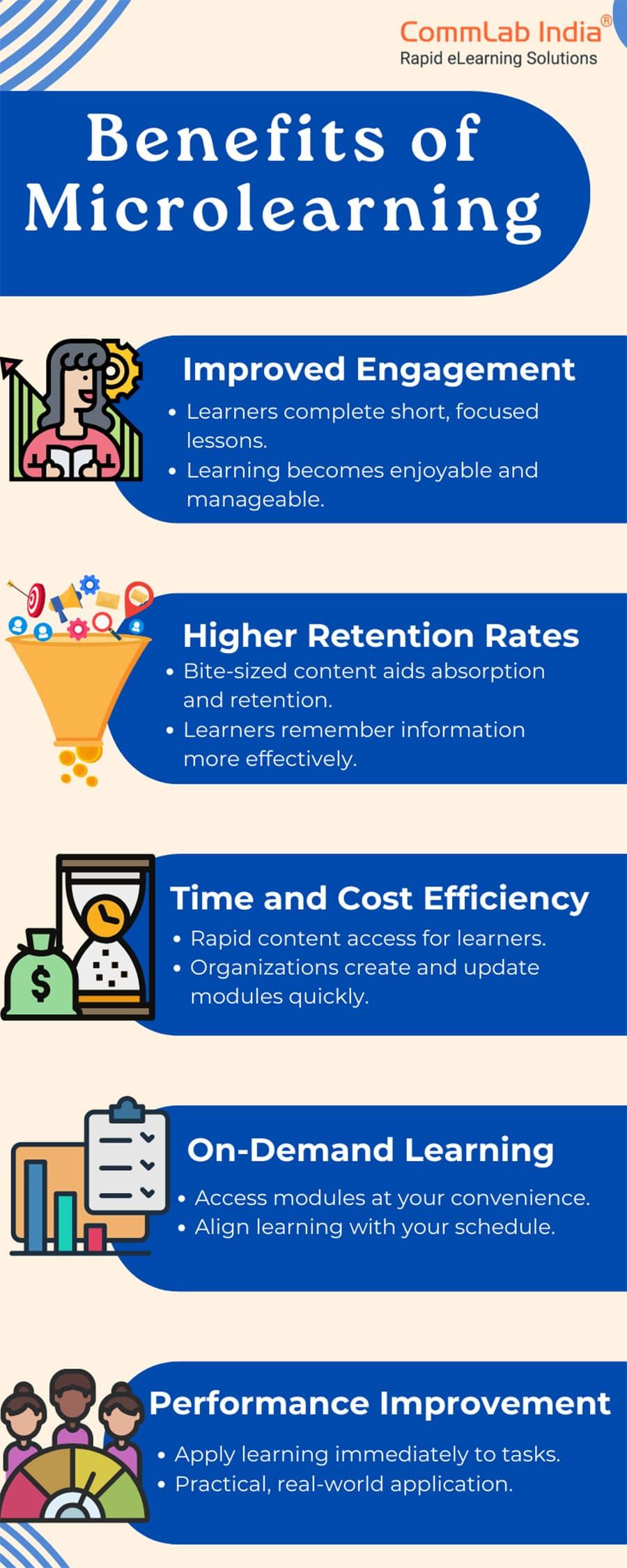
Key Benefits of Microlearning in Corporate Training
Integrating microlearning into your corporate training programs can drive remarkable improvements in employee performance. Here’s how:
1. Improved Knowledge Retention
- Microlearning leverages repetition and spaced learning, cementing knowledge in long-term memory.
- Short bursts allow for frequent review, increasing recall rates.
2. Enhanced Employee Engagement
- Interactive elements like quizzes, flashcards, and gamification motivate learners.
- Employees can choose how, when, and what they learn, boosting compliance and curiosity.
3. Scalable and Cost-Effective
- Creating and updating microlessons is affordable compared to traditional classroom sessions.
- Organizations can rapidly deploy new content to global teams with minimal disruption.
4. Flexible and Accessible Learning
- Modules are accessible on multiple devices, supporting remote and hybrid workforces.
- Supports a “learn in the flow of work” culture, enabling immediate application on the job.
5.Personalized Learning Pathways
- Microlearning enables targeted upskilling and reskilling based on employee needs.
- Adaptive learning tools can track progress and suggest personalized modules.
Best Practices for Implementing Microlearning in Corporate Training
To fully realize the benefits of microlearning in your organization, follow these best practices when designing and delivering your programs:
1. Identify Clear Learning Objectives
- Break down complex skills into granular, achievable objectives for each microlesson.
- Align objectives with business goals and employee performance metrics.
2. Keep Content Short, Simple, and Actionable
- Each lesson should focus on a single topic or skill for maximum impact.
- Use plain language, clear visuals, and concise text/video formats.
3. Incorporate Interactive & Multimedia Elements
- Use videos, infographics, simulations, and quizzes to cater to different learning styles.
- Interactive scenarios and feedback loops promote active engagement and knowledge application.
4. Enable Mobile Access
- design content to be responsive and accessible on smartphones and tablets.
- Support offline access for field staff or employees with variable connectivity.
5. Use Data and Analytics
- Leverage LMS analytics to monitor completion rates, quiz scores, and knowledge retention.
- Continuously refine content based on learner feedback and performance data.
6. Integrate with Existing Corporate Training Programs
- Blend microlearning modules with instructor-led sessions, workshops, and eLearning courses.
- Reinforce core concepts or provide follow-up refreshers after major trainings.
Real-World Case studies: Microlearning in Action
Explore how industry leaders are leveraging microlearning in their corporate training strategies to deliver meaningful performance improvements:
Case Study 1: Global Tech Enterprise Improves product Knowledge
A leading global technology company faced challenges ensuring all employees understood frequent product updates. by introducing 5-minute microlearning video modules, the company increased knowledge retention rates by 39%. Customer support teams reported fewer escalations and faster issue resolution, directly boosting client satisfaction.
Case Study 2: retail Chain Accelerates Onboarding and Compliance
an international retail giant implemented mobile-based microlearning modules for onboarding and compliance training. Task-focused lessons reduced new hire onboarding time by 60% and improved overall compliance test scores. Managers noted higher confidence and job readiness among new team members.
Practical Tips for Leveraging Microlearning Effectively
- Create a content calendar to ensure regular updates and align with business priorities.
- foster a culture of continuous learning by sharing success stories and celebrating learning milestones.
- Encourage self-directed learning—allow employees to select microlearning modules most relevant to their needs.
- Solicit feedback through quick surveys or polls after completing each microlesson.
- Promote peer-to-peer learning by allowing employees to contribute or curate content.
Conclusion: The Future of Corporate Training is Microlearning
Microlearning is not just a fleeting trend—it’s a transformative approach for modern corporate training programs that empowers employees, improves performance, and drives organizational success. By making learning accessible, actionable, and aligned with real-world job demands, microlearning fosters an environment where upskilling and reskilling are natural, ongoing processes.
Ready to boost employee performance with microlearning? Start small, iterate, and watch your workforce thrive in a dynamic, digital-frist landscape.
Frequently Asked Questions
- Q: How long should a microlearning module be?
A: Ideally,microlearning lessons should last between 3 to 7 minutes,focusing on a single concept or skill.
- Q: Can microlearning replace traditional training?
A: Microlearning is most effective as a supplement to, rather than a replacement for, traditional training—reinforcing, updating, or filling in knowledge gaps.
- Q: What tools can help deliver microlearning?
A: Popular platforms include mobile learning apps, LMS solutions with microlearning capabilities, and video-based content platforms.
For more insights and step-by-step guidance on implementing microlearning in your organization, explore our latest resources or contact our corporate training experts today!