
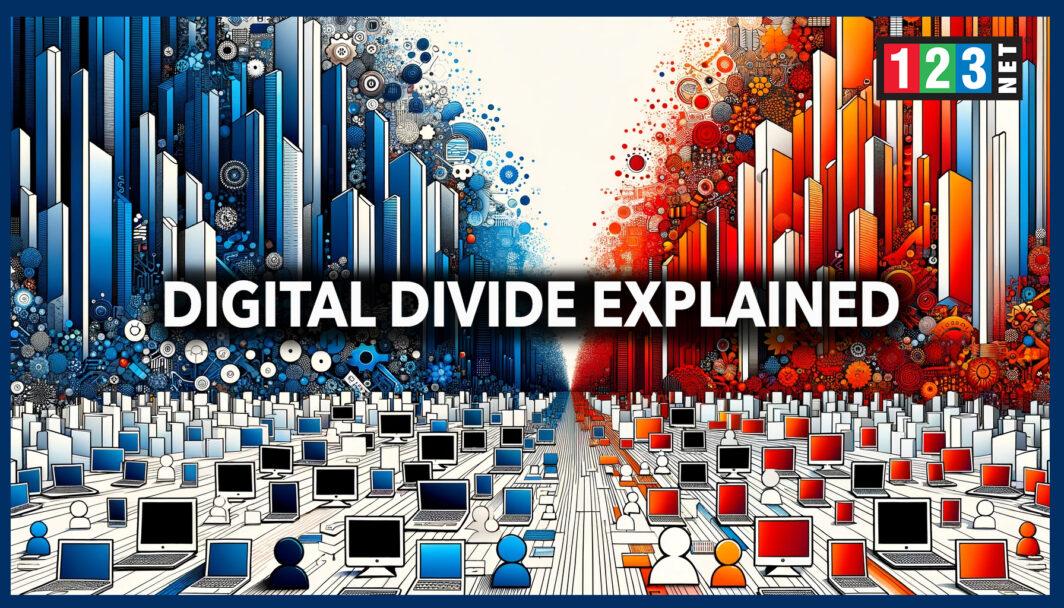
Bridging the Digital Divide: Top Global Initiatives Making Internet Access Equitable
In today’s interconnected world, stable and affordable internet access defines not only opportunities for education, business, and healthcare, but also the very participation in modern society. yet, bridging the digital divide remains one of the most pressing global challenges. According to the International Telecommunication Union, over 2.6 billion people remain offline in 2023,with lower-income and rural regions most affected by this exclusion.
This article explores the top global initiatives dramatically improving internet accessibility and digital inclusion, discusses the wide-ranging benefits, and provides practical insights for supporting these efforts. Let’s discover how collective action is making internet access equitable for everyone.
Understanding the Digital Divide
The digital divide refers to the gap between those who have ready access to computers, the internet, and the digital skills necessary to participate fully in the data age—and those who do not. The divide can occur due to various factors, including:
- Geographical limitations (urban vs rural)
- Socioeconomic inequality
- Inadequate infrastructure or power supply
- Lack of digital literacy or local content
- Policy barriers and affordability issues
Why Equitable Internet Access Matters
Reliable and affordable internet access isn’t just a luxury. It is indeed a core driver of:
- Educational opportunities, from online learning to university research
- Entrepreneurship and participation in the digital economy
- Healthcare delivery and telemedicine
- Access to government and social services
- Personal empowerment and community engagement
“Internet connectivity shouldn’t depend on where you live or how much you earn. Equitable access empowers individuals, communities, and entire economies.”
– United Nations Broadband Commission
top Global Initiatives Bridging the Digital Divide
Across continents, public and private partnerships, non-profits, and local communities have launched creative projects and scalable solutions targeting digital inclusion.Here are some of the most impactful global initiatives to bridge the digital divide:
1. Internet.org & Free Basics by Facebook
Launched by Meta (formerly Facebook), Internet.org collaborates with mobile operators worldwide to offer free basic internet services in developing regions.Its Free Basics platform connects millions to essential resources—education, health, jobs—at no data cost.
- Over 100 partners in more than 60 countries
- Content tailored for low-bandwidth and local languages
- Often first taste of internet for underserved populations
2. Starlink Satellite Internet by SpaceX
SpaceX’s Starlink is disrupting the internet landscape by deploying thousands of low-orbit satellites to provide high-speed broadband worldwide, including remote and rural areas previously neglected by traditional ISPs.
- Service now available on all continents, even in polar regions
- Enabling education, healthcare and e-commerce for isolated communities
- Rapid rollout with minimal ground infrastructure needed
3. Google’s Project Loon & Taara
Project Loon used high-altitude balloons to beam 4G LTE signals to underserved areas, with accomplished pilots in Kenya, Puerto Rico, and Peru. Its successor, Project Taara, leverages light beams instead of cables to provide last-mile connectivity across rivers and rough terrain in Africa and Asia.
- Reduced the cost and complexity of traditional infrastructure
- Partnered with local telecoms for scale and sustainability
4. The Alliance for Affordable Internet (A4AI)
A4AI is a multi-stakeholder coalition supported by the web’s inventor, Tim Berners-Lee. It focuses on policy advocacy, clarity in pricing, and innovative financing to make broadband affordable in the world’s poorest countries.
- Works in over 30 countries, mostly in Africa and Asia
- Coordinates governments, civil society, and tech companies
- Publishes the annual Affordability Report highlighting progress and opportunities
5. One Laptop per Child (OLPC) & Local device Access Initiatives
The One Laptop Per Child initiative has distributed low-cost, energy-efficient laptops and tablets to millions of children in more than 60 developing nations, sparking a wave of similar device and content access projects.
- Holistic approach combining hardware, teacher training, and open content
- Focus on child-friendly, rugged, and multilingual devices
6. India’s Digital India Mission
Launched in 2015, Digital India aims to transform India into a digitally empowered society and knowledge economy. It focuses on worldwide broadband access, digital literacy, and delivery of government services online.
- Over 500,000 public Wi-Fi hotspots installed across rural villages
- Direct connections for over 1.2 billion citizens to e-government platforms
Case study: Kenya’s Mawingu Networks
Mawingu Networks provides affordable, solar-powered Wi-Fi to remote Kenyan villages using innovative TV white space spectrum. By partnering with Microsoft’s Airband Initiative, Mawingu connected schools, clinics, and thousands of homes or else unreachable by traditional isps. The project emphasizes local training and entrepreneurship, demonstrating how public-private collaboration can scale digital inclusion sustainably.
Benefits of Closing the Digital Divide
- Economic Growth: Each 10% broadband penetration rise can boost GDP growth by up to 1.5% in developing countries (World Bank, 2021).
- Educational Advancement: Enables distance learning and access to global knowledge.
- Health Outcomes: Expands access to telemedicine and critical information during pandemics.
- Social Inclusion: Connects marginalized groups with opportunities and services.
- Innovation: Empowers startups and local businesses with digital tools.
Practical Tips for Supporting Digital Inclusion
Whether you’re an individual,educator,policymaker,or entrepreneur,there are actionable steps you can take to support equitable internet access:
- Support organizations working on digital literacy training in underserved areas
- Advocate for policies ensuring affordable broadband and net neutrality
- donate used but functional devices to local schools or NGOs
- Promote open-source educational resources and localized content creation
- Encourage local governments to invest in public Wi-Fi and digital infrastructure
Firsthand Experience: Voices from the Frontline
“After internet came to our village,I was able to enroll in online classes and connect with other students. Now, I’m the first in my family to pursue university education.”
— Mariam, rural Kenya
“Our clinic can now consult with specialist doctors in Nairobi virtually—saving lives and money every week.”
— Dr. John Mwangi, Community Health Worker
Conclusion: The Future of Internet Accessibility
Bridging the digital divide is a vital step towards global equity, economic development, and resilient communities. While significant progress has been made through bold global digital inclusion initiatives, continued cross-sector collaboration—combining technology, policy, local knowledge, and community engagement—remains key to connecting the next billion people.
By supporting and participating in these efforts, we can help provide equitable internet access that empowers every individual—regardless of geography or income—to thrive in the digital age.
Keywords: bridging the digital divide, internet access, digital inclusion, digital equity, global initiatives, internet accessibility, affordable broadband, rural connectivity, digital literacy.