
Chief Technology Officer (CTO) Education: Essential Degrees & Skills for Success
Are you intrigued by the rapidly advancing world of education technology and passionate about transforming learning environments? If so, a career as a Chief Technology Officer (CTO) in Education might be the perfect fit for you. With schools, colleges, and universities increasingly relying on technological solutions, the demand for skilled leaders who can guide innovation is higher than ever. In this comprehensive guide, we break down what it takes to become a successful CTO in the education sector, focusing on critical degrees, must-have skills, responsibilities, real benefits, and practical tips to help you secure your dream position.
Understanding the Role of a CTO in Education
The Chief Technology Officer (CTO) in education acts as the cornerstone of institutional technology strategy. This executive position oversees the planning, implementation, and maintenance of technology systems that enhance teaching and learning. A CTO isn’t just a technical expert—they’re a visionary leader who collaborates with academic and administrative teams to craft solutions that support institutional goals.
- Strategic Leadership: Developing and communicating a long-term technology strategy.
- Project Management: Supervising major IT projects and upgrades.
- Team Oversight: Managing IT staff and professional development.
- Stakeholder Collaboration: Working with administration, faculty, and students to meet their technology needs.
- Security: ensuring systems are robust, secure, and compliant with regulations.
Essential Degrees for Aspiring CTOs in Education
While experiance is invaluable, holding the right academic qualifications can boost your credibility as an educational technology leader. Here’s a breakdown of degrees that provide a strong foundation for the CTO role:
Bachelor’s Degree
- Computer Science: Offers essential programming, systems design, and networking knowledge.
- Information Technology: Focuses on system administration, cybersecurity, and database management.
- Education Technology: Bridges core tech principles with educational applications.
Master’s Degree (Recommended)
- Master of Education (M.Ed.) in Educational Technology: Deepens knowledge of digital learning environments and instructional design.
- Master of Science (M.S.) in Information Systems: Enhances skills in enterprise technology management, cloud computing, and data analytics.
- Master of Business Administration (MBA): Strengthens management, finance, and organizational leadership.
Doctoral Degrees (Optional but Advantageous)
- Doctor of Education (Ed.D.) in Educational Leadership: Perfect for those who wish to shape policy and drive systemic change.
- PhD in Computer Science or Information Systems: Ideal for CTOs in research universities or those involved in cutting-edge tech initiatives.
Professional Certifications
- certified Education Technology Leader (CETL)
- Project Management Professional (PMP)
- Certified Information Systems Security Professional (CISSP)
- Microsoft Certified: Azure Solutions Architect Expert
These qualifications demonstrate your commitment to excellence and your proficiency in handling the unique challenges of educational technology.
Must-Have Skills for CTO Success in Education
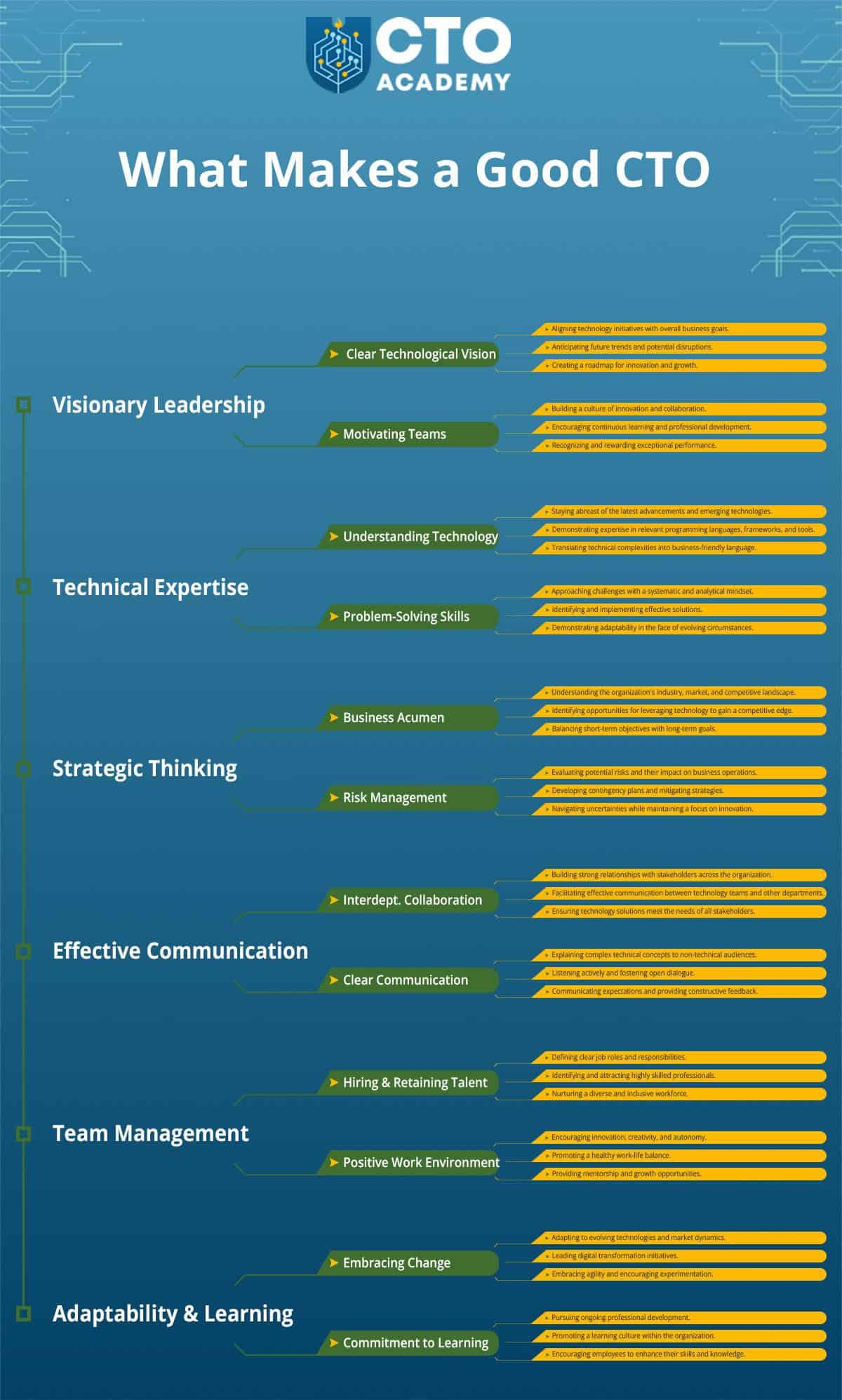
The right degrees lay the foundation, but distinct skills set top CTOs apart in schools, colleges, and universities. To shine in a CTO role, focus on developing the following key competencies:
Technical Expertise
- Systems integration, infrastructure design, and cloud technologies
- Cybersecurity strategies tailored for educational environments
- Data management, analytics, and privacy compliance
- Learning Management Systems (LMS) administration
Leadership & Communication
- Guiding teams and mentoring IT professionals
- Translating technology solutions for non-technical stakeholders
- Advocating for innovative solutions to senior leaders
Strategic Thinking & Problem Solving
- Aligning technology planning with institutional goals
- Innovative budget management for technology projects
- Risk assessment and crisis management
Educational Insight
- Understanding curriculum needs and teaching methodologies
- Championing digital equity and accessibility
- Supporting professional development for faculty and staff
Project Management Skills
- coordinating large-scale deployments of new technology
- Measuring project success via KPIs and user feedback
Daily responsibilities of a CTO in Education Technology
Wondering what a typical day looks like for a CTO at a university, college, or school? Here are some common duties you can expect:
- leading IT department strategy meetings
- Managing vendor relationships for hardware and software solutions
- Overseeing upgrades of networks and educational software
- Developing policies for data protection and privacy
- Collaborating with educators to design virtual classrooms and e-learning tools
- Presenting technology plans to executive boards
Benefits of Being a CTO in Education
Working as a Chief Technology Officer in education offers both professional satisfaction and personal fulfillment. Here are some of the top benefits you can expect:
- Influence: Shape the future of teaching, learning, and student success in your community.
- Innovation: lead exciting projects, such as virtual reality classrooms, AI-driven assessment, or next-generation learning platforms.
- collaboration: Partner with educators, administrators, and external experts to drive meaningful change.
- Career Growth: Access executive-level compensation and advancement opportunities within the academic world.
- personal Fulfillment: Know your work directly impacts students’ lives and educational outcomes.
Practical Tips for Landing a CTO Position in Education Technology
Ready to become a CTO in a school, college, or university? These actionable steps can put you on the fast track to securing your dream role:
Build Diverse Experience
- Gain hands-on experience in IT management, preferably within educational environments.
- Take on leadership roles in technology projects, such as LMS implementations or digital change initiatives.
Emphasize Soft Skills
- Develop your ability to lead, communicate, and influence cross-functional teams.
- Showcase your strategic thinking skills during job interviews.
Stay Ahead of Trends
- Keep current on emerging technologies in education: AI, VR, adaptive learning, and more.
- Attend conferences, webinars, or workshops focused on EdTech leadership.
Customize Your Resume & Portfolio
- Highlight achievements with measurable outcomes, such as increased student engagement or cost savings.
- Demonstrate a balance of technical and educational expertise.
Network Strategically
- Engage with professional associations for educational technology leaders.
- Build relationships with decision-makers in academia who value innovative technology leadership.
Conclusion: your Pathway to CTO Success in Education
Becoming a successful Chief Technology Officer in Education is a rewarding journey for aspiring professionals eager to make a lasting difference in schools, colleges, or universities. By developing the right mix of degrees, technical know-how, and leadership skills, you position yourself as a key driver of educational transformation. The demand for visionary CTOs continues to rise as the sector evolves, ensuring exciting career prospects for those who are prepared. Take the first steps today and open the door to a future where you can innovate, inspire, and lead in the ever-growing field of education technology.