
chief Technology Officer (CTO) – Essential Education Paths and Skills for Success
Are you passionate about technology and inspired by the potential to transform education? A career as a Chief Technology Officer (CTO) in education technology (EdTech) at universities, colleges, or schools could be your ideal vocation.As education increasingly embraces digital transformation, the CTO’s role has become indispensable in navigating emerging technologies, implementing innovative learning tools, and shaping the future of educational environments. In this thorough guide, we’ll explore the essential education paths, crucial skills, and practical steps to thrive as a CTO in the EdTech sector.
Table of contents
- Understanding the CTO Role in EdTech
- Essential Education Paths for EdTech CTOs
- key Skills for a Successful Education Technology CTO
- practical Tips to land a CTO Job in Education
- Benefits of Being a CTO in Education Technology
- Conclusion
Understanding the CTO Role in EdTech
The Chief Technology Officer (CTO) is the visionary responsible for formulating and executing an institution’s overall technological strategy. In the context of education technology within schools, colleges, or universities, a CTO’s responsibilities go beyond IT oversight. They lead initiatives to enhance learning outcomes through technology, streamline administrative processes, and ensure a safe, accessible, and innovative digital environment for all stakeholders.
Typical Responsibilities of an EdTech CTO
- develop and implement the overall technology roadmap for the institution
- Oversee IT infrastructure, cybersecurity protocols, and data privacy compliance
- Lead digital transformation and the adoption of EdTech solutions such as learning management Systems (LMS), virtual classrooms, and AI-powered tools
- Manage cross-functional teams and collaborate with educators, administrators, and external vendors
- Provide professional progress and training to educators and staff
- Monitor technology trends, evaluate and pilot new educational tools
- Budget planning and resource allocation for technology investments
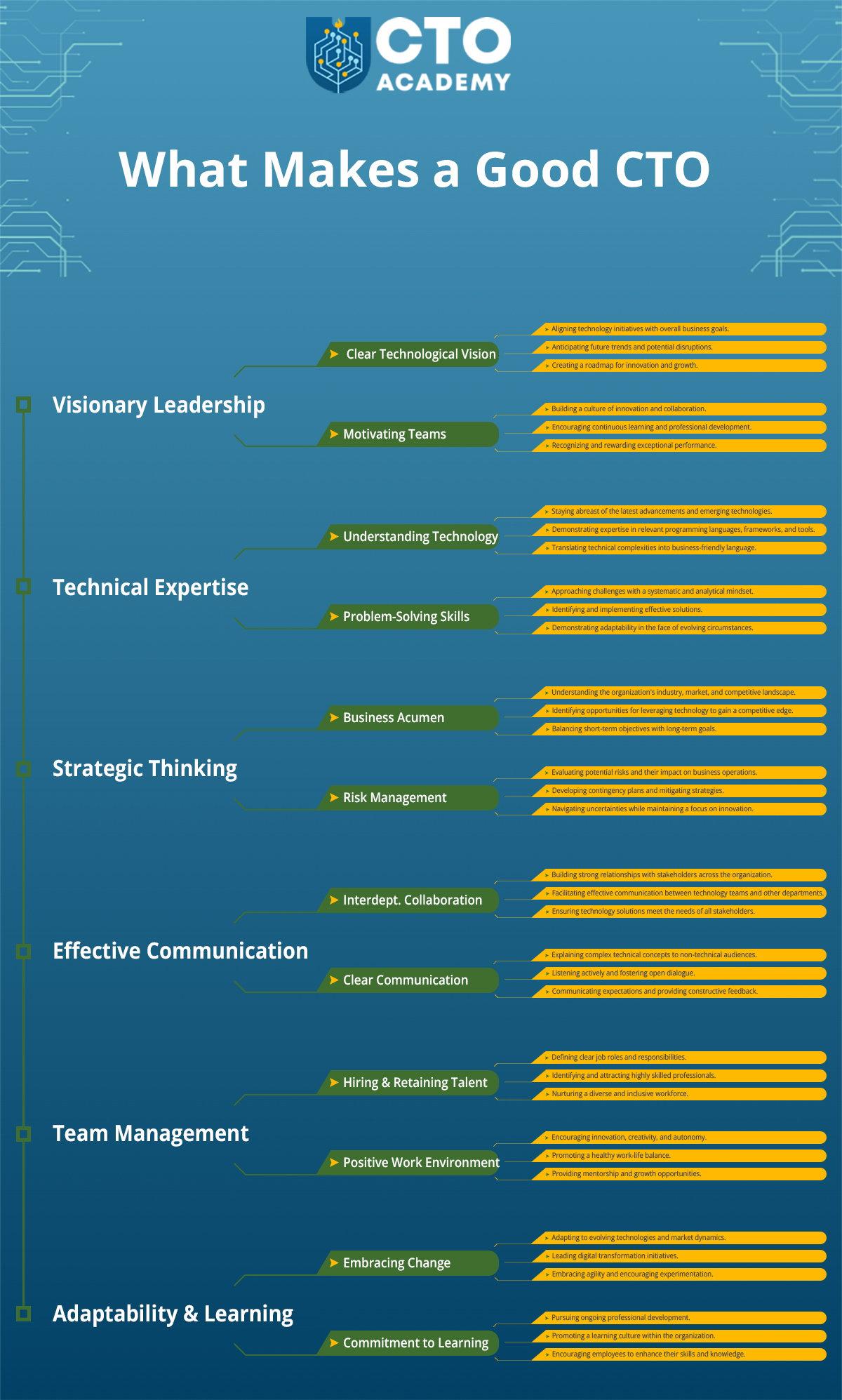
Effective EdTech CTOs are not onyl technology experts but also visionary leaders, excellent communicators, and advocates for student-centric innovation.
Essential Education Paths for EdTech CTOs
Building the qualifications necesary to become a CTO in education technology requires both formal education and relevant industry certifications. Here’s a breakdown of the optimal education pathways:
Bachelor’s Degree (Foundation)
- Common majors: Computer Science, Data Technology, Software Engineering, Educational Technology, Management Information Systems
- Key Subjects: Programming, Systems Analysis, Database Management, Networking, Instructional Design, Education Theory
Master’s Degree (Preferred for Leadership Roles)
- Relevant Master’s Programs:
- Master of Education (M.Ed.) in Educational Technology
- Master of Science (M.S.) in Information Technology or Computer Science
- Master of Business Governance (MBA) with a focus on technology Management
- Skills Developed: Strategic leadership, Advanced IT Management, Digital Pedagogy, Project Management, Data Analytics
Doctoral Degrees (Not mandatory but advantageous)
- Doctor of Education (Ed.D.) or Ph.D. in education/Technology Leadership
- Can strengthen credentials for top-tier universities or C-suite roles
Industry Certifications
- Project Management: PMP, PRINCE2
- Information Security: CISSP, CISM
- Cloud Solutions: AWS Certified Solutions Architect, Google Cloud Professional
- EdTech-Specific: ISTE Certification, CETL (Certified Education Technology Leader)
Relevant Continuing Education
Stay current by attending EdTech conferences, workshops, and webinars, or by enrolling in micro-credential courses focused on the latest emerging trends.
Key Skills for a Successful Education Technology CTO
Securing and excelling in a CTO role within the education sector depends not only on your academic background but also on a robust toolkit of technical and soft skills. Here’s what top employers in universities, colleges, and schools look for:
Technical Proficiency
- Enterprise IT architecture and network management
- Familiarity with education management systems (LMS, SIS)
- Cybersecurity and data privacy regulations (FERPA, GDPR)
- Cloud computing and SaaS submission deployment
- Integration of emerging technologies: AI, AR/VR, IoT in education
- Data analytics and reporting for educational outcomes
Strategic Leadership and Project Management
- Developing and communicating a strategic vision for technology integration
- Leading cross-functional teams, including IT staff, teachers, and administrators
- Change management and stakeholder engagement
- Budgeting and managing large-scale technology projects
Effective Communication and Collaboration
- Translating technical solutions into clear benefits for educators and students
- Building consensus among diverse institutional stakeholders
- Providing professional development and training with empathy
Knowledge of Educational Best Practices
- Instructional design principles and digital pedagogy
- Promoting equity and inclusion through accessible technology
- Understanding education policies and regulatory compliance
Practical tips to Land a CTO Job in Education
Pursuing a role as a CTO in education technology involves strategic career planning. Here are some actionable steps to accelerate your journey:
- build a Diverse Portfolio: Gain experience in both IT leadership and EdTech implementation at various educational institutions.
- Network and Engage: Connect with education professionals, attend EdTech conferences, and participate in forums to expand your knowledge and contacts.
- Stay on the Cutting Edge: Subscribe to industry publications and follow thought leaders to keep pace with trends and best practices.
- Highlight Impact: On your resume, focus on case studies where you improved learning outcomes, increased system efficiency, or led successful technology rollouts.
- Develop Soft Skills: Practice active listening, empathy, and team motivation – these are essential for gaining buy-in and leading change.
- Obtain Certifications: Validate your expertise with certifications in technical and leadership domains.
- Customize Your Applications: Tailor your cover letter and CV to each institution, aligning your achievements with their technology vision and strategic goals.
Benefits of Being a CTO in Education Technology
Becoming a Chief Technology Officer in the EdTech sector offers a meaningful and dynamic career path, with numerous rewards, including:
- Impactful Leadership: Directly shape how educators teach and how students learn, making a tangible difference in academic experiences.
- High demand and Compensation: With increasing reliance on digital tools, EdTech CTOs are in high demand and frequently enough benefit from competitive salaries and benefits.
- Continuous Innovation: Freedom to experiment with new technologies and pilot transformative solutions.
- Professional Growth: Opportunities to ascend to higher executive roles such as CIO,President,or specialized educational consultancy.
- Making Education Accessible: Pioneering equitable solutions for underserved communities and promoting global learning access.
Conclusion
Chief Technology Officers play a critical role in advancing the digital transformation of colleges, schools, and universities.With the right mix of education, technical expertise, and a passion for driving impact, you can forge a successful career as a CTO in the EdTech sector. By following the education paths and cultivating the essential skills outlined above, you’ll be well-equipped to lead innovation, empower learning, and thrive at the forefront of educational technology. Start building your EdTech leadership journey today, and become an inspiring force for digital change in education.