
Chief Technology Officer (CTO) – Essential Education Requirements and Skills for Success in Education
As technology continues to revolutionize the way educational institutions operate, the role of a Chief Technology Officer (CTO) has emerged as a crucial leadership position. Universities, colleges, and K-12 schools are investing in advanced educational technology (EdTech) to improve student outcomes, streamline operations, and foster innovation. If you’re aiming for a CTO role in education,understanding the essential education requirements and core skills will dramatically improve your chances of landing your dream job. This comprehensive guide will walk you through everything you need to know to succeed as an EdTech CTO.
What is a Chief Technology Officer (CTO) in Education?
The chief technology Officer (CTO) is a senior executive responsible for driving the technology strategy and overseeing IT operations at educational institutions. whether at a university, college, or school district, the CTO ensures that digital infrastructure, learning platforms, and data security protocols align with the institution’s goals. The CTO plays a pivotal role in adopting emerging technologies, implementing best practices in EdTech, and supporting faculty, administrators, and students with thier digital needs.
Education Requirements for CTO Roles in Education
The pathway to becoming a CTO in education typically involves extensive academic and professional planning. Here are the most common education requirements:
Bachelor’s Degree
- Relevant Fields: Computer Science, Information Technology, Educational Technology, Software Engineering, or related disciplines.
- Key Learning: Foundational knowledge of programming, systems design, network governance, and database management.
Master’s Degree (Highly Preferred)
- Recommended Programs: Master’s in Educational Technology, Information Systems, Computer Science, or Business administration (MBA with a focus on technology management).
- Benefits: Equips candidates with a deeper understanding of integrating technology in educational settings, project management, and organizational leadership.
doctoral Degree (Optional but Advantageous)
- PhD or EdD: Especially valued in higher education institutions, a doctoral degree can help demonstrate expertise in educational leadership or research-driven innovation.
certifications
- Popular Certifications:
- Certified Education Technology Leader (CETL)
- Certified Information Systems Security Professional (CISSP)
- Project Management Professional (PMP)
- Microsoft Certified: Azure Solutions Architect Expert
- Google Certified Education Leader
- Why They Matter: Certifications showcase up-to-date skills and commitment to professional development, both of which are highly valued by educational employers.
Core Skills for a Successful Education CTO
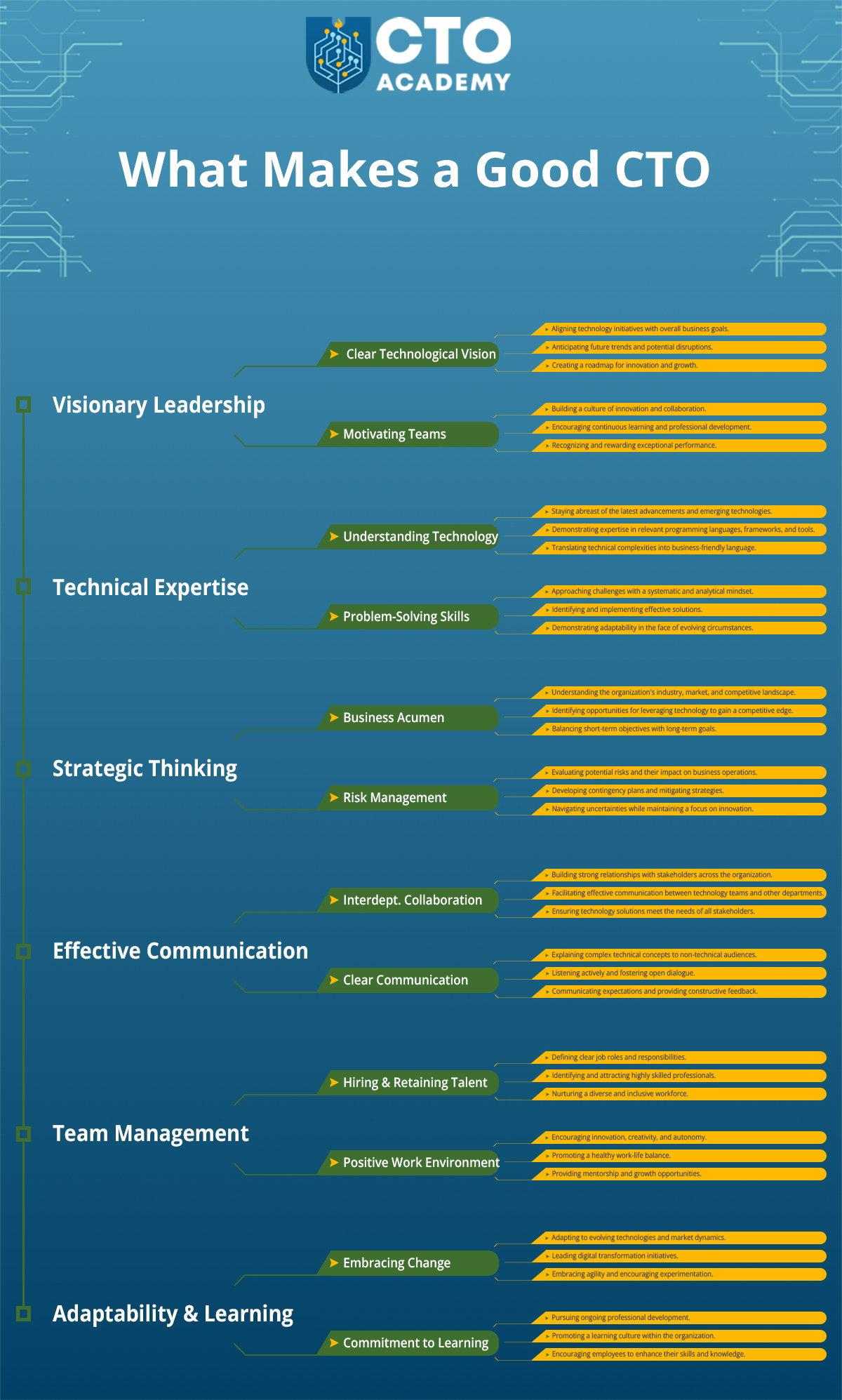
Technical expertise is just the starting point for a successful Chief Technology Officer. Those who aspire to lead technology in universities, colleges, or schools need a well-rounded skill set that spans technical acumen, leadership, and interpersonal abilities.
Technical Skills
- EdTech Integration: Experience with Learning Management Systems (LMS), classroom technology, and digital assessment tools.
- Network Infrastructure: Designing and managing secure, scalable institutional networks.
- Cybersecurity: Establishing protocols to protect data privacy and comply with regulations like FERPA and GDPR.
- Cloud Computing: Implementing cloud-based solutions for scalability and remote learning.
- Software Development: Overseeing the development, customization, and deployment of educational software applications.
- Data Analytics: Leveraging analytics to support student achievement and administrative decision-making.
Leadership and Strategic Skills
- Visionary Thinking: Setting a long-term digital strategy that aligns with the institution’s mission.
- Change Management: Leading stakeholders through technological conversion and overcoming resistance.
- Budget Management: Allocating resources for technology initiatives and demonstrating ROI to leadership.
- Team leadership: Building and mentoring high-performing IT and EdTech teams.
- Interaction: Translating complex technical concepts for non-technical audiences, including faculty, students, and administration.
Knowledge of Education Policy and Compliance
- Regulatory Expertise: Staying current with laws and regulations affecting education technology (FERPA,ADA,COPPA,etc.).
- Accessibility and Inclusion: Ensuring that digital learning environments are accessible for all students, including those with disabilities.
Benefits of being a CTO in Education
Taking on a Chief technology Officer role at a university, college, or school brings both professional and personal rewards:
- Impactful leadership: Influence the future of learning, teaching, and research through innovative technology adoption.
- career Growth: Gain access to executive-level compensation, professional networks, and the opportunity to shape institutional policy.
- Job Satisfaction: Help educators and students achieve their best by providing robust, accessible, and secure technological tools.
- Diverse Challenges: No two days are the same, with every new semester and tech advancement bringing fresh opportunities and challenges.
Practical Tips for Aspiring Education CTOs
If you’re eager to secure a CTO position in education, consider these actionable steps to boost your readiness and professional appeal:
- Build a Robust Portfolio: Document experience managing EdTech projects, migrating systems, or implementing new learning platforms.
- Network with Peers: Join education technology communities, attend relevant conferences, and connect with other EdTech leaders.
- Stay Ahead of Trends: Regularly follow developments in artificial intelligence, data privacy, cloud computing, and digital pedagogy.
- Pursue Ongoing Education: Enroll in MOOCs, workshops, and certification programs to keep your skills current.
- Showcase Leadership: Volunteer for committees at your current institution,present at conferences,and mentor junior staff to demonstrate your leadership potential.
Essential Qualities Hiring Committees Look For
When applying for a CTO position at a university, college, or school, hiring committees look beyond degrees and certifications. Here’s what they also value:
- Track Record of Successful Technology Initiatives: Demonstrated experience delivering projects on time and within budget.
- Ability to Align Technology with Educational Vision: Understanding institutional goals and how technology can enhance learning, equity, and access.
- Strong Communication Skills: Ability to bridge the gap between IT staff,faculty,administrators,and students.
- Operational Agility: Quickly responding to rapidly changing priorities, as seen during transitions to remote learning.
Sample Job Description: CTO in Higher Education
To give you a clearer picture, here’s what might appear in a typical job description for a CTO position in a university or college setting:
- Lead the development and implementation of the institution’s technology strategy.
- Oversee all IT systems, security protocols, and network infrastructure.
- Evaluate and procure new technology solutions to enhance teaching and research.
- collaborate with academic deans, department heads, and faculty on digital initiatives.
- Direct IT support services and professional development for technology adoption.
- Ensure compliance with data privacy and security regulations.
- Lead crisis response for technological challenges, such as cybersecurity threats or system outages.
Conclusion: Take the Next Step Toward a CTO Career in Education
The Chief Technology Officer is a transformative leadership position at the intersection of technology, education, and strategy. To succeed as a CTO in universities, colleges, or schools, you’ll need a blend of advanced academic qualifications, technical mastery, strategic vision, and a passion for educational excellence. By cultivating the right mix of education, certifications, and practical experience—and by staying current with edtech trends—you can position yourself as a top candidate for this rewarding and highly impactful career.
Are you ready to lead the future of learning? The right preparation will help you stand out, make a meaningful difference, and enjoy a fulfilling career as a Chief Technology Officer in education.