
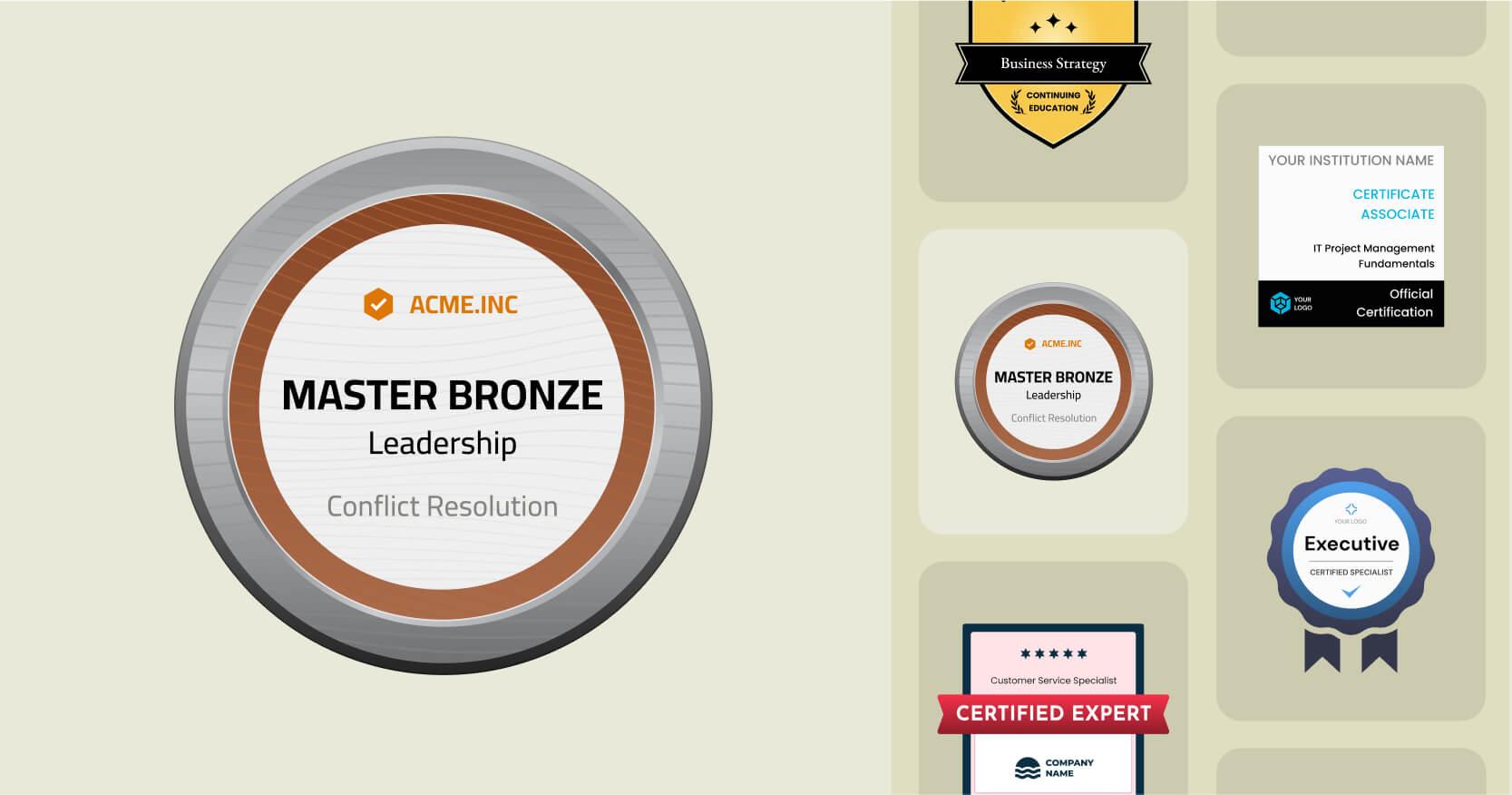
Digital Badges: How They Recognise Skills & Boost Achievements
In today’s digital-first world, how we assess and recognise skills is rapidly evolving.
Digital badges have emerged as innovative, credible, and much-needed alternatives to traditional certificates and degrees.
But what exactly are digital badges, and how can they help you showcase your expertise, gain recognition, and boost your achievements in your professional journey?
This complete guide breaks down everything you need to know about digital badges: their significance, benefits, and how you can leverage them to maximise your personal and career growth.
What Are Digital Badges?
Digital badges are virtual tokens of achievement that validate specific skills, competencies, or accomplishments.
Unlike traditional paper certificates, they use secure, online technology and are easily verifiable, shareable, and displayable across various platforms.
Each badge typically contains metadata—details about the badge issuer, assessment criteria, and evidence backing the achievement.
- Visual Symbol: Custom graphic representing a particular skill or achievement.
- Metadata: Embedded data verifying the earner, date earned, issuing organisation, and details of the accomplishment.
- Shareable: Displayed on LinkedIn, resumes, personal websites, or digital portfolios.
How Digital badges Recognise Skills
Digital badges go beyond just stating that you’ve completed a course or participated in an event.
They provide evidence-based recognition for both hard skills (like programming, analytics, or design) and soft skills (such as interaction, leadership, or critical thinking).
Ways Digital Badges Acknowledge Skills:
- Objective Assessment: Most badges are awarded after rigorous assessments, test results, or completion of specific projects.
- Obvious Credentials: Metadata shows exactly what skill or competency has been demonstrated, making badges far more transparent than typical paper certificates.
- Granular Recognition: Digital badges can highlight both micro-skills and major achievements, offering a nuanced view of your capabilities.
- Stackable Achievements: Multiple badges can combine to form a holistic picture of your proficiency in a domain—ideal for lifelong learners.
Key Benefits of Digital Badges
- Instant Verification: Anyone can verify a digital badge’s authenticity and details instantly online, eliminating the risk of fraudulent claims.
- Shareability: Showcase skills easily on social media profiles, personal websites, and CVs—putting your achievements in front of potential employers or collaborators.
- Motivation and Engagement: Earning badges gamifies the learning process, keeping users motivated while also clearly marking progress along learning paths.
- Portability: Digital badges travel with you across jobs, education providers, and geographic locations.
- Career Advancement: Badges help candidates stand out in competitive job markets by providing concrete evidence of specific expertise.
Employers now increasingly value micro-credentials, such as digital badges, because they give quick insights into a candidate’s up-to-date skills.
Practical Tips for Leveraging Digital Badges
- Curate Your Badge Portfolio: Not every badge needs to be displayed. Choose badges that best align with your career goals and personal brand.
- Include Badges on LinkedIn: Add badges to your “Licenses & Certifications” section or feature them in the “Featured” area for maximum visibility.
- Embed Badges on Your Personal Website: Use badge embeds or download badge images with verification links for your online CV/portfolio.
- Request Employer Recognition: If your workplace uses a digital learning platform, ask HR to integrate digital badge recognition into internal training programs.
- Keep Upgrading: Use digital badges to build your personal learning roadmap, stacking badges over time as your skills grow.
Real-World Case Studies: Digital Badges in Action
1. IBM’s Digital Badge Program
IBM has awarded millions of digital badges through its global training and skills initiatives. They report that badge earners are more likely to be noticed by recruiters and secure interviews faster than those without digital badges.These badges cover areas such as cloud computing,artificial intelligence,and cybersecurity.
2. Credly & Pearson VUE
Leading credentialing organisations use platforms like Credly to issue digital badges for industry certifications (e.g., Project Management, IT Security). Many hiring managers now actively search for candidates who display these badges on their LinkedIn profiles.
3. Higher Education: University Adoption
Universities such as the University of California, Davis, have implemented digital badge systems to acknowledge not only academic success but also co-curricular achievements such as leadership or research participation. As a result, students graduate with a digital record of holistic accomplishments that goes beyond their transcript.
First-hand Experience: Digital Badges Make a Difference
“when I completed a Professional Progress course and earned a digital badge, suddenly my LinkedIn profile started gaining attention from recruiters in my field. The digital badge not only made my skillset more visible but also provided tangible proof of my expertise. It opened up new opportunities I hadn’t considered before.”
— Emily T., Digital Marketing Specialist
Stories like Emily’s are becoming increasingly common as digital badges gain traction among professionals, educators, and employers worldwide.
Common Questions About Digital Badges
Are digital badges secure and trustworthy?
Yes, reputable issuers use encrypted metadata and online verification, making digital badges more difficult to forge than traditional certifications.
Who issues digital badges?
Universities, online course providers (like Coursera, Udemy), industry associations, and large employers all issue digital badges.
Can digital badges replace degrees?
While they don’t fully replace degrees, digital badges serve as valuable supplements—especially for micro-credentials, ongoing training, and skills outside traditional academic programs.
The Future of Digital Badges
With the rise of remote work, skills-based hiring, and continuous professional development, digital badges are only expected to grow in value and prominence. as more educational and corporate institutions adopt micro-credentialing systems, demonstrating your abilities with verifiable, shareable proof will become a career necessity.
Future trends may involve integration with AI-driven hiring platforms, more industry-specific badges, and seamless transferability between learning management systems and professional networks.
Conclusion: Why Embrace Digital Badges?
Digital badges are transforming the landscape of skills recognition and achievement. They offer a transparent, verifiable, and easy-to-share way to showcase your expertise to the world.
Whether you are a student,a professional,or an employer looking to recognise and develop your team,digital badges deliver value,motivation,and credibility.
embrace digital badges today and take the next step in building your digital reputation—because your achievements deserve to stand out in a crowded digital world.
Ready to get started? Explore the wide variety of digital badge programs offered by universities, professional associations, and e-learning platforms to begin your journey toward smarter, more accessible credentialing and success.