
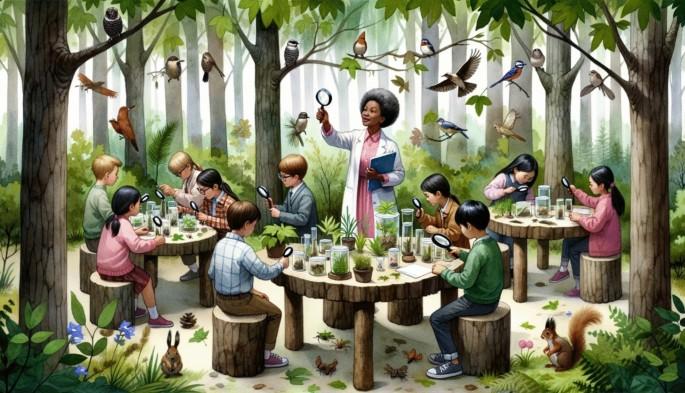
EdTech Meets Environmental Education: Innovative Solutions at their Crossroads
In today’s rapidly evolving digital and ecological landscape, the fusion of educational technology (EdTech) with environmental education is paving the way for innovative, engaging, and highly impactful learning experiences. As global awareness of environmental challenges grows, harnessing the potential of EdTech is not just a trend—it’s a necessity for equipping learners with the knowledge, skills, and motivation too address pressing environmental issues.
Why EdTech and Environmental education Are a Perfect match
At their crossroads, EdTech and environmental education amplify each other’s strengths.Digital platforms provide unprecedented access to real-time data,immersive content,and collaborative tools,making sustainability education more interactive,personalized,and actionable. This intersection is driving a revolution that has the potential to touch learners worldwide, nonetheless of location or resources.
- Enhanced engagement through gamification and multimedia content
- Real-world relevance with live data and virtual field trips
- Global collaboration via online learning communities and projects
- Accessibility for diverse and remote audiences
Key Benefits: how EdTech Transforms Environmental Learning
Integrating EdTech in environmental education brings multifaceted advantages for students, educators, and the planet:
1. Personalized and Adaptive Learning Experiences
Adaptive learning platforms use AI to tailor content according to individual needs, helping students understand complex environmental concepts at their own pace.
2. Immersive Experiences With Virtual and Augmented Reality
virtual Reality (VR) lets students explore endangered ecosystems, while Augmented Reality (AR) overlays real-world data onto everyday surroundings—making abstract ideas tangible.
3.Data-driven Insights for Real-World Impact
Interactive dashboards and real-time monitoring tools empower learners to track environmental indicators—such as air quality or biodiversity—and take informed action.
4. Expanding Accessibility & Inclusivity
Mobile apps and cloud-based platforms break down geographic barriers, allowing learners in remote or under-resourced areas to access top-quality environmental education.
5. Fostering Global Citizenship and Collaboration
Online classrooms and collaborative projects connect students from different corners of the world, deepening understanding and fostering global responsibility.
Case Studies: Leading Examples at the EdTech and Environmental Education Crossroads
-
Earth School (UN Environment Program & TED-Ed):
This online platform offers interactive lessons and activities about the natural world, connected to real-world data and global challenges. Users engage through quizzes, videos, and hands-on missions to deepen their environmental literacy.
-
Eco-Schools Virtual Learning Environments:
Through gamified modules and digital badges, students take on sustainability projects such as energy conservation, waste audits, and biodiversity surveys—all supported by mobile applications and online leaderboards.
-
iNaturalist:
This citizen science app lets learners document local flora and fauna, upload observations, and contribute to global biodiversity databases, demonstrating EdTech’s power in crowd-sourced environmental monitoring.
-
Google expeditions – Virtual Field Trips:
Google Expeditions enabled teachers to guide students on VR journeys to coral reefs,rainforests,and glacial environments,helping them “visit” faraway ecosystems without leaving the classroom.
Practical Tips for Integrating EdTech into Environmental Education
Ready to bring the power of EdTech into your environmental classroom? Here are some actionable tips for educators and institutions:
- Start with purpose: Identify specific sustainability goals or environmental topics and match your EdTech tools accordingly.
- Blend digital and hands-on learning: Use apps and online simulations as a supplement for outdoor experiments and local environmental projects.
- Leverage open educational resources (OER): Utilize free, high-quality online materials from trusted organizations and adapt them for your local context.
- Foster collaboration and discussion: Implement forums, wikis, or project-based learning platforms to encourage teamwork and diverse perspectives.
- Assess with real impact in mind: use digital portfolios, reflection journals, and project outcomes—not just quizzes—to evaluate student learning and civic engagement.
Educator and Student Voices: Firsthand Experiences
“Using interactive simulations, my students truly grasp how ecosystems work and what happens when they are disrupted—it’s far more impactful than any textbook.”
– Maria L., High school Environmental Science Teacher
“Thanks to AR field guides, I could identify plants during my hikes and contribute to a real scientific project. Learning feels like an adventure!”
– Jake, Grade 8 Student
future Trends: The road Ahead for EdTech and Environmental Education
- AI-Powered Environmental Modeling: Artificial Intelligence is increasingly being used to simulate climate scenarios and analyze large-scale environmental data.
- Blockchain for Sustainable Certifications: Blockchain can validate eco-amiable actions and track progress in school and community sustainability projects.
- IoT Sensors in Classrooms: Internet of Things (IoT) devices empower students to monitor and analyze energy use, air quality, or climate metrics in real-time.
- Integration with STEAM: EdTech platforms are merging sustainability topics with Science,Technology,Engineering,Arts,and Math (STEAM) education.
These trends show that the synergy between EdTech and environmental education is just beginning, promising even more transformative impacts in the years ahead.
Conclusion: Towards a Greener, More Connected Future
The intersection of EdTech and environmental education is unlocking exciting new possibilities for teaching, learning, and action. By combining digital innovation with real-world environmental stewardship, we can empower learners everywhere to become agents of positive change. Whether through virtual reality field trips, citizen science apps, or collaborative global projects, these pioneering solutions are cultivating awareness, responsibility, and hope for a sustainable future.
Ready to explore more ways to integrate technology into your environmental education journey? Stay inspired, stay curious, and keep pushing the boundaries of what’s possible at the crossroads of EdTech and sustainability!