
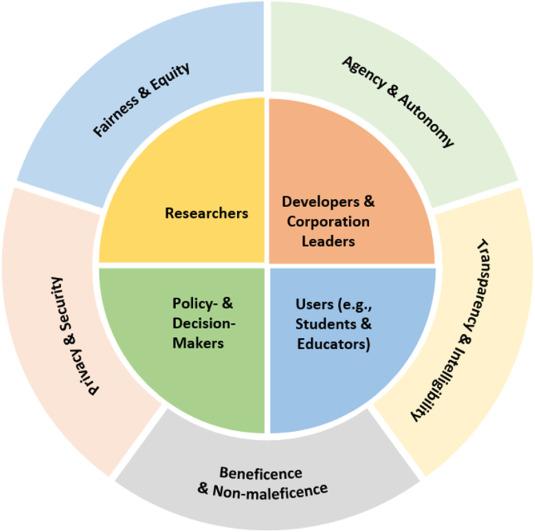
Ethical Considerations in AI-Driven Learning: safeguarding Students, Data, and fairness
Artificial Intelligence (AI) is rapidly transforming education, offering new opportunities to personalize learning, improve outcomes, and streamline administrative processes. However, as AI-driven learning platforms become more prevalent, educators, parents, and policymakers must address ethical considerations relating to student safety, data privacy, and fairness to ensure responsible and equitable use of technology in schools and universities.
Table of Contents
- Benefits of AI-Driven Learning
- Key Ethical Challenges in AI Education
- Safeguarding Students in AI-Driven Learning Environments
- Data Privacy and Security in Educational AI
- Ensuring Fairness in AI-Based Education Systems
- Practical Tips for Ethical AI Adoption in Schools
- Case Studies: Ethical AI in Real-World Education
- Conclusion
Benefits of AI-Driven Learning
AI-driven learning platforms are revolutionizing education by offering:
- Personalized learning paths: Systems that adapt to individual student strengths, weaknesses, and learning styles.
- Automated assessment: Faster feedback and grading with clever algorithms.
- Resource optimization: Efficient use of educational resources and improved administrative decision-making.
- Accessibility: Tools that overcome learning barriers for differently abled students.
Despite these transformative benefits, integrating AI into education requires careful attention to ethical considerations to prevent unintended consequences.
Key Ethical Challenges in AI Education
AI applications in education present several ethical challenges. These include:
- Student safety and protection
- Data privacy and clarity
- Algorithmic bias and fairness
- Accountability and explainability
- Informed consent
Let’s explore these challenges in depth and examine strategies for addressing them.
Safeguarding Students in AI-Driven Learning Environments
As AI-driven platforms interact directly with students, safeguarding their well-being is paramount. Key concerns include:
- Protection from exploitation: Automated systems must avoid manipulating or exploiting vulnerable students accidentally or intentionally.
- Online safety: AI chatbots and agents should be rigorously tested to prevent harmful interactions, cyberbullying, or inappropriate content exposure.
- Psychological impact: Continuous monitoring or grading by AI may lead to increased anxiety or loss of autonomy.
Best Practices for Safeguarding Students:
- Establish clear usage policies for AI systems.
- Regularly audit AI algorithms for safety risks.
- Provide students with agency and control over automated interactions.
- Offer human oversight to supplement AI decision-making and support.
Data Privacy and Security in Educational AI
AI-powered educational platforms collect vast amounts of sensitive student data, including learning behaviors, personal information, and academic progress. Data privacy is crucial for protecting student rights and maintaining trust.
Key Data Privacy Concerns:
- Unauthorized data access: Risks from cyber-attacks or internal misuse.
- Lack of transparency: Students and parents may be unaware of how data is used or stored.
- data sharing with third parties: Commercialization or misuse of student data outside educational contexts.
Safeguarding Data in AI-Driven Learning:
- Implement end-to-end encryption for student records and communications.
- Ensure strict access controls and regular security audits.
- Publish clear privacy policies explaining data usage, retention, and sharing practices.
- Comply with educational data regulations such as FERPA or GDPR, depending on your region.
- Empower students and families to review, modify, or delete their data when desired.
“Responsible data management is foundational to building trust in AI-driven educational environments. Students deserve to know how their personal information is handled and protected.”
ensuring Fairness in AI-Based Education Systems
One of the most challenging ethical considerations in AI-driven learning is algorithmic fairness. because AI models learn from ancient data, they can inadvertently reinforce existing biases, leading to:
- Discriminatory outcomes: Students from underrepresented groups may receive less favorable recommendations or support.
- Inequitable resource allocation: Automated systems may provide different levels of attention or intervention based on biased data.
- Barriers to prospect: AI might perpetuate stereotypes or limit access for disadvantaged students.
Strategies for Fair AI in Education:
- Perform regular bias audits on datasets and algorithms.
- design models that factor in diversity and inclusion metrics.
- Enable human-in-the-loop processes for critical decision-making.
- Encourage transparency and explainability in AI-generated recommendations and outcomes.
Notable Case Study: Reducing Bias in AI Admissions
The University of Texas piloted an AI-driven admissions review system and found that initial models disproportionately favored applicants from affluent backgrounds due to historical data bias. By retraining the AI using balanced datasets and adding manual oversight, admissions fairness improved—demonstrating the importance of active bias mitigation.
Practical Tips for Ethical AI Adoption in Schools
Educational leaders and IT professionals can implement ethical AI practices by following these actionable tips:
- Conduct Ethical Risk Assessments: Evaluate new AI applications for ethical risks before deployment.
- Engage Stakeholders: Include educators, parents, and students in discussions about AI selection and use.
- Offer Training and Awareness programs: Help users understand the strengths and limitations of educational AI and foster responsible tech use.
- Monitor and Report Incidents: Create channels for reporting and addressing ethical concerns or technology-related harms.
- Collaborate on Standards: Support or participate in the development of industry-wide ethical standards for educational AI.
Case Studies: Ethical AI in Real-World Education
1. AI Tutoring with Privacy-First Approach
BrightLearn, an online tutoring platform, implemented an AI-driven learning assistant while adhering to strict privacy standards. By allowing parents to view and manage data,using encrypted student profiles,and limiting data collection to what was necessary for learning outcomes,BrightLearn increased user trust and improved adoption rates.
2. Detecting Bias in Automated Grading
In a UK secondary school, teachers used an AI-powered essay grading system. Initial results showed scoring discrepancies between genders. Upon review, the team adjusted the AI model and added human review for contested results, ensuring fairness and transparency.
3. Safeguarding Student Mental Health
A district in California piloted an AI platform for monitoring learning engagement. When the system flagged students at risk of disengagement, school counselors intervened personally, combining algorithmic insights with supportive human care.
Conclusion
AI-driven learning systems hold remarkable potential to reshape education through personalization, efficiency, and improved outcomes. Though, these innovations must be balanced with robust ethical considerations to safeguard students, protect sensitive data, and guarantee fairness for all learners. By fostering transparent practices,prioritizing student safety,and actively mitigating bias,educational institutions can unlock the benefits of AI while upholding their responsibility to every student.
Want to learn more about ethical AI in education? Subscribe to our newsletter for the latest insights and practical guidance on responsible technology adoption in schools and universities.