
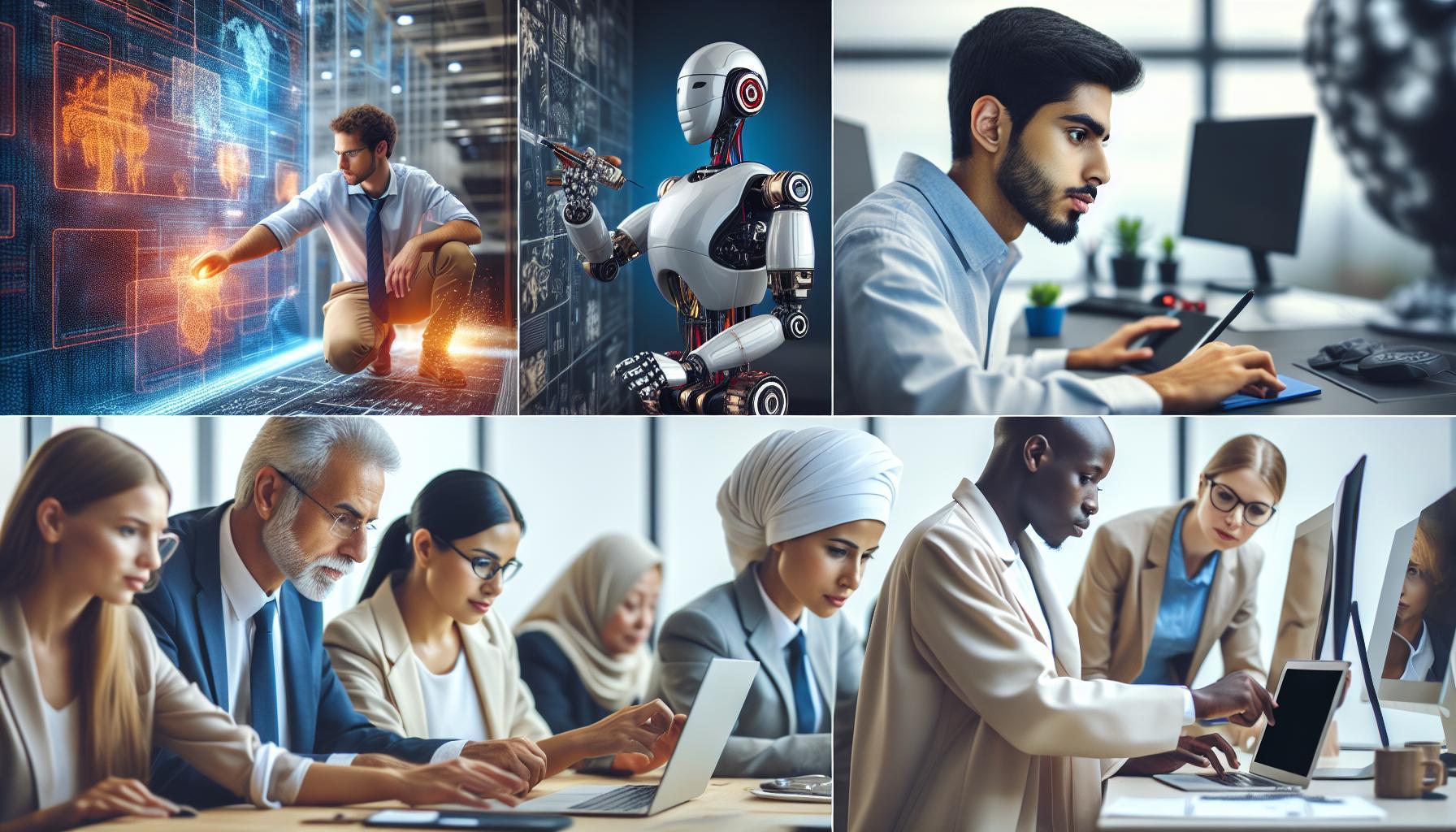
Future-Proof Skills: Preparing Students Today for Tomorrow’s In-Demand Jobs
In today’s fast-changing world, the job market is evolving at a pace never seen before. as automation, artificial intelligence, and other emerging technologies reshape the global economy, it’s more vital than ever for students to develop future-proof skills. But what does that mean? Simply put, these are the abilities that will remain relevant and valuable—even as industries change and new roles emerge. in this article, we’ll explore the skills needed for tomorrow’s in-demand jobs, practical strategies for educators and parents, and tips to help students thrive in an uncertain future.
Why Future-Proof Skills matter in Today’s Education
Gone are the days when mastering a single technical skill would ensure career longevity. The future of work demands adaptability, creativity, and lifelong learning. According to the World Economic Forum’s Future of Jobs Report 2023, over 85 million jobs might potentially be displaced by a shift in labor between humans and machines, while 97 million new roles could emerge that are more adapted to the new division of labor.
- Technology is rapidly transforming industries: Automation and AI are streamlining repetitive tasks, increasing the demand for uniquely human skills.
- Businesses seek adaptability: Employers are placing greater value on employees who can learn quickly, think critically, and communicate effectively across multiple platforms.
- The gig economy is growing: Careers are no longer linear, with professionals often changing roles or industries multiple times during thier working life.
Top Future-Proof Skills for Tomorrow’s Workforce
Preparing students for in-demand jobs requires going beyond traditional academic knowledge. Here are some of the most valuable future-ready skills that students shoudl begin developing today:
1. Critical Thinking and Problem Solving
Robots can crunch numbers, but making sense of complex problems and thinking outside the box are uniquely human talents.Employers want solution-oriented individuals who can reason, analyze, and find creative answers.
2. Digital Literacy and Technological Fluency
From data analysis to understanding how AI works, digital skills are essential. Students should be comfortable using emerging digital tools, programming basics, cybersecurity principles, and managing online identities.
3. Dialog and Collaboration
The ability to convey ideas clearly, both in writing and speech, and to work effectively with diverse teams—often across global and virtual environments—is vital.
4. Adaptability and Resilience
change is the only constant in the future workplace. Students must be prepared to face setbacks, adapt to new situations, and continue learning.
5.Emotional Intelligence (EQ)
Understanding and managing one’s own emotions, as well as empathizing with others, will remain crucial in roles involving teamwork, negotiation, and leadership.
6. Creativity and Innovation
Original thinking helps businesses grow, adapt, and remain competitive. Students should be encouraged to experiment, question assumptions, and pursue novel ideas.
7. Entrepreneurial Mindset
Initiative, risk-taking, and the ability to identify opportunities will benefit students whether they start a business or drive innovation within an organization.
Practical Tips: How to Teach and Cultivate Future-Proof Skills
Integrating future-proof skills into education doesn’t have to mean overhauling the curriculum overnight. Here are actionable steps that schools, educators, and parents can take:
- Project-Based Learning: Encourage hands-on projects that combine multiple disciplines. This fosters critical thinking, teamwork, and problem-solving.
- Promote Digital Literacy: Introduce coding, digital research, and safe online practices across various subjects, not just computing classes.
- Encourage Communication: Use presentations, debates, group discussions, and collaborative assignments to build confidence and communication skills.
- Foster Curiosity: Allow students to ask questions, research independently, and explore their interests beyond the textbook.
- Mental Health and wellbeing: Provide resources for stress management and resilience training to help students adapt to change.
- Inclusive Learning Environments: Celebrate diversity and multicultural perspectives to prepare students for global collaboration.
- Career Guidance and mentorship: Connect students with professionals,invite guest speakers,or arrange workplace visits to expose them to real-world careers and essential soft skills.
Emerging Fields and In-Demand Jobs of the Future
To truly future-proof students, it’s helpful to point them toward sectors expected to see significant growth. According to recent labor market analyses, some of the fastest-growing and most resilient fields include:
- Artificial Intelligence and Machine Learning
- Data Science and Analytics
- Cybersecurity
- Healthcare and Biotechnology
- Green Energy and Sustainability
- User Experience (UX) and Product Design
- Education Technology
- Remote Work Facilitators (IT, Communication, HR)
teachers and parents can incorporate awareness of these sectors into lessons and conversations, helping students align their individual talents and passions with where the future of work is heading.
Case Study: Integrating future-Ready skills in the Classroom
consider the story of Lincoln High School, an innovative secondary school that launched a multi-year program to develop 21st-century skills:
- Cross-Curricular Projects: Math, science, and arts teachers collaborated on a sustainability challenge, prompting students to design and prototype eco-amiable products using coding, critical thinking, and creative expression.
- Digital Portfolios: Students were encouraged to document their learning journey,reflecting on successes and failures,and showcasing skills for university or job applications.
- Mentorship Program: Local business leaders provided mentorship and real-world feedback, helping students understand workplace expectations and emerging job opportunities.
The results? Higher student engagement, greater confidence, stronger collaborative skills—and a tangible advantage in university admissions and the workforce.
Benefits of Future-Proof Skills for Students
- Better Career Versatility: Students can navigate multiple industries and job roles as economic needs change.
- Increased Employability: Those with transferable skills stand out to employers seeking adaptability and innovation.
- Enhanced Personal Development: Empathy, communication, and critical thinking foster stronger relationships and lifelong learning.
- Preparedness for Technological Change: Digital literacies help students thrive with emerging technologies rather than fear disruption.
First-Hand Experience: Advice from Future-Ready Graduates
“Learning to code wasn’t just about programming—it taught me how to break down big problems and tackle them step by step.those skills helped me land my first job as a product designer.”
– Sarah, Recent Graduate
“Group projects in school used to frustrate me, but now I realize they prepared me for real-world teamwork in my cybersecurity career. communication and empathy are everything.”
– James, Cybersecurity Analyst
Conclusion: Building Bridges to the Future
The journey to prepare students for in-demand future jobs begins with a commitment to teach future-proof skills—those that foster adaptability, innovation, and lifelong learning. By equipping young people with the tools they need to navigate an ever-changing world, we empower them not just to survive, but to thrive. It’s a team effort: educators, parents, and community leaders all play a role in helping the next generation bridge today’s classroom to tomorrow’s careers.
Whether you’re a teacher, a parent, or a student, start the conversation today. The future of work is full of possibility—let’s prepare for it together.