
How 5G is Revolutionizing Online Learning: Enhancing Connectivity and Educational Experiences
With the rise of remote education and digital classrooms, reliable connectivity and immersive educational experiences have never been more crucial. 5G technology is at the forefront of this transformation, promising to reshape online learning and revolutionize the way students and educators connect, collaborate, and achieve their academic goals. In this article, we’ll explore how 5G is revolutionizing online learning, enhancing connectivity and educational experiences, and what it means for the future of digital education.
fast Fact: 5G, or the fifth generation of wireless technology, offers up to 100 times faster speeds, lower latency, and the ability to connect more devices than previous generations—laying the groundwork for next-level online learning.
The need for Enhanced Connectivity in Online Learning
Since the global shift towards online education,reliable internet connectivity has become critical. Challenges like network lag, interrupted video lessons, and slow downloads can hamper the learning process. Traditional wireless technologies, such as 3G and 4G, often struggle to handle the demands of high-definition video streaming, real-time collaboration, and interactive content. This is where 5G in education comes in, providing speeds and reliability that meet the needs of modern e-learning platforms.
How 5G is Transforming Online learning
1.Lightning-fast Speeds and Low Latency
- Seamless Video Conferencing: 5G delivers ultra-fast speeds, ensuring HD or even 4K video lessons without buffering.
- Instant Resource Downloads: Large files, such as multimedia textbooks and 3D models, are downloaded in seconds, saving valuable study time.
- Low latency for Real-Time Interaction: With latency as low as 1 millisecond, live Q&A sessions and collaborative projects become as smooth as an in-person classroom experience.
2.Expanded Access and Digital Inclusion
One of the core promises of 5G for online learning is bridging the digital divide. With improved coverage and capacity, even students in rural or remote areas can gain access to high-quality educational resources.
- Universal access to virtual classrooms and distance education
- More equitable learning opportunities for students lacking wired broadband connections
- Reduction in “homework gaps” due to poor internet at home
3. Enhanced Interactivity: AR, VR, and Immersive Content
5G unlocks the full potential of augmented reality (AR) and virtual reality (VR) in education. Low-latency and high bandwidth enable:
- Virtual science labs and simulations that replicate real-world experiments
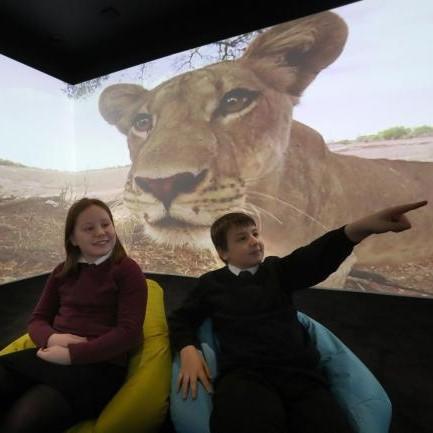
- Immersive field trips to ancient sites or natural wonders, right from the classroom or home
- Gamified learning experiences, making lessons more engaging and memorable
4. Personalized and Adaptive Learning
By supporting AI-driven educational platforms, 5G helps deliver personalized content in real time. AI and machine learning can analyze students’ progress and adapt the curriculum instantly, offering tailored guidance for every learner.
Key Benefits of 5G for Online Education
- Better Engagement: Interactive AR/VR content and live sessions heighten student participation.
- Flexible Learning Environments: Students can learn anywhere—on the go, from home, or even outdoors—without worrying about network limitations.
- Scalable Solutions: Institutions can accommodate thousands of simultaneous learners worldwide without system slowdowns.
- Support for IoT Devices: connected devices, smart boards, and sensors enable smart classrooms and data-rich activities.
- Greater Collaboration: Students and teachers can co-create content, tackle group projects, and brainstorm ideas seamlessly.
Case Studies: 5G-Powered Online Learning in action
South Korea’s 5G Smart Classrooms
South Korea—a global leader in 5G deployment—has introduced smart classrooms equipped with 5G-enabled tablets, AR/VR learning tools, and real-time translation services. Results showed a notable increase in student satisfaction and participation, especially in STEM subjects.
Remote Science labs in Rural India
In regions of india where access to high-speed internet was previously limited,5G pilot programs now let students participate in remote-controlled science labs. They can conduct experiments virtually and interact with classmates using VR headsets.
Virtual Field Trips in the United States
With 5G, American schools have started taking students on virtual field trips, visiting museums, national parks, and historical landmarks through high-definition, interactive VR streams. This “learning beyond walls” approach broadens horizons for all learners, irrespective of location.
First-Hand Experiences: educators and Learners Share
“With 5G, video calls and interactive lessons have become so smooth that it’s easier to keep students engaged, especially in larger classes.we can now do things that were impossible with just regular Wi-Fi or 4G, such as collaborative virtual art projects or instant polling in real time.”
– Maria Lopez, High School Teacher
“I live in a rural area where the internet used to cut out all the time. thanks to 5G, I can take part in virtual labs and group discussions without worrying about connection drops. It’s made online learning a lot less stressful!”
– Anika Sharma, University Student
Practical Tips: How to Leverage 5G for Better Online Learning
- Upgrade Devices: Ensure that students and educators use 5G-compatible smartphones, tablets, or hotspots for optimal connectivity.
- Explore new Tools: Try AR/VR educational apps, interactive platforms, and adaptive learning management systems designed to utilize high-speed networks.
- Prioritize cybersecurity: As connectivity improves, be vigilant about digital security with robust passwords and regular updates.
- Invest in Training: Offer professional progress for teachers to leverage 5G capabilities in their lesson plans.
- Partner for better Access: Work with local governments and telecom providers to expand 5G coverage, especially in underserved communities.
Future Trends: What’s Next for 5G and Online Education?
The integration of 5G and education technology is still in it’s infancy,but the future promises even more innovation.
- AI-driven tutors and chatbots that can react in the moment with instant feedback and support
- Mixed Reality (MR) classrooms blending physical and digital learning environments
- Global educational collaborations powered by seamless translation and zero-lag video conferences
As more institutions embrace 5G-enabled online learning, expect to see new pedagogical models, greater personalization, and the breaking down of geographical barriers for students everywhere.
Conclusion: Embracing the 5G Revolution in Online Learning
5G is undeniably revolutionizing online learning, offering blazing fast speeds, ultra-low latency, and the power to create highly interactive educational experiences.By embracing 5G technology, schools, universities, educators, and students gain the tools they need for a brighter, more connected, and more inclusive future of learning.
If you’re an educator, parent, or student, now is the time to explore how 5G can enhance your educational journey and unlock new possibilities in digital education!