
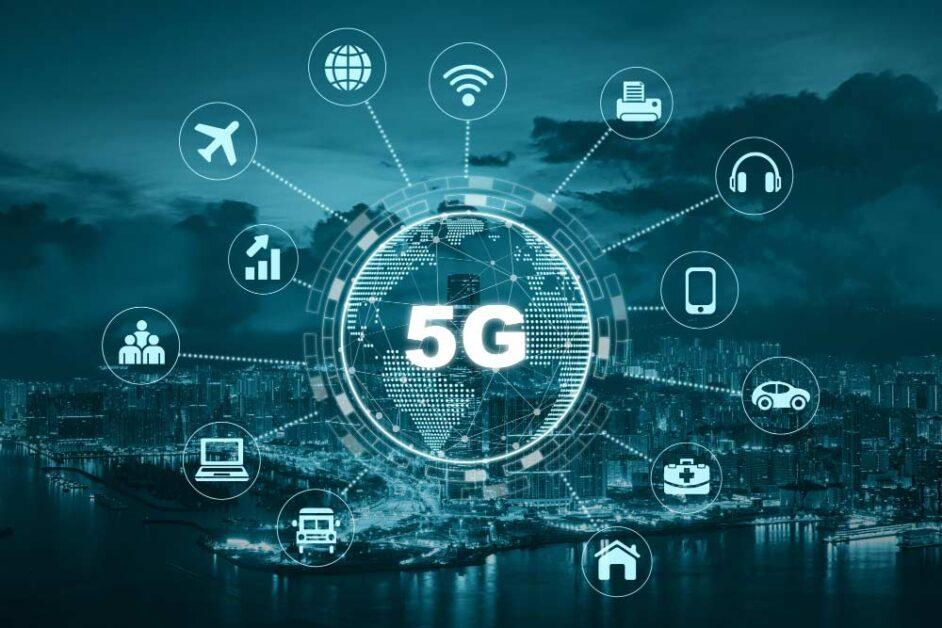
How 5G Technology is Revolutionizing Online learning: Key Benefits and Future Prospects
Introduction: The New Era of Online Learning
In recent years, online learning has become an integral part of education across all age groups and disciplines. The global shift to virtual classrooms has been propelled by technological advancements, but none have promised as radical a transformation as 5G technology. As the world embraces faster, more reliable internet connections, 5G is rapidly reshaping how students and educators interact, collaborate, and access educational content. In this article,we explore how 5G technology is revolutionizing online learning,highlighting key benefits,practical applications,and future prospects.
What is 5G Technology?
5G, short for fifth-generation wireless technology, is the latest standard for mobile networks. Compared to its predecessors, 5G offers:
- Ultra-fast data speeds (up to 100 times faster than 4G)
- Ultra-low latency (response times measured in milliseconds)
- Higher connectivity density (capability to connect more devices)
- Improved reliability and coverage
These advancements enable seamless access to rich, data-intensive educational experiences, paving the way for a dramatic evolution in online learning.
Key Benefits of 5G Technology in Online Learning
The impact of 5G on education is far-reaching. Here are some key benefits of 5G in online learning:
1. Seamless Streaming of High-Quality Video Content
video lectures and interactive webinars are essential for e-learning, but high-definition (HD) and 4K videos can quickly overwhelm lower bandwidth connections. 5G networks deliver lightning-fast data speeds, making buffer-free, high-definition video streaming accessible for all students, even in remote or underserved areas.
2. Enabling Real-time Interactivity and Collaboration
Low latency is a hallmark of 5G technology. This means that online classes, group discussions, and live interactive sessions feel instantaneous, supporting real-time communication and collaboration.
- Instant feedback between students and teachers
- Real-time peer-to-peer collaboration on projects
- Smoother participation in interactive simulations
3. Powering Immersive Learning with AR and VR
Augmented Reality (AR) and Virtual Reality (VR) bring learning to life, simulating environments and scenarios for deeper understanding. However, AR/VR applications require high bandwidth and low latency, making them impractical on older networks. 5G unlocks the full potential of immersive learning,allowing students to:
- Explore ancient sites through virtual field trips
- Conduct virtual science experiments safely
- Practice language skills in simulated environments
4. Bridging the Digital Divide
With its extensive coverage and ability to support more devices, 5G can definitely help close the connectivity gap in rural and underserved communities, bringing quality online education to everyone, everywhere—including remote villages and developing regions.
5. Enabling Smart Learning Environments
The Internet of Things (IoT) will see explosive growth alongside 5G. IoT-enabled devices and smart classrooms can gather data, personalize learning pathways, and automate administrative tasks, making learning experiences more tailored and efficient.
Practical Applications of 5G in Education
Let’s look at real-world examples of how 5G technology is transforming online education:
- Remote Classrooms: Schools like those in South Korea and Finland are leveraging 5G to create interconnected remote classrooms, providing access to quality education for students in rural and isolated communities.
- Medical Training: universities and hospitals use 5G-enabled AR/VR headsets to let medical students observe surgeries and practice procedures virtually, improving learner engagement and safety.
- Language Learning: Platforms utilize 5G to deliver live language coaching with instant translation features, making global exchanges and peer-learning easier than ever.
Case Study: 5G-Powered Smart campus
Shenzhen Institute of Advanced Technology in China has implemented a 5G-enabled smart campus. Their system integrates high-speed Wi-Fi, IoT sensors, and AR/VR labs to:
- Monitor energy usage and optimize facilities automatically
- Support high-capacity live-streamed lectures
- Enable students to work on remote lab experiments in real time
The result? Increased student satisfaction, higher faculty productivity, and reduced costs—illustrating the potential of 5G in educational innovation.
Tips for Schools and Educators to Leverage 5G in Online Learning
- Invest in Compatible Devices: Ensure that students and teachers have 5G-ready smartphones, tablets, or laptops to take full advantage of faster connectivity.
- Promote Digital literacy: Offer training sessions to help educators and students integrate new technologies like AR/VR and IoT tools seamlessly into learning activities.
- Adopt Cloud-based Platforms: shift to cloud-based learning management systems that can leverage 5G for improved reliability, security, and scalability.
- Foster Collaboration with Technology Providers: partner with local telecom providers and technology companies to access early innovations and pilot new 5G educational applications.
Challenges and Considerations
While the benefits of 5G in education are significant, some challenges remain:
- Infrastructure Costs: Upgrading facilities and devices requires investment.
- Security & Privacy: More connected devices and data-intensive applications mean robust cybersecurity measures are crucial.
- Digital Equity: Ensuring all students have equal access to 5G technology is vital to prevent widening the digital divide.
Educational institutions should develop clear strategies to address these challenges and ensure a smooth transition to 5G-enabled learning.
The Future of Online Learning with 5G
The future of online education is radiant, with 5G unlocking new possibilities:
- AI-Powered Personalization: Faster networks will enable advanced AI tools to analyze learner progress and personalize content in real time.
- More Accessible Global Classrooms: Students from around the world can participate in the same class, breaking down geographical barriers.
- Gamification and EdTech Innovations: Cutting-edge educational games and platforms that require fast, responsive connectivity will become mainstream.
As more schools upgrade their infrastructure and educators embrace digital innovation,5G will continue to redefine the boundaries of what’s possible in online learning.
Conclusion: Embracing the 5G Revolution in Education
5G technology is revolutionizing online learning by delivering ultra-fast, reliable connectivity and enabling immersive, collaborative, and personalized educational experiences. the transition to 5G-powered online education holds immense promise for bridging digital divides, accelerating innovation, and preparing learners for success in a connected world.
As we look to the future,embracing 5G in education is not just an upgrade—it’s a transformative leap,making quality learning accessible,engaging,and relevant for every student,everywhere.