
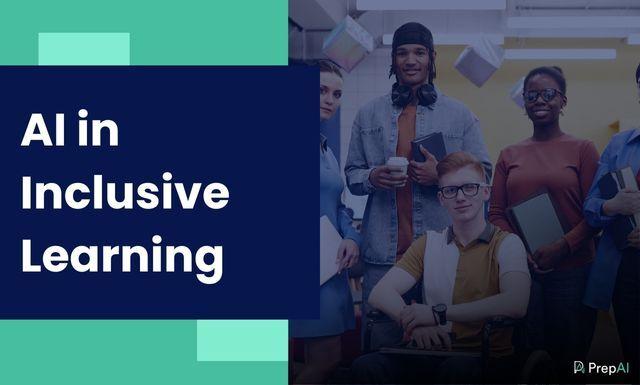
How AI Empowers Students with Disabilities: innovations in Inclusive Education
Introduction: Embracing AI for Inclusive Learning
Inclusive education has long aimed to ensure that every student—nonetheless of their abilities—receives the support and opportunities they need to thrive academically and socially. in recent years, Artificial Intelligence (AI) has emerged as a game-changer, revolutionizing how teachers and institutions accommodate learners with disabilities. From adaptive technologies to personalized resources, AI-powered tools are bridging gaps and empowering students in ways that were once unimaginable. In this article, we’ll explore how AI in education is fostering inclusivity, shedding light on its benefits, innovations, real-world applications, and practical tips for educators and families.
AI-Powered Innovations Transforming Inclusive Education
The intersection of AI and special education has given rise to a slew of powerful innovations.These advances are tailored to address specific challenges faced by students with disabilities, enabling them to engage meaningfully with educational content.
Adaptive Learning Platforms
- Personalized Learning Paths: AI-driven platforms assess individual student strengths, learning pace, and areas for betterment. this data fuels tailored lesson plans,interactive exercises,and scaffolding that ensure every learner can progress at their own rate.
- Accessibility Features: AI-based resources frequently enough include voice-to-text, sign language interpretation, and screen readers, making content accessible for students with visual, auditory, or mobility impairments.
Speech Recognition and Language Processing
- Real-Time captioning: Platforms like Google live Transcribe and microsoft Azure Speech Service provide instant, accurate captions for spoken content, benefiting students who are deaf or hard of hearing.
- Language Translation: AI transforms educational materials into multiple languages—including sign language—allowing non-native speakers and hearing-impaired students to participate fully.
- Text-to-Speech: Screen readers powered by AI convert written material to speech, helping visually impaired students access literature, assignments, and digital resources.
Assistive Robotics and Virtual Reality (VR)
- Physical Assistance: AI-driven robotic aids can help students with physical disabilities navigate classrooms, manipulate objects, and even participate in sports or lab experiments.
- Immersive Learning: VR platforms personalized by AI allow students with disabilities to interact with simulated environments, practicing social scenarios or experiencing historical events at their own pace.
Intelligent Tutoring Systems (ITS)
- Continuous Feedback: AI tutoring systems analyze student responses in real time, offering constructive feedback, explanations, and hints tailored to the user’s needs.
- 24/7 Availability: Students with chronic illnesses or fluctuating learning patterns benefit from intelligent tutoring that’s accessible anytime, anywhere.
Benefits of AI for Students with Disabilities
Incorporating AI in inclusive education unlocks numerous advantages for both learners and educators:
- Increased Independence: Students gain greater autonomy, accessing learning materials and assignments without constant supervision.
- Enhanced Communication: AI bridges communication gaps—weather through instant translation or alternative input devices—opening classroom discussions to all.
- Empowered Educators: Teachers receive analytics and actionable insights, helping them identify challenges early and implement effective strategies.
- Customizable Learning Experiences: AI tailors resources according to individual sensory, cognitive, or physical needs, ensuring a more engaging educational journey.
- Scalability: AI solutions can be applied across multiple classes or schools, extending inclusive education benefits to wider communities.
- Reduction in Stigma: Seamless, unobtrusive technologies help normalize accommodations, fostering acceptance and belonging.
Case Studies: Real-World AI Submission in Inclusive Education
Case Study 1: AI-Powered Reading for Dyslexia
Learning ally utilizes advanced text-to-speech technology to help students with dyslexia. AI algorithms not only read aloud, but also adjust pacing and pronunciation to suit individual learners. Over 90% of users report increased reading fluency and better comprehension.
Case Study 2: autism Spectrum Support Through Personalized AI
Cognoa is an AI-driven platform helping educators discern early signs of autism and customize social-emotional learning exercises. By analyzing behavioral patterns, Cognoa suggests ways to structure group activities, improving communication and emotional regulation for neurodiverse students.
Case Study 3: AI in Physical Accessibility
Wheelchair-bound students often encounter obstacles in customary school layouts. Institutions piloting AI-powered navigation robots allow students to request classroom materials, open doors remotely, or attend virtual assemblies, previously impossible without a personal aide.
Case Study 4: real-Time Captioning in Mainstream Classrooms
At a mainstream high school in California, students with hearing impairments are given AI-powered transcription devices.Attendance and participation in classroom discussions have risen by 30% thanks to accessible, real-time captions.
First-Hand Experience: Voices from the Inclusive Classroom
“AI has made a huge difference for our daughter, who has cerebral palsy. She now participates using a voice-activated tablet, contributing to class discussions independently. The personalized feedback built into her learning apps helps her master concepts that used to feel out of reach.”
— Sarah O., Parent
“As a teacher, AI analytical dashboards highlight which students need extra help. It prompts me to adjust assignments proactively and connect with parents before challenges escalate.”
— mark T., Educator
“With my AI-enabled captioning device, I no longer miss parts of lectures. I feel like I am on equal footing with my classmates.”
— Emily K., High School Student
Practical Tips: Maximizing AI’s Potential for Inclusive Education
- Collaborate Early: Engage students, parents, and support staff in selecting and deploying AI tools to foster buy-in and ensure solutions meet diverse needs.
- Prioritize Accessibility: Choose AI tools designed for universal usability, verifying compatibility with assistive devices (e.g., braille displays, adaptive keyboards).
- Train Teachers: Offer regular professional growth on AI platforms, emphasizing how to customize settings and interpret data insights.
- Ensure Data Privacy: Adhere to privacy regulations (like FERPA or GDPR) when integrating AI, and clarify data usage with all stakeholders.
- Measure Impact: Use metrics such as engagement,attendance,and achievement to evaluate success and guide ongoing improvements.
- Celebrate Successes: Share stories and positive outcomes with the school community—highlighting ongoing commitment to inclusive education.
Challenges and Ethical Considerations in AI for Inclusive Education
While AI empowers students with disabilities in unprecedented ways,implementation isn’t without challenges:
- Access to Technology: Not all schools have equal resources to deploy advanced AI-powered tools,perhaps widening the digital divide.
- Bias and Fairness: AI algorithms must be trained on diverse data sets to avoid inadvertently reinforcing stereotypes or neglecting certain types of disabilities.
- Continuous Support Needed: Both teachers and students require ongoing support, troubleshooting, and updates to ensure technology remains effective.
To maximize inclusive education through AI, it’s vital for policymakers, educators, and developers to collaborate and address these issues proactively.
Conclusion: The Future of Inclusive Education with AI
As AI technologies continue to evolve, their potential to enhance inclusive education for students with disabilities grows with them.From adaptive learning to real-time accessibility, AI is not just a set of tools—it’s a beliefs that prioritizes dignity, equity, and chance. Educators,parents,and policymakers all have a role to play in championing these innovations and ensuring that AI-powered solutions remain responsive,ethical,and accessible.
The promise of AI is clear: a classroom where every student, regardless of disability, can achieve academic success and develop lifelong skills. By embracing this technology and its continual improvements, we move closer to a fairer, more inclusive education system—one exceptional learner at a time.