
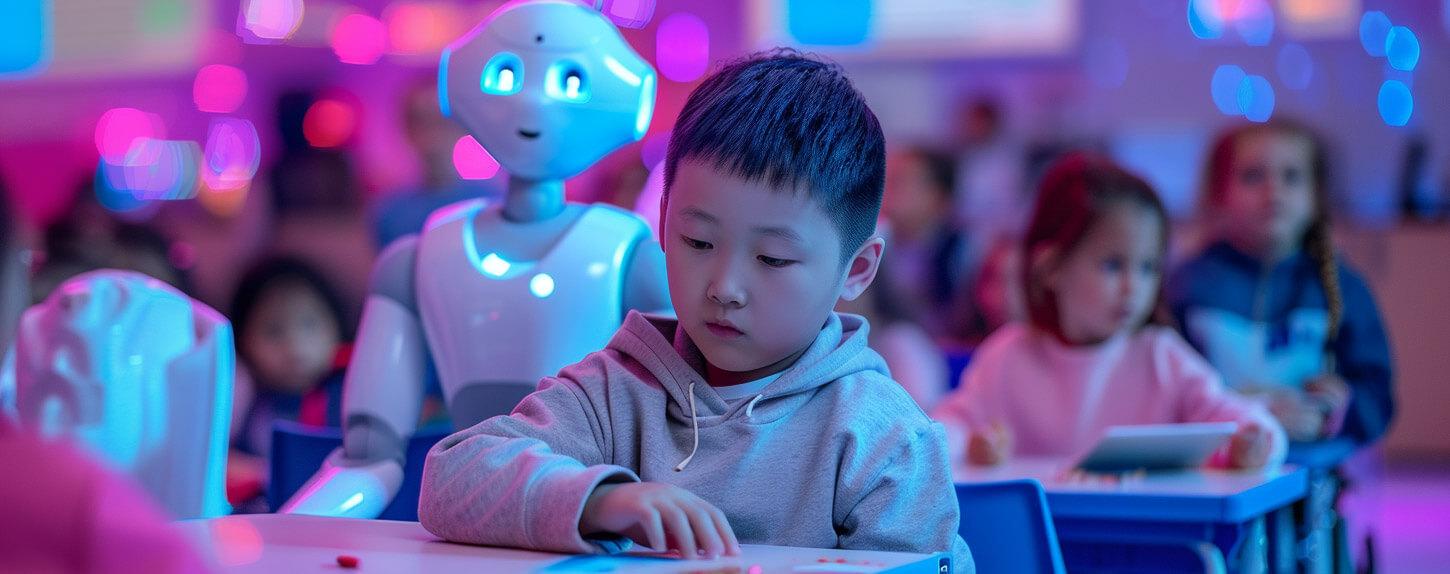
How AI Empowers Students with Disabilities: transforming Education and Support
Artificial Intelligence (AI) is rapidly transforming the educational landscape, offering innovative solutions for learners of all abilities. for students with disabilities, AI provides unique opportunities to access, engage, and thrive in academic environments that may have once posed meaningful challenges. From adaptive learning platforms to real-time speech-to-text tools, the integration of AI in education is redefining inclusive learning and support. In this extensive guide, we’ll explore how AI empowers students with disabilities, the tangible benefits it brings, real-world success stories, and practical tips for educators and parents alike.
The Power of AI in Special Education
The advancement of AI technology in special education has enabled a more personalized and accessible learning experience for students with a variety of disabilities, including physical, cognitive, sensory, and learning disabilities. Through complex algorithms and data-driven insights, AI tools can:
- Adapt content: Adjust instructional materials to suit each student’s unique needs and learning pace.
- Offer assistive technologies: Provide real-time transcription, visual supports, and voice recognition for improved engagement.
- Enhance interaction: Facilitate interaction for students with speech or language impairments.
- Monitor progress: Track academic performance and provide insights for tailored support.
As schools seek to foster greater inclusivity, AI-driven tools are playing a pivotal role in bridging learning gaps and empowering all students to achieve their fullest potential.
Key Benefits of AI for Students with Disabilities
-
Personalized Learning Paths
AI algorithms assess student strengths, challenges, and preferences to deliver tailored lesson plans and practice activities. This ensures that each learner receives just the right level of support and challenge, minimizing frustration and maximizing achievement.
-
Real-Time Support and Feedback
Tools such as AI-powered text-to-speech, speech-to-text, and image recognition enable students with reading, writing, or visual impairments to access information and express themselves in ways that work best for them, in real time.
-
Enhanced Communication Tools
For students with non-verbal autism, speech or language difficulties, AI-powered communication apps and Augmentative and Choice Communication (AAC) devices offer intuitive ways to communicate using symbols, pictures, or predictive text.
-
Improved Accessibility Across Devices
AI ensures smart device compatibility and seamless access to educational content across laptops, tablets, and mobile phones, making learning possible anytime, anywhere.
-
Automated Administrative Support
AI chatbots and virtual assistants can help with scheduling, reminders, and routine queries, enabling students to manage their academic responsibilities with greater independence.
Real-World Examples: AI in Action
The practical impact of AI on empowering students with disabilities is already visible in classrooms around the world. Hear are a few notable examples:
-
Microsoft Immersive Reader:
Designed for students with dyslexia and other reading challenges, this AI-powered tool assists with text decoding, comprehension, and fluency through text-to-speech, grammar highlighting, and translation.
-
Voiceitt:
Voiceitt uses advanced AI to interpret the impaired or non-standard speech of users, making it possible for people with speech disabilities to communicate clearly with others and with digital devices.
-
Seeing AI:
Developed by Microsoft, Seeing AI is a narration app for the visually impaired. It describes people, text, and objects, turning the visual world into an audible experience.
-
Otter.ai:
This real-time transcription service assists students with hearing impairments by providing live captions during lectures and discussions.
First-Hand Experience: Student Stories
emily’s journey: Diagnosed with dysgraphia, Emily struggled with handwriting and written assignments. With the introduction of an AI-based speech-to-text request in her classroom, Emily began dictating her essays. for the first time, she could keep pace with her peers, boosting her confidence and love for learning.
Michael’s independence: Michael is a high school student with cerebral palsy who uses an AI-powered eye-tracking device to navigate educational software hands-free. This technology has given him newfound autonomy in the classroom and enabled him to pursue his academic interests without barriers.
These stories are just two of countless examples illustrating how AI is providing personalized, dignified, and effective support for students with disabilities.
practical Tips: Getting Started with AI in Special education
-
Evaluate Student Needs:
Begin by assessing each studentS unique strengths, tech proficiency, and areas requiring support. Collaborate with special education professionals for a holistic approach.
-
Research AI Tools:
Explore a range of AI-driven apps,platforms,and devices tailored for specific disabilities. Look for tools with strong accessibility features, positive user ratings, and active support communities.
-
Ensure Data Privacy:
When adopting new technology, prioritize student privacy and ensure that any AI platform complies with established data protection regulations such as FERPA or GDPR.
-
Provide Ongoing Training:
Invest in regular training for educators, students, and caregivers to maximize the benefits of AI tools.
-
Encourage Feedback and Adaptation:
Continuously solicit feedback from students and teachers to fine-tune tool selection and usage, ensuring optimal outcomes.
The future of AI and Accessibility in Education
The intersection of AI and inclusive education is only just beginning to reveal its transformative potential. As artificial intelligence technology evolves, we can anticipate:
- Smarter, more intuitive AI systems for learners with complex needs
- Greater customization of educational experiences
- expanded availability of accessible resources in multiple languages
- Stronger collaboration between technology developers, educators, and disability advocates
By embracing innovation and fostering an inclusive mindset, schools and families can unlock new possibilities for students with disabilities.
Conclusion
In today’s digital era, AI empowers students with disabilities by breaking down barriers to learning and communication. from personalizing education to enabling independence, the impact of AI is profound and far-reaching. For educators, parents, and policymakers, embracing AI-driven educational technology is a crucial step towards building a more inclusive, accessible, and equitable future for all learners. As we continue to innovate, the promise of truly empowered education for students with disabilities is not just a vision—it’s rapidly becoming a reality.