
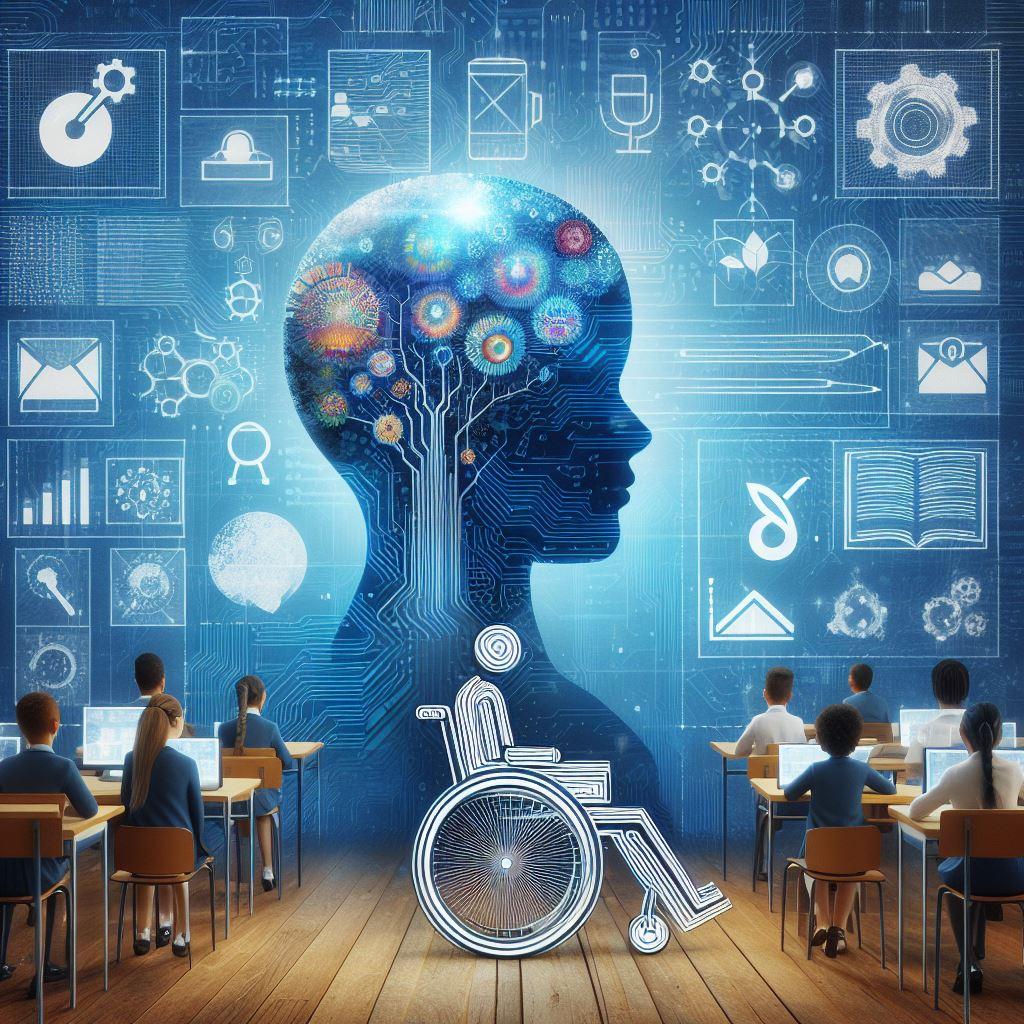
How AI Is Bridging the Gap in Special Education: Revolutionizing Support for Students with Special needs
In recent years, artificial intelligence (AI) has made a profound impact on the field of education. As technology rapidly evolves,educators and families alike are exploring new ways to harness AI’s power for meaningful progress. For students with special needs, access to quality education and personalized support has always presented unique challenges. Today, AI is bridging the gap in special education, offering innovative solutions that enhance learning, accessibility, and inclusion for millions of children worldwide.
Understanding Special Education Needs
special education encompasses instructional programs, educational services, and support systems designed to meet the individual needs of students who have learning disabilities, cognitive impairments, autism spectrum disorder, behavioral, or emotional challenges, and other exceptionalities. Despite significant strides, students with special needs frequently enough face barriers such as:
- Lack of customized learning materials
- Insufficient access to one-on-one support
- Barriers in interaction and social interaction
- Physical or technological limitations
- Limited resources and trained staff
AI in special education is emerging as a force of change, helping to mitigate these challenges and empower every learner to reach thier full potential.
How AI Is Transforming Special Education
The integration of AI-driven technology in classrooms and at home is revolutionizing special education. Here’s how artificial intelligence tools are making a real difference:
1.Personalized Learning Pathways
AI algorithms can analyze students’ abilities, preferences, and progress to create highly customized lesson plans. These adaptive learning systems:
- Adjust difficulty levels in real time
- Identify strengths and areas needing enhancement
- Offer multisensory approaches (visual, auditory, kinesthetic)
- Allow students to learn at their own pace
2. Assistive Technologies for Accessibility
AI-powered assistive tools are breaking down barriers for students with disabilities. Technologies such as:
- Speech-to-text and text-to-speech converters for those with reading or writing challenges
- Real-time captioning and transcription services for students with hearing impairments
- AI voice assistants for students with mobility or communication impairments
- Smart communication boards and augmentative and option communication (AAC) apps
3.Behavioral Support and Early Intervention
AI-driven analytics can detect patterns in student behavior, engagement, and emotional states. This allows educators to:
- Identify early signs of struggles or distress
- Tailor behavioral interventions swiftly
- Develop personalized behavior management strategies
- Promote a safe and positive learning surroundings
4. Enhanced Communication for Nonverbal Learners
For students on the autism spectrum or with speech and language disorders, AI tools enable:
- Picture-based communication systems
- Emotion recognition and feedback
- Automated translators for sign language
5. Support for Teachers and Administrators
AI automates administrative tasks, tracks student progress, and recommends individualized education plan (IEP) adjustments. This frees teachers to focus more on meaningful interactions and instructional planning.
Benefits of AI in Special Education
Embracing AI-powered special education tools benefits students, educators, schools, and families in several significant ways:
- Increased personalization: tailored instruction and resources meet each student’s unique needs.
- Improved accessibility: Assistive technologies make learning materials available to all, irrespective of ability.
- Greater independence: Students access support and communicate more easily, fostering confidence and autonomy.
- Efficient progress monitoring: Real-time data tracking enables timely interventions and goal adjustments.
- Enhanced collaboration: AI facilitates seamless sharing of insights among teachers, therapists, and parents.
- Scalability: AI tools help address shortages of specialized staff in underserved areas or rural communities.
Real-Life Examples: AI Bridging the Gap
Let’s examine some promising case studies and first-hand experiences that illustrate how AI is bridging the gap in special education:
Case study 1: AI-Powered Reading Apps Empowering Dyslexic Students
Schools across North America have successfully integrated AI reading assistants that use natural language processing to:
- Read aloud complex texts
- Highlight words and phrases
- Offer definitions and reading strategies
- Track and adapt to each student’s reading level
Result: Significant improvements in reading comprehension and classroom participation among dyslexic students.
Case Study 2: AI-Driven Communication Boards for Autism
An elementary school in the UK implemented AI-powered AAC apps on tablets for nonverbal autistic students. Teachers noted:
- Greater independence in expressing needs and emotions
- Reduction in classroom disruptions
- Higher social engagement with peers
A parent shared, “For the first time, my son can clearly communicate with his classmates and teachers. It’s life-changing.”
Case Study 3: Early Detection of Behavioral Issues Using AI Analytics
A district in California piloted an AI-based behavioral monitoring platform that analyzed students’ engagement patterns. The software triggered alerts for early intervention, resulting in:
- Earlier support for at-risk students
- More effective and targeted behavioral plans
- increased student retention and success
Practical Tips for Integrating AI in Special Education
- Assess current needs: Identify specific challenges faced by students, teachers, and support staff.
- Research AI tools: Look for solutions with proven results, accessibility features, and user-friendly interfaces.
- Involve stakeholders: Collaborate with parents, therapists, and IT professionals for effective implementation.
- Prioritize data privacy: Ensure compliance with privacy laws and protect sensitive student information.
- Provide training: Offer professional progress to help teachers confidently use AI technologies.
- Monitor impact: Regularly evaluate student progress and adjust strategies as needed.
Overcoming Challenges and Considerations
While AI in special education offers transformative potential, it’s significant to address possible challenges:
- Equitable access: Advocate for funding and policies to ensure all schools and families can access AI tools.
- Bias in AI algorithms: Choose tools developed with diverse data sets to avoid skewed outcomes.
- Human connection: Remember that AI should supplement, not replace, the empathy and expertise of educators.
The Future of AI in Special Education
As artificial intelligence continues to evolve, its applications in special education will become even more sophisticated. Future AI innovations may include:
- Predictive analytics to anticipate individual learning trajectories
- virtual reality (VR) and augmented reality (AR) simulations for experiential learning
- Deeper integration of multimodal feedback—voice, gesture, facial expression recognition—to enhance communication
The goal remains the same: creating inclusive, accessible, and empowering learning environments for every student with special needs.