
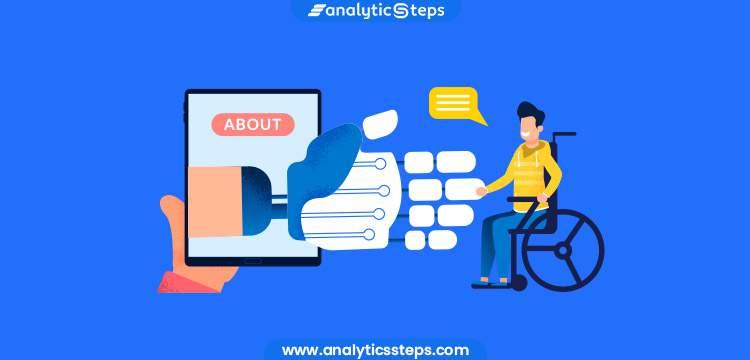
How AI Is Transforming Support for Students with Disabilities: Enhancing Accessibility and Learning
In recent years, artificial intelligence (AI) has brought about revolutionary changes across sectors, and education is no exception.For students with disabilities, AI-driven technology is breaking barriers, enabling greater accessibility, personalized learning, and academic success. This article delves into how AI is transforming support for students with disabilities, explores its many benefits, and provides actionable insights for educators, students, and parents.
Table of Contents
- AI in Education: An Inclusive Revolution
- Benefits of AI for Students with Disabilities
- Key AI Technologies Enhancing Accessibility
- AI-Driven Personalized Learning for Special Needs
- Real-Life Success Stories and Case Studies
- Practical Tips for Educators & Parents
- Future Trends and Challenges
- Conclusion
AI in Education: An Inclusive Revolution
Inclusivity in education has always been a challenge, especially for students with learning disabilities, visual or hearing impairments, and mobility challenges. Traditional support methods, while helpful, frequently enough fall short of providing the kind of personalized, instant support many students need. AI is bridging this gap by offering adaptive tools and intelligent technologies that cater individually to students’ needs.
With advancements in machine learning, natural language processing, and computer vision, schools and institutions are now able to deliver accessible, flexible, and engaging learning experiences to all. By leveraging AI-powered accessibility tools, the education sector is on a path toward truly equal opportunities.
Benefits of AI for Students with Disabilities
Harnessing AI can bring about significant advantages for students with disabilities and their wider learning community. Here are some of the most notable benefits:
- Enhanced Accessibility: AI-driven tools break down barriers to accessing content, making learning materials available in multimedia formats (text, audio, video, and braille).
- Personalized Learning: Adaptive algorithms tailor educational content and pacing to each student’s unique strengths and needs.
- Real-Time Feedback: Instant AI analysis enables students to identify mistakes and improve on the spot.
- Assistive Communication: Speech-to-text, text-to-speech, and language translation tools empower students with communication difficulties.
- Increased Engagement: Interactive AI platforms keep students motivated and engaged, reducing feelings of isolation.
- Teacher Support: AI frees up valuable teacher time by automating grading,generating learning analytics,and managing routine tasks.
Key AI Technologies Enhancing Accessibility
Several AI-powered technologies stand at the forefront of educational accessibility for students with disabilities. Below are some of the transformative tools currently in use:
1. AI-Powered Text-to-Speech (TTS) & Speech Recognition
- Text-to-Speech (TTS): Converts digital text into lifelike speech, aiding students with visual impairments or reading difficulties such as dyslexia.
- Speech-to-Text: Automatically transcribes spoken content into written text, benefitting students with hearing impairments or limited mobility.
2. Optical Character Recognition (OCR) and Image Recognition
- OCR technology: Scans printed or handwritten content—such as textbooks or notes—and converts them into accessible digital formats, supporting blind or low-vision students.
- Image Description: AI can “see” images and provide contextual descriptions, making visual content accessible to all learners.
3. Smart Assistive Apps and Devices
- AI chatbots: Offer 24/7 learning support, answer questions, and provide personalized guidance tailored for special education needs.
- Wearable devices: Tools such as smart glasses interpret and relay environmental cues or spoken content for students with hearing or visual challenges.
4. Language Translation and Communication Tools
- Real-time audio translation: For students with hearing impairments or those learning in a second language,AI offers instant language customization and sign language interpretation.
- Augmentative and Choice Communication (AAC) apps: These provide new avenues for nonverbal students to communicate using AI-driven interfaces.
AI-Driven Personalized Learning for Special Needs
one of the most profound impacts of AI in special education is the ability to personalize the learning journey for each student. AI-powered learning platforms monitor student progress in real time, dynamically adjust lesson difficulty, and recommend tailored resources. This ensures that students with learning disabilities,autism spectrum disorder,or ADHD receive suitable support at every step.
Personalized Learning: practical Examples
- Adaptive assessment tools adjust questions based on student responses, providing just the right level of challenge.
- Interactive platforms, like Khan Academy or Microsoft Immersive Reader, use AI to suggest additional content and reading support based on performance.
- Learning analytics dashboards allow educators and parents to track progress, set goals, and intervene early when learning gaps are detected.
Real-Life Success Stories and Case Studies
The real-world impact of AI-powered educational tools is best illustrated through the stories of students who have experienced meaningful change in their learning experiences. Here are a few standout examples:
case Study #1: AI for Dyslexia Support
A UK primary school implemented an AI-powered reading assistant that reads text aloud, highlights words, and helps with pronunciation.Students with dyslexia reported increased reading confidence and a significant advancement in test scores.
Case Study #2: Communication for Nonverbal Learners
In an inclusive classroom in California, AI-powered AAC apps gave nonverbal autistic students an independent voice. Teachers noted a dramatic increase in participation during group activities and higher overall engagement.
Case Study #3: AI and Visual Impairment
At a university level, students with visual impairments use smart glasses integrated with AI-powered OCR and image recognition. This tech provides instant descriptions of their surroundings, from whiteboards to art projects, enabling them to participate fully in academic life.
Practical Tips for Educators & Parents
applying AI in the classroom or at home doesn’t have to be overwhelming. here are some tips to ensure you make the most out of AI for supporting students with disabilities:
- Start Small: Begin by integrating one or two AI tools (like text-to-speech or language translation) and gauge their effectiveness.
- Get Feedback: regularly check in with students to ensure tools meet their needs and preferences.
- Provide Training: Both educators and students benefit from short training sessions to maximize tool usage.
- Encourage self-Advocacy: Teach students to explore and choose the AI tech that best supports their individual learning styles.
- Work Collaboratively: Engage parents, therapists, and IT specialists to ensure complete support and data privacy.
- Stay Updated: Technology evolves quickly, so keep an eye on new AI-powered educational tools designed for accessibility.
Future Trends and Challenges
As AI becomes more embedded in mainstream education, its potential to overhaul accessibility in learning will only grow. Looking ahead,we can expect:
- Improved personalization algorithms that respond to real-time emotional cues and learning habits.
- Greater integration of AI-powered virtual and augmented reality for immersive,multi-sensory learning experiences.
- Expanded language and cultural inclusion, thanks to advanced translation and localization features.
Still, challenges remain. Ensuring data privacy, avoiding algorithmic bias, and providing equitable access to technology are critical.Schools must work with developers and policymakers to make sure AI is implemented ethically and inclusively.
Conclusion
The transformative power of AI in education is unmistakable, especially for students with disabilities. From adaptive learning systems to AI-powered communication tools, the ways in which technology can enhance accessibility and learning continue to expand. by leveraging these tools thoughtfully and inclusively, educators, parents, and institutions can create environments where every student is empowered to achieve their full potential.
As we look to the future, investing in AI-driven solutions—while staying mindful of challenges—will be key to building an accessible, equitable, and enriching educational landscape for all.
Keywords: AI in education, accessibility, students with disabilities, AI-powered educational tools, personalized learning, inclusive classrooms, assistive technology, AI accessibility tools.