
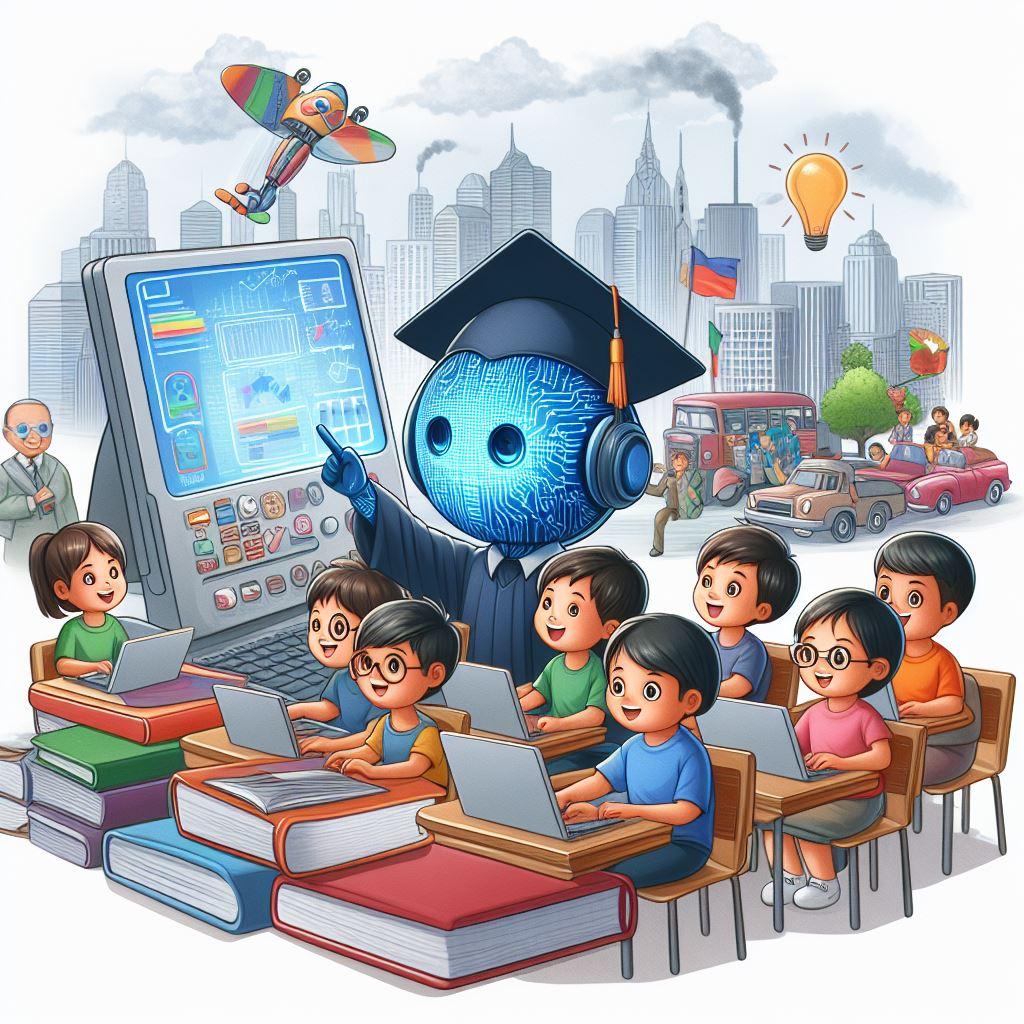
how AI is Transforming Support for Students with Disabilities: Key Benefits and Future Impact
Artificial Intelligence (AI) is revolutionizing the educational landscape, especially for students with disabilities. With adaptive tools, personalized learning, and innovative accessibility features, AI bridges gaps and empowers diverse learners to reach their full potential. In this article, we delve into how AI is transforming support for students with disabilities, highlight key benefits, offer practical tips, and examine the future potential of AI-powered inclusive education.
Introduction: the Role of AI in Inclusive Education
For decades, students with disabilities have faced unique challenges in mainstream education—ranging from inaccessible materials and interaction barriers to limited individualized support. However, recent advancements in AI-driven educational technology are creating more inclusive learning environments. Through machine learning, natural language processing, and computer vision, AI can adapt to the needs of every student, enabling equitable access to education like never before.
Inclusive education isn’t just a buzzword; it’s a critical step toward ensuring that every learner, regardless of ability, achieves their academic and personal best. With AI,teachers,parents,and special educators have new opportunities to provide personalized support and interventions—making education a true right,not a privilege.
The Key Benefits of AI for Students with Disabilities
AI brings a suite of practical solutions to common obstacles faced by students with disabilities, fueling a revolution in special education support. Here’s how:
1. Personalized Learning Experiences
- Adaptive Learning Platforms: AI-powered platforms like DreamBox, Smart Sparrow, and Microsoft Reading progress assess each student’s abilities and learning style, dynamically adjusting materials and pacing.
- Customizable content: Visual, auditory, or kinesthetic preferences can be set within platforms to accommodate students with autism, dyslexia, ADHD, or sensory impairments.
2. Improved Communication and Accessibility
- Real-Time Speech Recognition: Tools like Google’s Live Transcribe or Microsoft’s Translator provide instant speech-to-text services for students who are deaf or hard of hearing.
- AI-Powered Screen Readers: Applications such as JAWS and NVDA leverage AI to make websites,e-books,and documents navigable for students with visual impairments.
- Image to Text: Computer vision apps convert printed text or classroom whiteboards into accessible formats.
3. Enhanced Engagement and Motivation
- gamification: AI algorithms can personalize gamified content to match student abilities, boosting motivation and participation among learners with cognitive or emotional disabilities.
- Bright Tutoring Systems: Programs like Carnegie Learning and Knewton have built-in AI tutors that guide students step-by-step through lessons, providing hints and encouragement tailored to each learner’s progress.
4.Automation of Administrative Tasks
- IEP (Individualized Education Programme) Management: AI streamlines the creation, monitoring, and updating of IEPs, allowing teachers to focus more on direct student support.
- Automatic Grading and Assessment: AI tools can analyse assignments and provide immediate,personalized feedback—freeing educators to spend more time on one-on-one instruction.
5. Data-Driven Insights for early Intervention
- Early Warning Systems: AI analyzes learning patterns to flag students who might need extra support, enabling timely and preventative interventions.
- Progress Tracking: Machine learning models help educators identify gaps and tailor instructional strategies to evolving student needs.
Real-World Case Studies: AI Transforming Disability Support
Let’s look at how these benefits play out in actual educational settings:
- Speech Recognition at a Public School: A middle school in California implemented google Live transcribe for students with hearing impairments. Results: students participated more in classroom discussions, and teachers noted higher academic engagement.
- AI Reading Companion for Dyslexic Students: A UK primary school used the Ghotit Real Writer grammar and spell-checking software, designed specifically for students with dyslexia, powered by AI. Results: Students completed writing assignments more independently and with fewer errors.
- Math Support via AI Chatbot: In a pilot study, an elementary school in Texas deployed ChatGPT as a math tutor for children with learning disabilities. Results: Students demonstrated statistically significant improvements in problem-solving abilities and classroom confidence.
“AI-powered learning has opened doors for our students previously thought closed. It adapts, it listens, and most importantly, it empowers.”
— Special Education Coordinator,Texas
frist-Hand Experiences: Voices from educators and Students
AI isn’t just about the technology—it’s about the real,tangible impacts on lives. Here are some first-hand accounts:
- Educator Perspective: “With AI screening, I can identify struggling readers much earlier and adjust my teaching without waiting for end-of-term results. That means less frustration for my students and more targeted support.”
- Student Perspective: “I use a speech-to-text app for my English class. for the first time, I feel like my ideas matter, even if writing is hard for me.”
Practical Tips for Schools & Parents: Leveraging AI Effectively
Integrating AI into special education classrooms doesn’t have to be daunting. Here are some ways schools and families can make the most of these powerful tools:
-
Start with Accessible Platforms:
- Choose AI tools with robust accessibility features (text-to-speech, speech-to-text, adjustable UI, etc.)
- Examples: Microsoft Immersive Reader,Kurzweil Education,Otter.ai for note-taking
-
Train Educators and Students:
- Offer professional progress and hands-on training sessions to get pleasant with AI technology.
- Encourage collaborative exploration—let students and teachers share best practices.
-
Ensure Data Privacy:
- Choose solutions compliant with regulations like FERPA, GDPR, and COPPA.
-
Prioritize Ethical Use:
- Involve students and families in tool selection to respect preferences and privacy.
- Monitor algorithms for bias to ensure equity for all learners.
The Future of AI in Support for Students with Disabilities
The possibilities AI offers for inclusive education are just beginning to unfold. Here are some exciting innovations on the horizon:
- Multimodal Learning Analytics: Soon, AI may combine speech, gesture, eye-tracking, and biometric data to personalize instructional support even more deeply.
- Emotion-Aware Computing: Advanced AI will be able to recognize student frustration or confusion,adapting teaching methods in real-time.
- Universal Design for Learning (UDL) Integration: AI can streamline the delivery of universally designed content, benefiting all learners—not just those with IEPs.
- Language Translation and Augmentative Communication: Instantaneous translation and improved augmentative and alternative communication (AAC) systems will further remove communication barriers.
- Expanded Remote and Hybrid Learning: AI-powered platforms will make remote learning environments as supportive and engaging as in-person classrooms for students with disabilities.
Conclusion: Paving the Way to True Educational Equity
AI represents a monumental leap forward in educational accessibility for students with disabilities. by personalizing learning, enhancing communication, automating routine tasks, and delivering actionable insights, artificial intelligence is making learning more inclusive, equitable, and effective.
Schools, educators, and families that embrace AI-driven tools are positioned to provide students with disabilities the support they deserve—unlocking academic achievement, boosting self-confidence, and fostering lifelong skills needed for the modern world.
As the technology matures, collaboration between educators, students, developers, and disability advocates is essential to guarantee these benefits reach every learner. The future promises not just accommodation, but genuine empowerment for people of all abilities through the power of AI.