
How AI Is Transforming Support for Students with Disabilities
Artificial intelligence (AI) is having a revolutionary impact on education, especially for students with disabilities. Across classrooms and digital platforms,AI-powered solutions are making learning more accessible,inclusive,and tailored to individual needs. In this article, we’ll explore how AI is transforming support for students with disabilities, discuss it’s key benefits, highlight practical tips, share inspiring case studies, and look at future trends. Whether you’re an educator, parent, or student, understanding these advancements can help maximize the full potential of accessible education.
Understanding the Role of AI in Education for Students with Disabilities
the integration of AI into educational resources and support systems has opened up new doors for learners with a wide range of disabilities. Using a blend of machine learning, natural language processing, and computer vision, AI-powered assistive technologies help students overcome barriers that customary tools often can’t address. The result? Enhanced dialog, independence, and learning outcomes.
Common Disabilities Supported by AI
- Visual Impairments
- Hearing Impairments
- Learning Disabilities (such as dyslexia, ADHD)
- Physical Disabilities
- Autism Spectrum Disorders
AI-Powered Assistive Technologies: Key Solutions
The rapid development of AI technologies has given rise to innovative tools designed specifically to support students with special needs. Here are some of the most impactful AI-powered assistive technologies:
1. Text-to-Speech (TTS) and Speech-to-Text Technologies
AI-enhanced text-to-speech solutions convert written text into natural-sounding audio, which benefits students with visual impairments and reading difficulties. Conversely, speech-to-text tools transcribe spoken words into written text in real time, aiding students with mobility issues or hearing loss.
- Example: NaturalReader and Google’s Voice Typing are popular tools in classrooms and at home.
2. AI-Based Real-Time Captioning and Translation
AI-driven captioning software like Microsoft Translator and Google Live Transcribe provide instant subtitles and translations, making lectures accessible for students who are deaf, hard of hearing, or non-native speakers.
3. Personalized Learning Platforms
Adaptive learning systems powered by AI assess individual strengths and weaknesses and modify content delivery accordingly. this personalization is particularly beneficial for students with disabilities who may need content at a diffrent pace or in alternative formats. examples include DreamBox and Smart Sparrow.
4. Visual Recognition and Object Identification Tools
For students with visual impairments,AI apps like Seeing AI describe surroundings, people, and even read documents aloud, fostering independence and confidence.
5. Communication Apps for non-Verbal Students
AI-driven augmentative and alternative communication (AAC) devices enable non-verbal students to express themselves using predictive text and symbol-based communication, enhancing social interaction and classroom participation.
Benefits of AI for Students with Disabilities
AI’s impact goes beyond mere convenience; it’s actively enhancing the educational experience in meaningful ways:
- Personalized Learning: Tailors teaching methods, content, and pacing to each student’s unique abilities and challenges.
- Greater Independence: AI tools reduce dependence on human aides, empowering students to manage their own learning.
- Improved Communication: Real-time translation, captioning, and AAC devices facilitate better interaction with teachers and peers.
- Accessible Content: Digital content can be instantly converted to braille, audio, or simplified language.
- Early Intervention: AI can detect learning patterns and alert educators to potential concerns,allowing for prompt support.
- Reduced Stigma: Global tools help all learners, fostering acceptance and inclusivity.
Case studies: AI-Powered Support in Action
Case Study 1: AI-Powered reading Tools for Dyslexia
A public school district adopted an AI-based reading assistant designed for students with dyslexia. The program analyzed mispronunciations, provided real-time corrective feedback, and delivered exercises based on individual progress.The result? A 30% increase in reading proficiency scores, as well as a notable boost in students’ self-esteem and participation.
Case Study 2: Real-Time captioning for Hearing Impaired Students
At a university, students who were hard of hearing accessed AI-generated live captions during lectures. This breakthrough eliminated the need for advance note-taking requests and fostered greater inclusion. Faculty noted increased engagement and improved academic outcomes among these students.
Case Study 3: Visual Assistance through AI-Powered Apps
A blind high school student used Microsoft’s Seeing AI on her smartphone, allowing her to independently navigate the school environment, read textbooks, and even participate in science labs by receiving real-time visual descriptions.This tool transformed her academic and social life.
Practical Tips: implementing AI Support for Students with Disabilities
Here are some expert tips for integrating AI solutions to support diverse learners:
- Assess Individual Needs: Before adopting AI tools, evaluate each student’s strengths, challenges, and personal preferences.
- Choose User-Friendly Technologies: Opt for solutions with intuitive interfaces and accessible support documentation.
- Train Educators and Staff: Offer professional development on AI tools to ensure effective implementation and troubleshooting.
- Encourage Feedback: Create channels for students, parents, and teachers to share experiences, helping to refine AI tool selection and usage.
- Maintain Privacy and Security: Use only vetted and compliant platforms that protect student data and privacy.
- pair AI with Human Support: AI should complement—not replace—human empathy, mentorship, and social connection.
Challenges and Considerations
While AI is rapidly advancing accessibility, challenges remain:
- Digital Divide: Not all families or schools have access to the latest technologies or reliable internet connectivity.
- Bias and Accuracy: AI models need to be rigorously tested to avoid biases or errors, especially in diverse student populations.
- Cost: High-quality AI tools can be expensive, creating inequality in access.
- Privacy Concerns: Handling sensitive student data requires strict security protocols.
Schools and policymakers must work together to address these barriers and ensure equitable access to AI resources.
Future Trends: The Next Frontier for AI in Accessible education
AI technology will continue to evolve in ways that further empower students with disabilities. Emerging trends include:
- Emotion Recognition: AI systems can monitor student engagement and mood,prompting timely support or intervention.
- Predictive Analytics: early identification of academic challenges or mental health needs allows for proactive support.
- Virtual Reality (VR) & Augmented Reality (AR): Combined with AI, VR/AR can create immersive, accessible learning experiences for all.
- More Inclusive Design: Universal design principles are being embedded in AI tools from the start, making accessibility standard, not an afterthought.
Conclusion: Embracing an Inclusive Future with AI
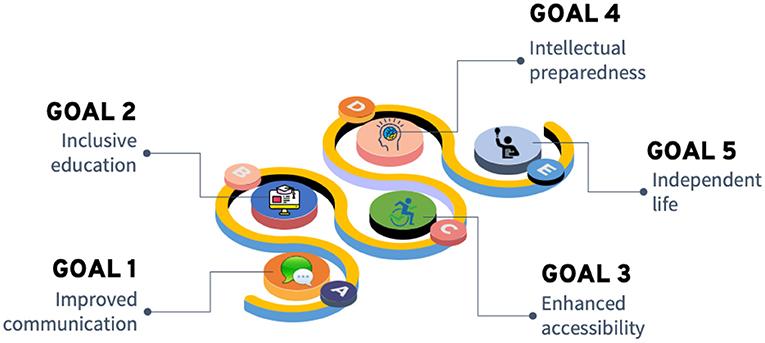
AI is transforming support for students with disabilities, breaking down barriers and opening new pathways for accessible, inclusive, and personalized education. From real-time captioning and adaptive learning platforms to intelligent communication devices, AI-driven tools are empowering students to reach their potential—academically, socially, and emotionally.The journey is ongoing, but with continued innovation and commitment to inclusion, AI offers a brighter, more equitable future for all learners.