
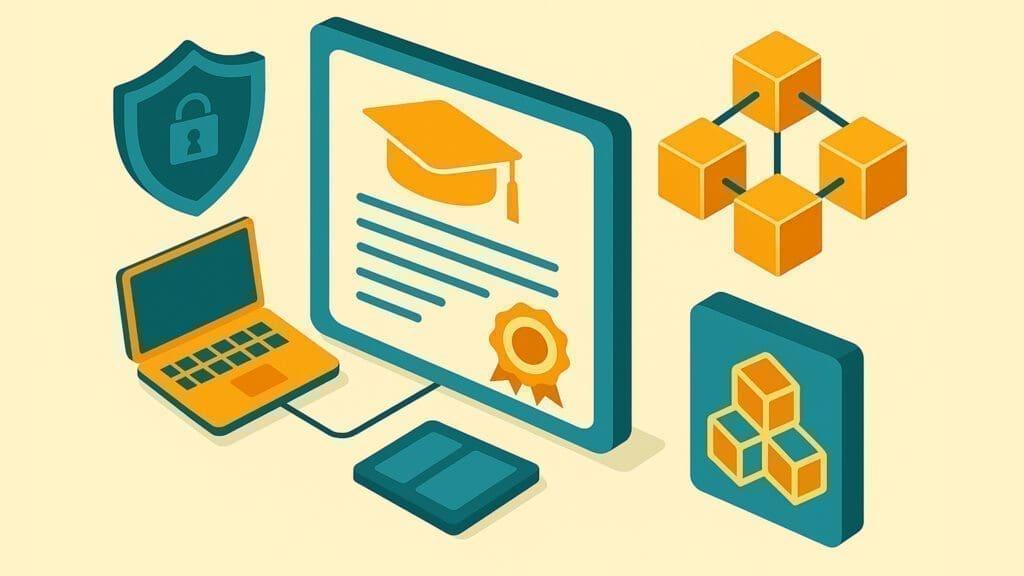
How Blockchain is Revolutionizing Qualification Verification: Ensuring Credential Authenticity
Qualification verification is rapidly evolving, thanks to the explosive adoption of blockchain technology. As fake degrees and credential fraud become more sophisticated, customary methods struggle to guarantee the authenticity of educational qualifications and professional credentials. Enter blockchain—a decentralized, tamper-proof solution that is revolutionizing the way we validate and share qualifications. In this article, we dive deep into how blockchain is transforming credential verification, its real-world applications, benefits, challenges, and practical implementation tips.
Understanding the Challenges of Traditional Credential Verification
before blockchain became a buzzword in education and recruitment, institutions and employers relied on labor-intensive and slow methods to verify candidate qualifications. The typical process included:
- Manual checks with issuing institutions
- Document attestation and notarization
- Third-party background checks
- Physical certificates and transcripts
These processes are not only time-consuming but also vulnerable to fraud, forgery, and human error. Fake certificates can be purchased online, and system breaches can alter or delete qualification records.This has serious implications for educational institutions, organizations, employees, and even governments worldwide.
What is Blockchain and How does it work in Credential Verification?
Blockchain technology is a distributed digital ledger that stores data across a network of computers. The key features that make it ideal for credential authenticity include:
- Decentralization: No single party controls the data.
- Immutability: Once recorded, information cannot be altered or deleted.
- Clarity: Transactions can be verified by all participants.
- Security: Advanced encryption protects data against unauthorized access.
In the context of qualification verification, credentials are issued as digital certificates on the blockchain. Their validity can be instantly verified by any authorized party, removing the risks and delays associated with traditional verification methods.
Key Benefits of Blockchain for Credential Verification
The implementation of blockchain-based credential verification offers tangible advantages over legacy systems:
- Fraud prevention: Credentials stored on the blockchain cannot be tampered with,ensuring authenticity for employers and educational institutions.
- Efficiency: Instantaneous verification eliminates time-consuming background checks and paperwork.
- User-Controlled Privacy: Individuals can control who accesses their records, preserving personal data privacy.
- Cost Savings: Reduction in administrative costs and resource allocation for verification processes.
- Portability: Digital credentials are easily accessible and transferable across borders and industries.
- Interoperability: Standardized formats enable seamless integration between various educational platforms and employers.
How Blockchain-Based Qualification Verification Works
- Issuance: Educational institutions or certifying authorities issue digital credentials or certificates to students via a blockchain.
- Storage: Each credential is encrypted and recorded on the blockchain, associated with a unique digital identity.
- Sharing: graduates or professionals share access to their credentials with employers or third parties through a secure link or QR code.
- Verification: Employers use blockchain explorers or verification platforms to confirm the authenticity and validity of the credentials in real time.
Case Studies: Blockchain in Real-World Credential Verification
1. MIT: digital Diplomas
The Massachusetts Institute of Technology (MIT) pioneered blockchain-verifiable digital diplomas for its graduates. Through the Blockcerts platform, students receive cryptographically signed digital certificates, easily verifiable by employers anywhere in the world.
2. University of Nicosia: Blockchain Degrees
The University of Nicosia, Cyprus, is another trailblazer, issuing certificates and degrees on the Bitcoin blockchain. This approach eliminates the risk of fake degrees and offers graduates lifelong ownership of their verifiable academic records.
3. The Learning Machine & World Bank Partnership
The World Bank worked with Learning Machine (now Hyland Credentials) to pilot a blockchain-powered credential verification system in developing nations, improving transparency, trust, and efficiency for both education and employment markets.
Challenges of Blockchain for Credential Verification
Despite the promise, some challenges must be addressed for mainstream adoption:
- Interoperability: Not all blockchains use the same standards, creating silos between systems.
- Data Privacy: Storing sensitive personal data securely while complying with regulations like GDPR.
- Awareness & Acceptance: Industries and institutions must understand and trust blockchain processes.
- Technical Barriers: The need for technical expertise to implement and maintain blockchain solutions.
- cost of implementation: Initial progress and rollout costs can be notable for large institutions.
Practical Tips for Implementing Blockchain-Based Credential Verification
- Partner with Technology providers: Collaborate with established blockchain credentialing platforms to leverage their secure infrastructure and know-how.
- Educate Stakeholders: Offer training sessions for your administrative staff, students, and hiring partners to familiarize them with blockchain workflows.
- Ensure Regulatory Compliance: Work with legal experts to ensure compliance with privacy laws, data regulations, and accreditation standards.
- Focus on Interoperability: Choose solutions that support open standards and are compatible with multiple blockchains and credentialing systems.
- Invest in User Experience: The interface for issuing,sharing,and verifying should be intuitive and accessible for all users.
Personal Experience: A graduate’s Viewpoint
“when I graduated, my university provided me with a digital diploma backed by blockchain. I was able to share a secure verification link on my LinkedIn profile and with employers. The instant verification cut weeks off my job application process, proving beyond doubt that my credentials were genuine.”
– Sarah F., Software Developer
Future Outlook: Blockchain and the Global Credentialing Landscape
Looking ahead, blockchain’s role in qualification authentication is only set to grow. As cross-border employment and remote work increase, the demand for instantaneous, trustworthy, and globally verifiable credentials will skyrocket.Emerging trends include:
- Decentralized Identity Wallets: Allowing individuals to manage all their qualifications, certifications, and achievements securely in one mobile app.
- micro-credentials & Skill badges: Recognizing specific in-demand digital skills via blockchain, making hiring and upskilling more dynamic and precise.
- Expanding Use Cases: From universities to professional licensing bodies, healthcare certifications, and online course providers.
adoption by major organizations such as IBM, Microsoft, and several governments confirms that blockchain-based credential verification is moving from pilot projects to mainstream utility.
Conclusion
Blockchain technology is a game-changer in qualification verification, providing an unbreakable chain of trust and dramatically reducing credential fraud. For employers, educational institutions, and learners, blockchain ensures fast, secure, and clear validation of skills and achievements.While challenges remain, the future of credential authenticity is decentralized, digital, and destined to become the global norm.
If you’re an educational leader, HR professional, or forward-thinking student, now is the time to explore blockchain-powered solutions to safeguard the integrity of qualifications and open doors to a new world of trust, efficiency, and opportunity.