
How Blockchain is revolutionizing Verifying Qualifications: The Future of Credential Authentication
In a world were digital conversion is reshaping industries,credential authentication and qualification verification are no exceptions.
Traditional methods of verifying degrees, certifications, and professional credentials are often slow, expensive, and prone to fraud.
blockchain technology is ushering in a new era, revolutionizing how academic and professional qualifications are authenticated. In this article,
we’ll explore how blockchain is transforming credential verification, the benefits it brings, real-life examples, practical tips for institutions, and what the future holds for this cutting-edge solution.
Understanding Credential authentication & Blockchain’s Role
Credential authentication refers to the process of validating that a person’s claimed academic or professional qualifications are legitimate.
Employers, educational institutions, and regulatory agencies rely on this process to ensure trustworthy and obvious hiring, admissions, and licensing decisions.
Blockchain technology operates as a decentralized ledger — a digital record that’s nearly impossible to alter or hack, shared across a secure network of computers.
By leveraging blockchain for verifying qualifications, stakeholders can create an immutable, verifiable record of credentials, drastically reducing fraud and streamlining verification processes.
Why Traditional Credential Verification Falls Short
- Lengthy Processing Times: Manual checks require coordination between multiple institutions, slowing down hiring and enrollment.
- Vulnerability to Fraud: Fake diplomas and forged transcripts are easily created and circulated online.
- High Administrative Costs: Processing and verifying credentials involves considerable labor and often, associated costs.
- Lack of Transparency: Tracking the verification status is difficult for candidates and employers alike.
Blockchain offers a secure, transparent, and streamlined option to these outdated practices.
The Benefits of Blockchain for Credential Authentication
- Immutability: Once entered, credentials can’t be modified or deleted, which prevents tampering and enhances trust.
- Verification in Minutes: Candidates can prove qualifications instantly with digital verification, reducing delays in request processes.
- Cost Reduction: Blockchain automates verification, minimizing manual workloads and related costs for both issuers and verifiers.
- User Control: Individuals own their digital credentials and choose when and with whom to share them.
- Global Interoperability: Blockchain-based credentials are accessible from anywhere, enabling seamless cross-border verification.
- Enhanced Privacy: Sensitive information is securely encrypted, protecting users’ personal data.
How Blockchain-Based Credential Verification Works
Blockchain credential authentication platforms typically follow these steps:
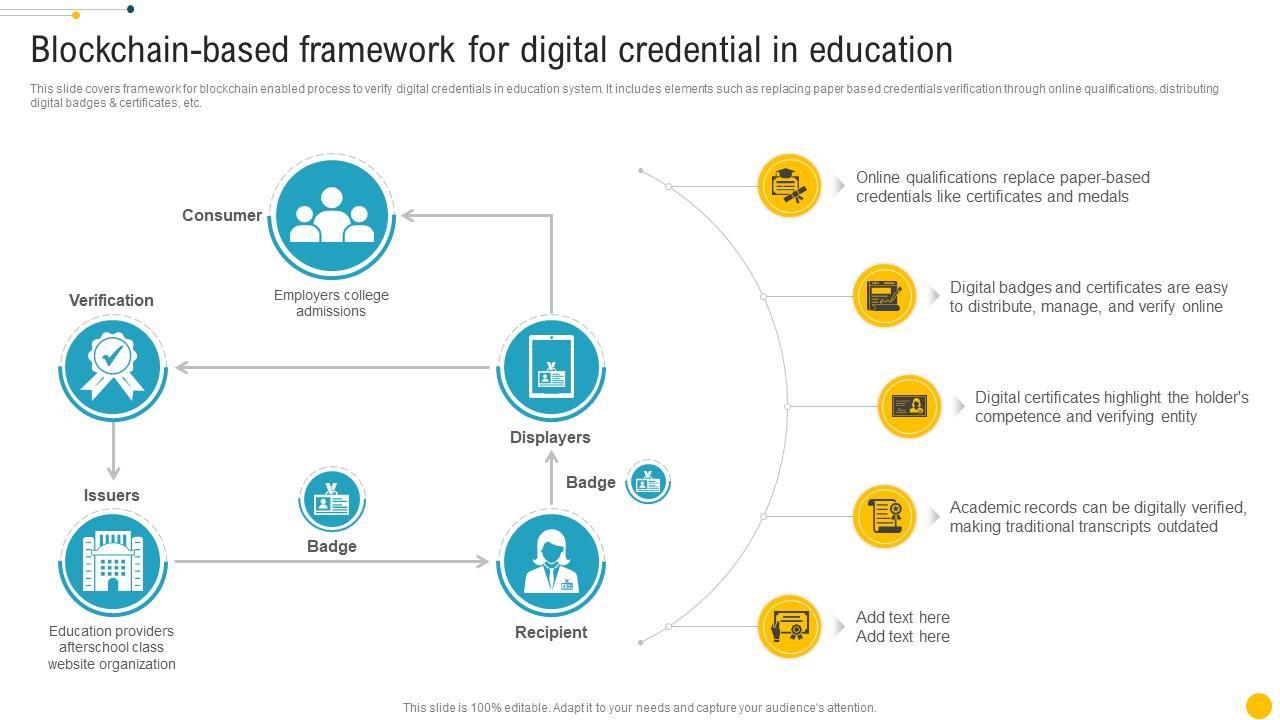
- Issuance: educational or professional institutions issue a digital credential (such as a diploma or license) to the blockchain, signed with their unique cryptographic key.
- Storage: Credential holders receive a digital certificate (often in the form of a QR code or digital wallet) containing proof of their qualification stored on the blockchain.
- Verification: Employers or other verifiers can check the validity of a credential by accessing the immutable blockchain record, confirming its authenticity instantly.
Smart contracts — self-executing contracts with coded conditions — can further enhance automation, enabling real-time verification and notifications.
Case Studies: Blockchain Credential Verification in Action
1. MIT and Digital Diplomas
The Massachusetts Institute of Technology (MIT) launched Blockcerts, an open standard for issuing and verifying academic credentials on the blockchain.
MIT students can now receive a tamper-proof digital diploma, which employers can verify worldwide by simply scanning a QR code.
This not only combats diploma fraud but also empowers graduates with greater control over their educational credentials.
2. Sony Global Education’s Blockchain Platform
Sony Global Education collaborated with IBM to develop a blockchain-based platform that authenticates student records and exam scores across multiple institutions, enhancing trust in educational exchanges and global mobility.
3. The national Health Service (NHS) – UK
To accelerate recruitment during the COVID-19 pandemic, the UK’s NHS piloted blockchain technology for verifying medical staff credentials.
The platform significantly reduced onboarding times, ensuring that qualified professionals could join the workforce faster.
Benefits for Stakeholders
For Educational Institutions
- Reduce administrative burden with automated, digital credential issuance.
- Promote institutional reputation by reducing the risk of fake degrees in circulation.
- Attract international students by ensuring globally-recognized, easily-verifiable qualifications.
For Employers
- Instantly verify applicants’ qualifications, speeding up hiring processes.
- Reduce the risk of fraud, improving workforce quality and compliance.
For Individuals
- Control over personal credentials and privacy.
- streamlined job and further education applications, especially for international opportunities.
Challenges and Considerations
- Adoption and Standardization: Widespread blockchain credential adoption requires coordinated industry standards.
- Technological Barriers: Implementation may be difficult for less technologically advanced institutions.
- Legal and Regulatory Hurdles: Varying privacy and data regulations must be navigated for global systems.
- Education and Awareness: Stakeholders need to be educated about blockchain’s potential and practical usage.
Practical tips for Institutions Implementing Blockchain credential Authentication
- Start Small: Launch pilot programs with selected credentials to test and refine the process.
- Engage with Industry Consortia: Collaborate with standards organizations and blockchain consortia for support and best practices.
- Prioritize Interoperability: Choose solutions compatible with open standards like Blockcerts to ensure verifiability across platforms.
- Focus on User Experience: Ensure that staff, students, and employers find the process intuitive and accessible.
- Stay Informed: Keep updated on evolving legal, privacy, and blockchain technology developments.
first-Hand Experience: A Blockchain Credential Holder’s Perspective
“when I graduated from university, I received my degree as a secure digital credential. A few months later, when applying for jobs abroad, employers could instantly verify my diploma using the blockchain link I provided,
saving weeks of paperwork and avoiding any risk of lost or falsified transcripts. Knowing that my qualification can’t be faked or altered has been a big confidence booster in my job search.”
— Maria Gomez, international job applicant
The Future of Credential Authentication: What’s Coming Next?
As more educational institutions, employers, and licensing agencies adopt blockchain-powered verification systems, we’ll see enhanced global mobility, increased trust, and greater efficiency.
Innovations such as decentralized digital identity (self-sovereign identity) may soon allow individuals to control a complete, lifelong digital portfolio of skills, certifications, and accomplishments — all easily shareable and instantly verifiable.
For the foreseeable future, blockchain is set to become the gold standard for credential authentication, transforming not only how we verify qualifications but also how we build trust in education and the workforce.
Conclusion
The shift to blockchain-based verification is more than just a technological innovation — it’s a paradigm change for education and employment.
By making credential authentication faster,more secure,and universally accessible,blockchain empowers individuals,streamlines institutional processes,and safeguards trust in qualifications.
As adoption increases, staying informed and engaged will be crucial for anyone involved in education, hiring, or professional licensing.
By embracing the future of blockchain credential authentication, we can unlock a world where qualifications are always reliable, fraud becomes a thing of the past, and opportunities can cross borders with ease and security.