
How Blockchain Revolutionizes Verifying Qualifications: Secure & Transparent Credentialing
In an increasingly digital world,the need for secure and transparent credentialing has never been more critical. From academic degrees to professional certifications, verifying qualifications can be a complex and frequently enough fraught process. Enter blockchain technology, a transformative solution that is revolutionizing how organizations and individuals manage and verify credentials. This article delves into the powerful role blockchain plays in secure and transparent credentialing, providing valuable insights, case studies, and practical tips for leveraging this technology to its fullest potential.
Understanding Blockchain in Credential Verification
At its core, blockchain is a decentralized, immutable digital ledger that records transactions across multiple computers so that any involved record cannot be altered retroactively. When used in the context of verifying qualifications, blockchain offers an unparalleled level of security and transparency, helping combat fraud, enhance trust, and streamline the verification process.
- Decentralization: Eliminates single points of failure, reducing the risk of data manipulation.
- Immutability: Records cannot be changed once added, ensuring permanent and tamper-proof credential history.
- Transparency: Promotes openness between credential issuers, holders, and verifiers.
- Automation: Smart contracts automatically validate credentials when set criteria are met.
Benefits of Blockchain-Based Credentialing Solutions
Moving qualification verification to blockchain platforms offers numerous advantages over conventional methods. Here’s why more institutions are adopting blockchain credentialing:
1. Enhanced Security
Blockchain’s cryptographic processes thwart unauthorized access and forgery, making credentials virtually impractical to fake. Each qualification is linked to a unique digital signature, protecting against tampering and fraudulent claims.
2. Increased Trust and Transparency
All stakeholders—employers, institutions, and credential holders—can independently verify the authenticity of certificates and degrees. This provides a trustless system where verification does not depend on the reputation of the issuer or intermediary.
3. Efficient Verification
Blockchain drastically cuts the time and cost required for verifying qualifications—no more chasing paper transcripts or lengthy email chains. Employers can instantly validate credentials using the blockchain with a simple scan or click.
4. Ownership and Portability
Individuals gain control over their credentials, allowing them to share their verified accomplishments universally and securely, whether they’re switching jobs, countries, or industries.
5. Interoperability
Blockchain facilitates seamless sharing across borders and sectors. Whether for academic,healthcare,or professional licenses,blockchain credentialing systems can interoperate,enabling global recognition.
How Blockchain Works for Credentialing
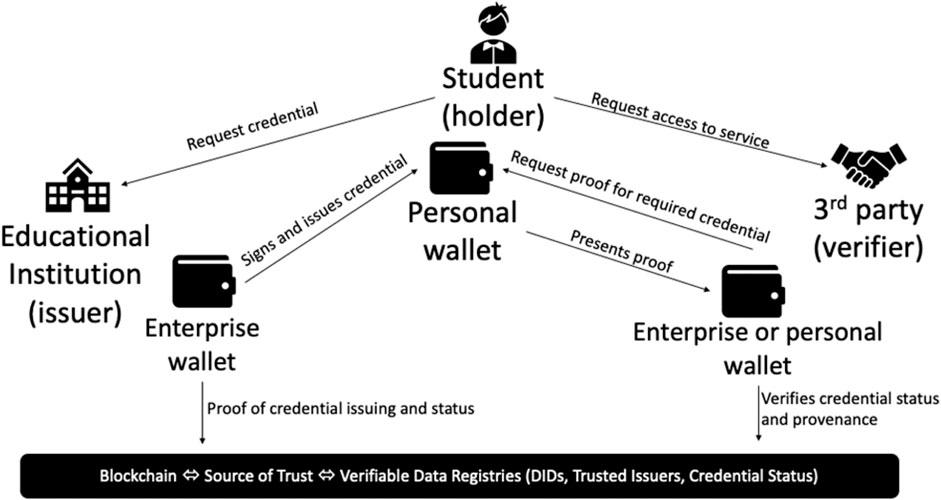
The blockchain verification process for qualifications can be summarized as:
- Issuance: Educational institutions or certification authorities create digital credentials and record them on the blockchain.
- Distribution: Individuals receive unique tokenized versions of their qualifications, stored in a secure digital wallet.
- Verification: Employers or other entities access the blockchain to verify the authenticity of qualifications—no intermediaries required.
Popular blockchain platforms for credentialing include Ethereum, Hyperledger, and specialized networks like Blockcerts, which are designed specifically for issuing and verifying certificates.
First-Hand Experience: A Graduate’s Perspective
Consider the journey of Andrew, a recent computer science graduate.Rather of receiving a paper diploma,Andrew’s university issued his degree as a blockchain credential. When applying for jobs, Andrew simply shared a secure blockchain link. Employers verified his degree instantly—without contacting the university or waiting for transcripts. For Andrew, this not only saved time but provided peace of mind that his credentials would be recognized anywhere in the world.
Practical Tips for Institutions & Job Seekers
Ready to embrace blockchain credentialing? Here are some actionable tips:
for Educational Institutions & Credential Issuers
- Choose the right blockchain solution: Evaluate security, scalability, and interoperability before investing in a platform.
- Standardize digital credential formats: Use open standards like Blockcerts for global compatibility.
- Educate stakeholders: Train staff and students on the value and use of blockchain credentials.
- Comply with data privacy regulations: Align blockchain implementations with GDPR and other relevant standards for data protection.
for Individuals & Job Seekers
- Store credentials securely: Use reputable digital wallets and keep backup copies.
- Be proactive: Request blockchain-based credentials when available, and share them directly with employers or licensing boards.
- verify before sharing: Check credential status on the blockchain to ensure information is current and authentic.
Case Study: MIT’s Digital Diplomas
The Massachusetts institute of Technology (MIT) set a global precedent by issuing blockchain-based digital diplomas to graduates. Powered by Blockcerts, MIT’s solution allows students to own, share, and prove their educational achievements anywhere in the world. This innovation reduced fraud,improved efficiency,and empowered graduates—showcasing the real-world benefits of secure and transparent credentialing.
Challenges & limitations
While blockchain has immense potential in credential verification, there are barriers to widespread adoption:
- Technology integration: Legacy systems and lack of standardization sometimes slow blockchain rollout.
- Regulatory uncertainties: Data privacy and compliance are evolving fields, and blockchain must adapt.
- Cost and scalability: Smaller institutions may face financial and technical hurdles.
- User education: Widespread understanding of blockchain credentialing among employers and individuals remains a work in progress.
Nonetheless, ongoing innovation and collaboration are rapidly overcoming these challenges.
Future Trends: Blockchain’s Growing Role in Credentialing
The future of qualification verification is increasingly digital and decentralized. Emerging trends include:
- Integration with Artificial Intelligence (AI) for automated credential assessments.
- Expansion to licenses,certificates,and skill badges across industries.
- Global credential registries enabling cross-border verification and mobility.
- Digital identity ecosystems where blockchain credentials become the backbone for personal data management.
These advancements will continue to refine and reinforce blockchain’s value for secure and transparent credentialing worldwide.
Conclusion
Blockchain is rapidly transforming the way qualifications are verified, offering secure, transparent, and efficient credentialing for individuals and institutions. By eliminating intermediaries,reducing fraud,and empowering users,blockchain solutions pave the way for a global standard in academic and professional verification. Whether you are an educator,employer,or job seeker,embracing blockchain technology offers tangible benefits that will shape the future of credentials. Start exploring blockchain-powered verification today and stay ahead in an increasingly connected digital landscape.