
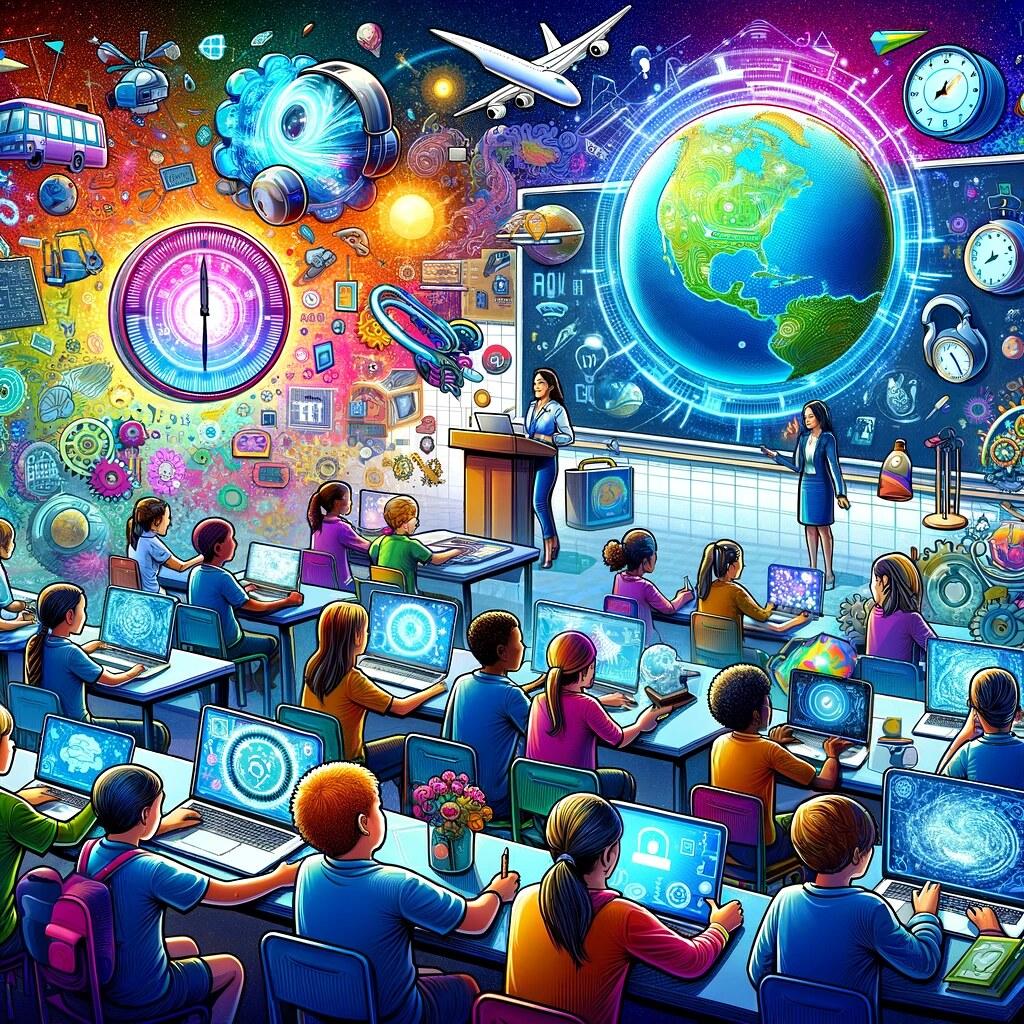
How EdTech is Revolutionizing Environmental Education: Exploring the Vital intersection
the world is facing unprecedented environmental challenges, from climate change to biodiversity loss. Ensuring that the next generation is not only aware of these issues but equipped to address them is more vital than ever.This is where EdTech—educational technology—steps in, reshaping conventional environmental education into a dynamic, interactive, and impactful experience. In this article, we delve into how EdTech is revolutionizing environmental education, exploring the vital intersection of technology and sustainability learning.
Understanding the Rise of edtech in Environmental Education
The traditional classroom approach to environmental education—textbooks, lectures, and occasional field trips—often falls short in capturing the complex, dynamic nature of real-world ecological systems. EdTech introduces new tools and platforms that make environmental learning immersive and accessible, bridging the gap between theory and real-life action.
- Interactive Simulations help visualize environmental processes such as climate cycles or water pollution.
- Gamified Learning platforms make sustainability concepts engaging and memorable.
- Virtual Field Trips enable students to explore rainforests, oceans, and renewable energy facilities from anywhere in the world.
- Data Visualization Tools empower students to analyse and interpret real-time environmental data effectively.
Key Benefits of EdTech in Environmental Education
Integrating technology in environmental education isn’t just about flashy gadgets—it’s about creating meaningful, lasting change. Here are the key benefits that make EdTech an indispensable force for sustainability learning:
1. Enhanced Engagement and Retention
Interactive learning platforms capture students’ interest, helping them retain and apply what they learn. Visualizing the melting of glaciers or simulating ecosystem responses brings abstract concepts to life.
2. Personalized Learning Experience
Adaptive EdTech solutions can assess individual learning styles and adjust content accordingly, boosting confidence and knowledge acquisition. Whether a student learns best through video, hands-on projects, or collaborative games, EdTech provides tailored pathways.
3. Accessibility and Global Reach
Many EdTech solutions are cloud-based or app-driven, breaking down barriers caused by location or financial constraints. students worldwide can access premium environmental education resources, fostering global citizenship for sustainability.
4. Real-Time Data and Problem Solving
Technology enables students to interact with live environmental data—like air quality indices or deforestation rates—developing crucial analytical and problem-solving skills in a real-world context.
5. Sustainable Practices
Online learning reduces the need for printed materials and travel, supporting sustainability principles right from the core of the educational process.
Popular EdTech Tools Revolutionizing Environmental Education
The integration of EdTech in environmental science is fueled by innovative platforms and applications designed specifically for sustainability learning. Here are a few leading examples:
Earth School by TED-ed & UNEP
A collection of interactive lessons that introduce students to the wonders and challenges of the natural world, featuring immersive videos and quizzes.
google Earth
Allows virtual exploration of the planet, enabling students to observe climate changes, deforestation patterns, and global geographical diversity in real time.
EcoChallenge
Gamified activities encouraging sustainable behaviors, teamwork, and critical thinking through real-world environmental challenges.
ArcGIS Online
Used in many classrooms for geospatial analysis, data mapping, and understanding human impacts on the environment.
Case Studies: edtech and Environmental Education in Action
Case Study 1: Virtual Environmental Labs
In response to limited access to physical labs during the pandemic, schools in Singapore adopted virtual lab software, enabling students to conduct experiments—such as testing water quality—entirely online. This not only maintained learning continuity but also sparked interest in environmental science careers.
case Study 2: Global Forest Watch in Secondary Schools
By integrating the Global Forest Watch platform, classrooms across Europe tracked deforestation in real time and participated in digital citizen science. This practical use of EdTech empowered students to propose actionable solutions for forest conservation.
First-Hand Experiences: Voices from the Field
“Using EdTech in my classroom transformed how my students understand sustainability. Mapping local pollution sources and visualizing global climate trends made these issues feel tangible and urgent.”
— Emily J., Environmental Science Teacher
“I never thought about how much energy we use until I played a simulation game about renewable energy. Now, I want to study environmental engineering!”
— Alex, High School Student
Practical Tips for Integrating EdTech in Environmental Education
- Start Small: Integrate one or two EdTech tools before scaling up to an entire curriculum overhaul.
- Encourage Exploration: Let students choose which interactive modules or virtual excursions interest them most.
- Collaborate Globally: Use online forums and global EdTech platforms to connect students with peers in other countries,fostering cross-cultural sustainability dialogues.
- Leverage Real-World Data: Regularly incorporate current environmental data sets into lessons to maintain relevance and context.
- Assess Impact: Use feedback and digital assessment tools to evaluate what works and continually refine yoru approach for maximum impact.
Future Trends: The Road Ahead for EdTech in Sustainability education
As technology continues to evolve, so will its applications for environmental education. Emerging trends to watch include:
- Artificial Intelligence (AI): Personalized learning pathways and automated feedback systems for deeper, more effective engagement.
- Augmented Reality (AR) and Virtual Reality (VR): Fully immersive field trips and simulated environmental crises for practical problem-solving experience.
- Blockchain: Clear tracking of eco-friendly initiatives and gamified rewards for sustainable actions.
- Social Learning Networks: Platforms that connect eco-minded learners and thought leaders globally, accelerating idea exchange and innovation.
Conclusion: A New Horizon for environmental Education
The intersection of EdTech and environmental education holds remarkable potential to inspire, educate, and activate the next generation of sustainability leaders. By leveraging innovative tools, engaging platforms, and global connectivity, we can empower learners of all ages to take meaningful action for the planet. As educators, students, and technology developers, embracing this transformation is not just a choice—it’s a obligation towards building a more resilient, sustainable future.
Ready to make a difference? Start exploring edtech tools today and help create a greener,smarter tomorrow.