
How Implementing Blockchain in Educational Institutions is Revolutionizing Student Records and Data Security
Unlock the power of blockchain in education and discover how this innovative technology is reshaping student records management and data security for schools and universities worldwide.
Introduction: The Digital Shift in Education
The growing digitalization of education brings immense benefits but also important challenges, especially regarding student data security and the management of academic records.From cyber-attacks to credential fraud, conventional systems are increasingly coming under scrutiny. Implementing blockchain in educational institutions is emerging as a game-changer, offering enhanced security, transparency, and reliability for managing student records.
Understanding Blockchain Technology in Education
Blockchain, a decentralized and distributed ledger technology, allows data to be securely stored and shared without the need for a central authority. In the context of educational institutions, blockchain can substantially improve:
- Student records management
- Data security and privacy
- Academic credential verification
- Streamlined student data systems
By leveraging blockchain, educational institutions can maintain tamper-proof, verifiable, and easily accessible academic records — ensuring authenticity and trustworthiness.
How Blockchain Revolutionizes Student Records Management
Immutable Record Keeping
blockchain creates records that are immutable — meaning once a record is added,it cannot be altered or erased. This is crucial in education, where maintaining the integrity of transcripts, diplomas, and certificates is paramount. Students, employers, and academic institutions can verify credentials instantly, minimizing risks of forgery or loss.
Decentralized Data Storage
Traditional student record systems are often centralized, creating a single point of failure and making them vulnerable to hacking or system failures. Blockchain, on the other hand, stores records across a distributed ledger, reducing risks associated with centralization and enhancing overall resilience.
Enhanced student Data Security
Data breaches are a significant concern for schools and universities. Blockchain technology secures sensitive student information using advanced cryptographic techniques, ensuring that only authorized parties can access or modify records.
Seamless Credential Verification
With blockchain-based digital credentials, verification becomes instantaneous. Employers or other organizations can quickly confirm the legitimacy of academic achievements without contacting the issuing institution, saving time and resources while eliminating the potential for fraud.
Benefits of Implementing Blockchain in Educational Institutions
- Superior Data Security: cryptographically secured, tamper-proof student records prevent unauthorized access and reduce the risk of data breaches.
- Elimination of Credential fraud: Blockchain ensures the authenticity of degrees, diplomas, and certificates, combating academic dishonesty and deceit.
- Greater Administrative Efficiency: Automation of processes such as transcript requests and degree verification reduces bureaucracy and administrative workload.
- Effortless Student Mobility: Students can seamlessly transfer credits and academic achievements between institutions, even internationally.
- Increased Trust and Transparency: Both students and employers benefit from obvious, verifiable academic records accessible anytime, anywhere.
- Regulatory Compliance: Blockchain facilitates compliance with data protection regulations like GDPR by enabling clear audit trails and ownership consent mechanisms.
Case Studies: Blockchain Adoption in Education
1. MIT’s Digital Diplomas
In 2017, the Massachusetts Institute of Technology (MIT) piloted digital diplomas on the blockchain. Graduates received both paper and digital diplomas, allowing them to share verifiable credentials with employers globally. This move exemplified how blockchain can streamline verification and prevent diploma fraud.
2. University of Nicosia’s Blockchain Initiatives
The University of Nicosia in cyprus became one of the first to use blockchain for issuing digital certificates. Their initiative demonstrated the potential for frictionless cross-border academic record management and increased trust in digital higher education credentials.
3. Sony Global Education Platform
Sony, in partnership with IBM, launched a blockchain-based platform for secured sharing and management of student records. This platform enables schools and universities worldwide to exchange information securely and efficiently.
First-Hand Experiences: What Educators and students Say
“With blockchain, managing student transcripts has become incredibly efficient. Our administration spends less time on manual verification, and students appreciate the fast, reliable access to their records.”
“I was able to share my verified diploma with multiple employers instantly, without worrying about paperwork delays or concerns over authenticity.”
Practical Tips for Integrating Blockchain in Education
- Assess Institutional Needs: Identify use cases for blockchain in your educational institution — be it transcript management, credential verification, or secure data sharing.
- Collaborate with Tech Partners: Work with experienced blockchain developers and solution providers who specialize in the education sector.
- Pilot with Non-Critical Systems: Start with a pilot program on a small scale (e.g., digital certificates for select courses), measure outcomes, and refine the implementation.
- Ensure Regulatory Compliance: Familiarize your team with data privacy laws (such as GDPR or FERPA) to ensure that blockchain solutions align with legal frameworks.
- Train Staff and students: Organize workshops and training sessions to help stakeholders understand the new system, its benefits, and cybersecurity best practices.
- Promote Change Management: Create clear communication plans to address concerns and foster a positive transition to blockchain-based systems within your institution.
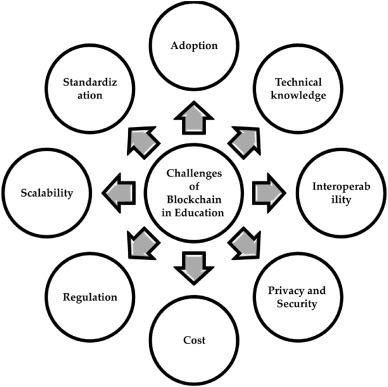
Potential Challenges & How to Overcome Them
- Technical Complexity: Blockchain can be complex to implement. Partnering with experts and opting for reliable platforms, such as Hyperledger or Ethereum, can mitigate risks.
- User Adoption: Change can be met with resistance. Proactive training and clear communication help ease the transition.
- Integration with Legacy Systems: Seamless integration requires careful planning. Choose modular, API-driven solutions to avoid data silos.
- Cost Considerations: While blockchain implementation requires upfront investment, the long-term cost savings from reduced bureaucracy and lower fraud rates outweigh initial expenditures.
Conclusion: Embracing the Future with Blockchain in Education
The implementation of blockchain in educational institutions is transforming the way student records are managed and secured. By providing immutable, transparent, and easily accessible student data, blockchain enhances educational integrity, increases administrative efficiency, and fortifies data security. As more schools and universities turn to this revolutionary technology, the education sector stands to benefit from unparalleled trust, reliability, and global connectivity. Now is the ideal time for educational leaders to embrace blockchain and future-proof their systems for the digital age.
Ready to explore how blockchain can transform your institution’s student records and data security? Contact our blockchain integration experts today and take the first step toward revolutionizing your educational systems.