
How Implementing Blockchain Transforms Educational Institutions: Benefits, Challenges, and Key Steps
The digital age is continuously redefining the landscape of education, introducing innovative technologies that streamline processes, enhance security, and empower students and educators. One of the most promising technologies making headway in schools, colleges, and universities is blockchain. Implementing blockchain in education is not just a future trend—it’s already revolutionizing how educational institutions manage data, authenticate credentials, and facilitate learning. In this article, we’ll explore how blockchain transforms educational institutions, the unique benefits it offers, common challenges faced, practical steps for implementation, and inspiring case studies.
Understanding Blockchain in Education
At its core, blockchain is a decentralized, tamper-proof digital ledger that permanently records transactions across a distributed network. while blockchain is best known as the foundation for cryptocurrencies like Bitcoin, its applications in education have rapidly gained momentum. Educational institutions are leveraging this technology to securely manage academic records, enable verifiable credentials, and streamline administrative operations.
Key Benefits of Implementing Blockchain in educational Institutions
Incorporating blockchain technology in the education sector brings numerous advantages. Here’s how implementing blockchain can transform educational institutions:
- Enhanced Security and data Integrity: Blockchain’s decentralized structure ensures that academic records, certificates, and student data are secure, immutable, and verifiable, reducing the risk of fraud and data breaches.
- Streamlined Credential Verification: Alumni,employers,and other educational institutions can easily verify digital diplomas and certificates,eliminating lengthy manual verification processes.
- Increased Transparency: Every transaction is recorded transparently on the blockchain, fostering trust among students, faculty, and employers.
- Automatic Smart Contracts: routine administrative tasks, like enrolling in courses or issuing refunds, can be managed through programmable “smart contracts,” increasing operational efficiency and reducing paperwork.
- Empowering Learners: Blockchain allows students to control and share their own academic records and micro-credentials, promoting lifelong learning and flexibility.
- Cost Reduction: Automation of processes and elimination of intermediaries result in lower administrative costs.
- enabling Global learning Ecosystems: Blockchain makes cross-border academic collaboration easier by standardizing verifiable credentials and allowing institutions to recognize credits obtained anywhere in the world.
Practical Tips to Maximize Blockchain Benefits
- Choose blockchain solutions that integrate seamlessly with existing Learning Management Systems (LMS).
- Educate staff and students about blockchain’s role and security features to build trust and awareness.
- Start with pilot projects like digital certificates before expanding to other processes.
- Collaborate with tech partners experienced in blockchain implementation for education.
Major Challenges in Implementing Blockchain in Education
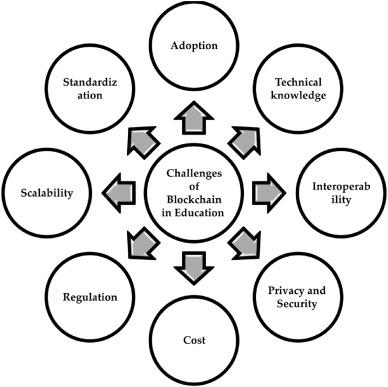
Despite its transformative benefits, integrating blockchain in educational institutions is not without hurdles. Understanding the challenges can help your institution prepare and strategize effectively:
- Technical Complexity: Adopting blockchain requires technical expertise, and existing IT staff may need ample upskilling.
- Initial Investment: Implementation costs for blockchain infrastructure, software advancement, and staff training can be meaningful.
- Interoperability Concerns: Ensuring blockchain solutions work across different platforms and institutions requires industry standards and protocols.
- Regulatory Uncertainty: Lack of universally agreed policies on data privacy and governance for blockchain in education can create legal challenges.
- Resistance to Change: Faculty, administrators, and even students might potentially be wary or skeptical of blockchain technology, requiring thoughtful change management.
How to Overcome Blockchain Implementation Challenges
- Start with small-scale projects to demonstrate value and build internal support.
- Seek collaborations with policy makers and standardization bodies for regulatory guidance.
- invest in robust staff training programs focusing on blockchain basics and practical use cases.
- Choose blockchain platforms with proven education sector adopters for greater reliability and support.
Key Steps to Implement Blockchain in Educational Institutions
For a successful blockchain journey, educational institutions should follow a structured, step-wise approach. Here are the essential steps to implement blockchain in education seamlessly:
- Identify Clear Goals and Use Cases
- Pinpoint areas that will benefit the most from blockchain, such as issuing digital diplomas, managing student transcripts, or automating admissions.
- Build Internal awareness and Capacity
- Organize workshops and training for faculty, administrators, and IT staff.
- Select the Right Blockchain Platform
- Compare public vs private blockchains, permissioned vs permissionless systems, and evaluate platforms like Ethereum, hyperledger, or proprietary solutions tailored for education.
- Develop or Partner for Solution Design
- Collaborate with blockchain developers and technology consultancies specializing in education technology.
- Pilot and Evaluate
- Launch pilot projects in specific departments or on selected processes and gather feedback from stakeholders.
- Scale and Integrate
- After successful pilots,phase the blockchain solution into broader institutional processes and integrate with existing systems (e.g., LMS, CRM).
- monitor and Optimize
- Regularly review blockchain systems for performance, security, and user experience improvements.
Case Studies: Blockchain in Action at Educational Institutions
1. Massachusetts Institute of Technology (MIT)
MIT pioneered the use of blockchain-powered diplomas, issuing digital credentials to graduates since 2017.These blockchain-based certificates empower students to instantly share verifiable transcripts with employers or universities worldwide.
2. University of Nicosia
As a global leader in blockchain education,the University of Nicosia in Cyprus issues degrees and transcripts on blockchain,enabling secure,cross-border verification. They also offer online courses in blockchain technology, reinforcing the institution’s innovative reputation.
3. Sony Global Education and IBM
Sony Global Education partnered with IBM to create a blockchain solution for managing student records, test scores, and transcripts. This initiative showcases blockchain’s scalability for managing educational data across institutions and even countries.
First-Hand Insights: Adopting Blockchain in Education
Educators and administrators from early-adopting institutions report several positive shifts:
- Admissions offices save significant time on transcript verification, especially with international applicants.
- Alumni appreciate having easy access to secure,digital diplomas that never get lost or damaged.
- Faculty report increased academic honesty, as blockchain-powered credential verification helps deter forged or altered certificates.
- Students gain a stronger sense of ownership over their learning journey, with instant access to verified accomplishments and micro-credentials.
Blockchain in Education: The Road Ahead
As more educational institutions experiment with blockchain, industry standards will mature, platforms will become more user-pleasant, and new opportunities will emerge. Expect to see increased collaboration between universities and employers, innovative uses for micro-credentials and badges, and a shift towards a learner-centered education ecosystem where students have agency over their academic achievements.
Conclusion: Start Your Blockchain Journey Today
Implementing blockchain in educational institutions promises unprecedented benefits in security, efficiency, and transparency, while empowering both students and educators. Even though technical and organizational challenges exist, a thoughtful approach—starting with strategic pilot projects and robust stakeholder engagement—can definitely help your institution harness the full potential of blockchain in education. As this transformative technology becomes more accessible, now is the perfect time for forward-thinking educational leaders to explore blockchain integration and position their schools for a future of innovation and trust.
Ready to take the next step? Start by educating your team, exploring successful case studies, and identifying the best blockchain solution for your institution’s unique needs.