
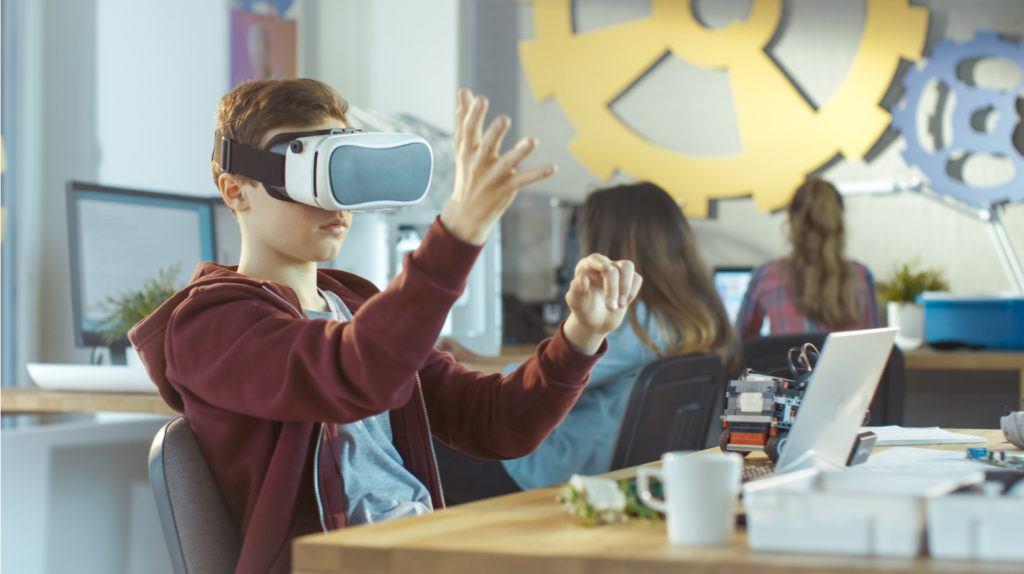
How to Train teachers for Effective VR/AR Classroom Integration: Essential Tips and Strategies
In recent years, virtual reality (VR) and augmented reality (AR) have emerged as game changers in the education sector, offering immersive, interactive, and engaging learning experiences. Though, the successful implementation of VR/AR in classrooms hinges on well-trained educators who are confident and competent in using thes emerging technologies. This extensive guide will walk you through the essential tips and strategies for training teachers for VR/AR classroom integration, ensuring they are equipped to unlock the full potential of this innovative teaching approach.
Why VR/AR Integration Matters in Today’s Classrooms
Integrating VR and AR technologies in education contributes to deeper learning, stimulates creativity, and bridges gaps in conventional teaching methods. From virtual science explorations to past time travel and 3D visualizations in mathematics, VR/AR classroom integration is no longer a futuristic dream—it’s rapidly becoming a standard in forward-thinking educational institutions.
- Immersive learning: students can experience hands-on exploration in safe, controlled virtual or augmented environments.
- Enhanced engagement: interactive lessons boost participation and reduce classroom distractions.
- Personalized learning: VR/AR technologies can be tailored to individual learners, addressing unique learning styles and needs.
- Bridging theory and practice: Concepts become tangible, aiding comprehension, retention, and overall student achievement.
the Importance of Teacher Training in VR/AR integration
No matter how advanced the technology, its impact is limited if teachers are not adequately prepared. Educators must feel comfortable navigating VR/AR hardware and software, curating and designing content, and facilitating engaging virtual or augmented lessons. Comprehensive teacher training for VR/AR integration not only alleviates technology apprehension but also ensures pedagogically sound usage.
Key Challenges Faced by Educators
- Lack of prior technology experience
- Concerns about technical issues disrupting lessons
- Difficulty in aligning VR/AR activities with curriculum standards
- Time constraints in lesson planning and technology management
Essential Tips & Strategies for training Teachers for Effective VR/AR Classroom Integration
To fully realize the benefits of VR/AR in education, schools must implement a thoughtful and systematic teacher training roadmap. Here are actionable strategies and tips for successful VR/AR teacher professional development:
1. Foster a Growth Mindset and Positive Attitude Towards Emerging Technologies
- Begin training with inspiring case studies that highlight VR/AR’s impact on learning.
- Encourage teachers to share their expectations,apprehensions,and ideas about integrating technology in the classroom.
- Emphasize that continuous learning and experimentation are part of the integration process.
2. Provide Hands-On, Experiential Training Sessions
- Offer workshops with real VR/AR devices and applications, allowing teachers to explore as learners first.
- Facilitate “sandbox” environments for risk-free experimentation.
- Encourage peer-to-peer sharing, where early adopters train colleagues (the “train-the-trainer” model).
3.Integrate Pedagogical best practices
- Showcase how VR/AR can align with existing curricula and learning objectives.
- demonstrate lesson modeling: experienced facilitators can simulate VR/AR-enabled lessons.
- Highlight classroom management strategies to address device distribution, student movement, and safety.
4. Develop Technical Competency and Troubleshooting Skills
- Break down device setup, maintenance, and software navigation into manageable steps.
- Share troubleshooting resources and checklists for common technical issues.
- Connect teachers with ongoing IT support for continued assistance.
5. Emphasize Content Curation and Creation
- Train teachers to evaluate and select high-quality, age-appropriate VR/AR content.
- Introduce user-kind tools for customizing or creating AR/VR learning experiences, such as CoSpaces Edu, Google Expeditions, or Merge EDU.
- Guide educators in copyright and digital safety best practices.
6. Encourage Collaborative Learning Communities
- Establish school or district-wide VR/AR professional learning networks.
- Facilitate regular meetings for educators to exchange insights, resources, and lesson ideas.
- Promote online forums, webinars, and social groups focused on educational XR (extended reality) advances.
7. Provide Ongoing Professional Development and Feedback
- Offer microlearning modules, refresher courses, and certification programs.
- Gather regular feedback from teachers to continually adapt training programs.
- Recognize and celebrate teacher innovation in VR/AR teaching.
Additional Resources to Support Teacher Growth
- edtech conferences and workshops featuring VR/AR education specialists
- Online courses (e.g., Coursera, edX) covering virtual/augmented reality in education
- Vendor-led training sessions from VR/AR equipment or software providers
- immersive Learning Research network (iLRN) and similar organizations sharing new trends
Real-world Examples: Case Studies in Teacher Training for VR/AR
To better illustrate the practical application and outcomes of effective teacher preparation, let’s consider two real-life scenarios:
Case Study 1: District-Wide Professional Learning in Rural Georgia
A rural school district aimed to deploy VR science labs in all middle schools. The district created a year-long professional learning community, including monthly hands-on workshops, online coaching, and peer classroom observations. Not only did teacher confidence with VR tools considerably increase, but student engagement and science test scores also improved.
Case Study 2: Urban High School Launches AR History Project
An urban high school launched an AR project on local history. Teachers first participated in a multi-day boot camp with AR experts,learning both the technology and the pedagogy for place-based AR learning. By the end of the semester, teachers reported greater student participation, a deeper connection to curriculum content, and renewed enthusiasm for innovative teaching.
practical Tips for Schools planning VR/AR Teacher Training
- Begin small—pilot with a “VR/AR champion” group before scaling up.
- Ensure school leadership is supportive and involved in professional development initiatives.
- Provide enough devices and plan for ongoing tech updates and maintenance.
- Document successes and challenges to inform future training cycles.
- Set realistic timelines—integrating immersive technology is a multi-phase process.
Conclusion: Empowering Teachers for the Future of Education
Incorporating VR/AR in the classroom is about more than just adopting new gadgets; it’s about empowering teachers to facilitate meaningful, immersive learning experiences. With comprehensive training, ongoing support, and a commitment to pedagogical innovation, educators can confidently leverage VR/AR technologies to transform classrooms and inspire learners. As schools continue to embrace the future of EdTech, investing in robust teacher training is the surest path to successful VR/AR classroom integration—making the extraordinary, achievable for all students.