
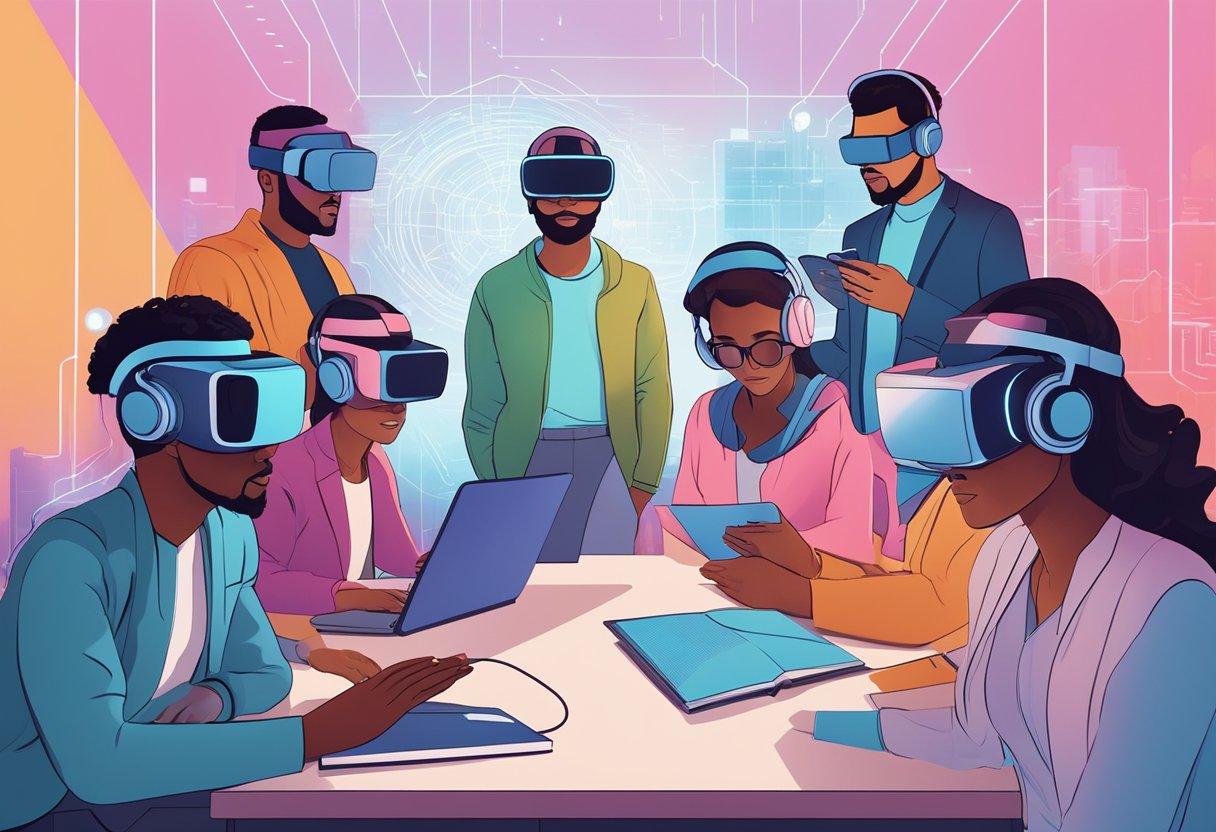
How Virtual Reality Boosts student Engagement and Retention
Education is evolving at breakneck speed, and Virtual Reality (VR) is at the forefront of this conversion. By cultivating immersive and interactive learning environments, VR technology offers unparalleled opportunities to ignite student curiosity, deepen understanding, and dramatically improve retention rates. But how,exactly,does VR elevate student engagement,and what does this mean for the future of learning?
What is Virtual Reality in Education?
Virtual Reality (VR) in education refers to the use of interactive,computer-generated environments that allow students to experience lessons firsthand,frequently enough through head-mounted displays and motion controllers. Unlike customary teaching methods, VR immerses learners in a 360-degree simulation where they can participate, explore, and collaborate in lifelike scenarios.
Key Benefits of VR for Student Engagement and Retention
- Immersive Learning Experiences: VR transforms passive learning into active exploration. Students can “walk through” ancient civilizations, perform virtual science experiments, or tour the solar system — making lessons memorable and engaging.
- Personalized Learning: VR allows teachers to customize lessons based on students’ abilities, interests, and pace, which increases motivation and caters to diverse learning styles.
- Immediate Feedback & Practice: With VR, students receive instant feedback, enabling them to learn from mistakes and repeat challenging tasks until mastery is achieved.
- Collaboration & Social Interaction: VR enables real-time collaboration in virtual spaces, fostering teamwork and interaction skills among classmates, even from remote locations.
- Reduced Distractions: By fully immersing students in lesson content, VR sharply reduces off-task behaviour and distractions.
- Increased accessibility: VR can offer solutions for students with physical disabilities, making learning more inclusive and participatory.
How VR Enhances Student Engagement
Active Participation
One of the strongest arguments for using VR in the classroom is its ability to make students active participants in their own learning. Rather than passively listening, students interact with the lesson, manipulate objects, and experiment in real time — making learning both fun and effective.
Deep Learning through Real-World Contexts
VR lets students experience concepts in context. Medical students can practice surgeries in a risk-free surroundings, history students can tour ancient landmarks, and chemistry students can safely conduct hazardous experiments. These virtual experiences make learning relevant, boosting engagement and knowledge retention.
Gamification and Motivation
Incorporating gamification elements — such as quizzes, rewards, and progress badges — into VR lessons increases motivation. Gamified VR environments challenge students to achieve goals, encouraging persistence and higher participation.
The Impact of VR on retention Rates
Numerous studies demonstrate the positive effect of VR on long-term memory retention. The “learning-by-doing” principle reinforces understanding and recall:
-
According to a Stanford University study, students retain up to 90% of information when learning through immersive simulations, compared to just 10% from traditional reading.
-
The National Training Laboratory’s “Learning Pyramid” highlights that hands-on experiences lead to the highest retention, a result amplified through VR’s interactive approach.
-
VR supports spaced repetition and replay, allowing students to revisit content at their own pace — a technique proven to boost memory consolidation.
case Studies: Real-World Examples of VR in Education
1. biology Classes with Virtual Labs
In several US high schools, biology teachers introduced VR simulations where students could virtually dissect animals, view microscopic worlds, and run complex experiments. Result: Test scores improved by over 20%, while students reported a higher enjoyment of science.
2. Virtual Field Trips at Elementary Schools
Schools lacking the budget for physical field trips used VR to tour cultural and past locations. These experiences sparked fascination and engagement, making social studies lessons unforgettable.
3. Language Immersion through VR
Language departments in European universities used VR to place students in virtual foreign cities. Learners practiced speaking and listening in realistic settings, accelerating fluency and confidence.
First-Hand experiences: Student and Teacher Testimonials
“virtual reality made history come alive for my students. They explored ancient Rome and truly felt immersed — their interest and knowledge retention soared!”
– Mrs. Harper, History Teacher
“I was always bored in science. But with VR labs, I can experiment hands-on and redo things if I fail. I actually remember what I learn now!”
– Lucas,High School student
Practical Tips for Implementing VR in the Classroom
- Start Small: Employ simple VR apps for short demos before moving to larger curriculum integrations.
- Choose Content Wisely: select educational VR experiences that align with your lesson goals and age group.
- Train Teachers: Offer training so educators feel pleasant using VR hardware and software during lessons.
- Ensure Equity: Have plans in place to provide access to students who may not have VR hardware at home.
- Collect Feedback: Regularly survey students and teachers to adapt and improve VR lesson effectiveness.
- Maintain Safe Practices: Monitor session durations and encourage safe, healthy use of VR equipment.
the Future of VR in Education
As VR hardware becomes more affordable and accessible, its use in schools and universities will continue to grow. Experts predict new waves of innovation — from AI-powered adaptive VR lessons to collaborative globe-spanning classrooms. Embracing VR now sets schools on the path to tomorrow’s learning.