
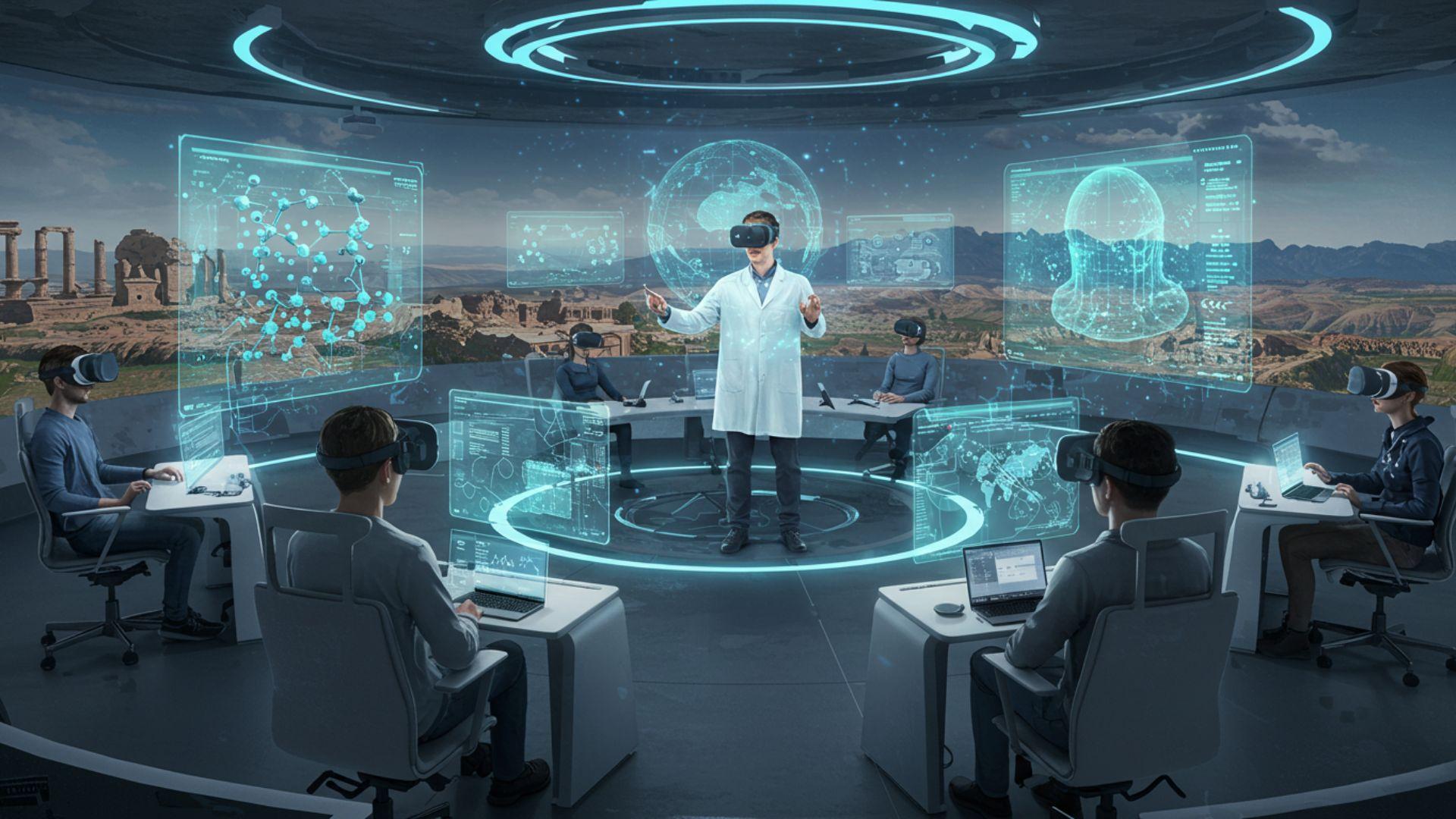
How VR and AR Are Revolutionizing Immersive Learning in Modern Education
Immersive learning experiences have always been at the core of impactful education. In recent years, Virtual Reality (VR) and Augmented Reality (AR) technologies have burst onto the educational scene, offering groundbreaking ways to engage students and educators alike. If you’ve been curious about how VR and AR are changing the way we teach, learn, and create, this comprehensive guide will walk you through the latest trends, benefits, practical tips, case studies, and future predictions for immersive learning in modern education.
What Are VR and AR in Education?
- Virtual Reality (VR): A fully immersive, computer-generated simulation where users can interact with 3D environments using VR headsets such as Oculus Quest, HTC Vive, or Google Cardboard.
- augmented Reality (AR): Overlays digital content and data on the real world using smartphones,tablets,or AR glasses (like Microsoft HoloLens or Magic Leap),enhancing real-life experiences without complete immersion.
Both technologies aim to make learning more hands-on, engaging, and efficient.By bridging the gap between abstract concepts and real-world application, VR and AR make complex topics accessible and fun.
Benefits of Immersive Learning with VR and AR
Modern education is not just about memorization—it’s about fostering critical thinking, creativity, and deep understanding. Here’s how immersive learning with VR and AR is elevating student experiences:
1. Improved Engagement and Motivation
- Gamified content and interactive simulations capture students’ attention longer than traditional methods.
- Learning feels like play, which is especially powerful for younger students or those easily distracted.
2. Better Retention and Understanding
- Visualizing complex subjects (like molecular biology or history) in 3D helps with memory retention.
- Students can practice real-world skills in safe, repeatable virtual settings, from conducting science experiments to speaking new languages.
3. Personalized and Adaptive Learning
- Lessons can be tailored to individual learning styles,paces,and needs—offering differentiated instruction for diverse classrooms.
- Immediate feedback and assessment tools let students and teachers track progress instantly.
4. Accessibility for All
- Students in remote or under-resourced areas can access world-class labs, museums, and field trips through VR and AR, bridging socio-economic gaps.
- AR and VR aid learners with disabilities by providing customized, multisensory educational experiences.
5. Collaboration and Social Interaction
- Multiplayer VR and AR environments foster teamwork and social skills—students can collaborate in real-time no matter where they are.
Practical Applications and Tips for Implementing VR and AR in Education
Ready to introduce immersive learning to your classroom or educational program? Here are practical ways to bring AR and VR to life:
Classroom Applications
- Virtual field trips: Explore the Great Wall of China, outer space, or the human body—no travel required.
- science and engineering labs: Safely conduct biology dissections or physics experiments in a controlled, risk-free environment.
- history reenactments: Step into ancient civilizations or historical events for immersive storytelling and empathy-building.
- Language learning: Practice conversational skills with AI avatars in virtual ‘real-world’ settings, enhancing fluency and confidence.
- Art and design: Create, edit, and visualize projects in 3D space, fostering creativity and spatial awareness.
Practical Tips for Successful Implementation
- Start small: Begin with free or low-cost AR apps and VR experiences before investing in hardware.
- Integrate with curriculum: Ensure VR/AR activities support curricular goals and learning objectives.
- Provide training: Educators should receive ongoing professional development on using immersive technology effectively.
- Address accessibility: Choose solutions that accommodate students with diverse needs and backgrounds.
- Gather feedback: Regularly assess student engagement and learning outcomes to refine the immersive experience.
Case Studies: VR and AR in Action
Case Study 1: Biology Labs with VR
A high school in California integrated the VR platform “Labster” into their biology classes. Students donned headsets to conduct virtual dissections,genetic experiments,and chemical reactions. As a result,test scores improved by 30%,and students reported much higher satisfaction and curiosity about science careers.
Case Study 2: AR for History Learning
Students at a UK primary school used AR-enabled tablets to bring Roman ruins and artifacts to life during a curriculum unit on ancient history. Engagement soared, with children able to “walk through” historical scenes and interact with animated historical figures, deepening their understanding and empathy.
Case Study 3: Virtual Language Immersion
A language institute in Japan adopted VR language learning apps allowing students to practice real-world scenarios, like ordering in a Parisian café or asking for directions in Beijing. in just one semester,students demonstrated significant improvements in listening skills and conversational fluency.
First-Hand Experiences: Voices from the Classroom
“Using VR for our chemistry lab has not onyl made lessons fun but also lessened my anxiety about making mistakes. I can learn by trying, failing, and trying again—in ways that weren’t possible before.” — Sarah M., High School Junior
“With AR flashcards and apps, my students finally became excited about vocabulary drills! Interactive words that leap off the page made a huge difference for our English learners.” — Mark H., Elementary School Teacher
Challenges and Considerations
- Cost and Access: High-quality VR devices can be expensive, though prices are decreasing.Many schools start with cheaper AR or cardboard VR solutions.
- Digital Literacy: Both teachers and students may need support to use these new tools effectively.
- content Quality: Not all VR/AR educational apps are created equal—look for solutions with evidence-based design and teacher input.
- Screen Time: as with any technology, balance immersive learning with other teaching methods to ensure holistic development.
The Future of Immersive Learning in Education
As VR and AR technology evolves, the possibilities for immersive learning in modern education are virtually limitless. Here’s what the future holds:
- Widespread adoption as technology becomes more affordable and accessible.
- AI integration for smarter, adaptive learning environments.
- Global classrooms connecting students worldwide in shared virtual spaces.
- Improved data analytics to track engagement and personalize lessons even further.
forward-thinking institutions and educators who adopt these technologies today are preparing their students for a rapidly digitalizing world.
Conclusion: Embrace the Immersive Learning Revolution
The integration of VR and AR in education is no longer a futuristic dream but an exciting reality reshaping classrooms across the globe. With immersive learning technologies, educators can spark curiosity, boost engagement, and cater to diverse learning needs like never before. By staying informed, starting small, and focusing on pedagogically-sound implementation, you can bring the wow factor of VR and AR to your own classroom—empowering students and teachers to learn, create, and grow together in a truly modern educational environment.
Ready to get started? Explore the growing library of VR and AR resources for classrooms and join the immersive learning revolution!