
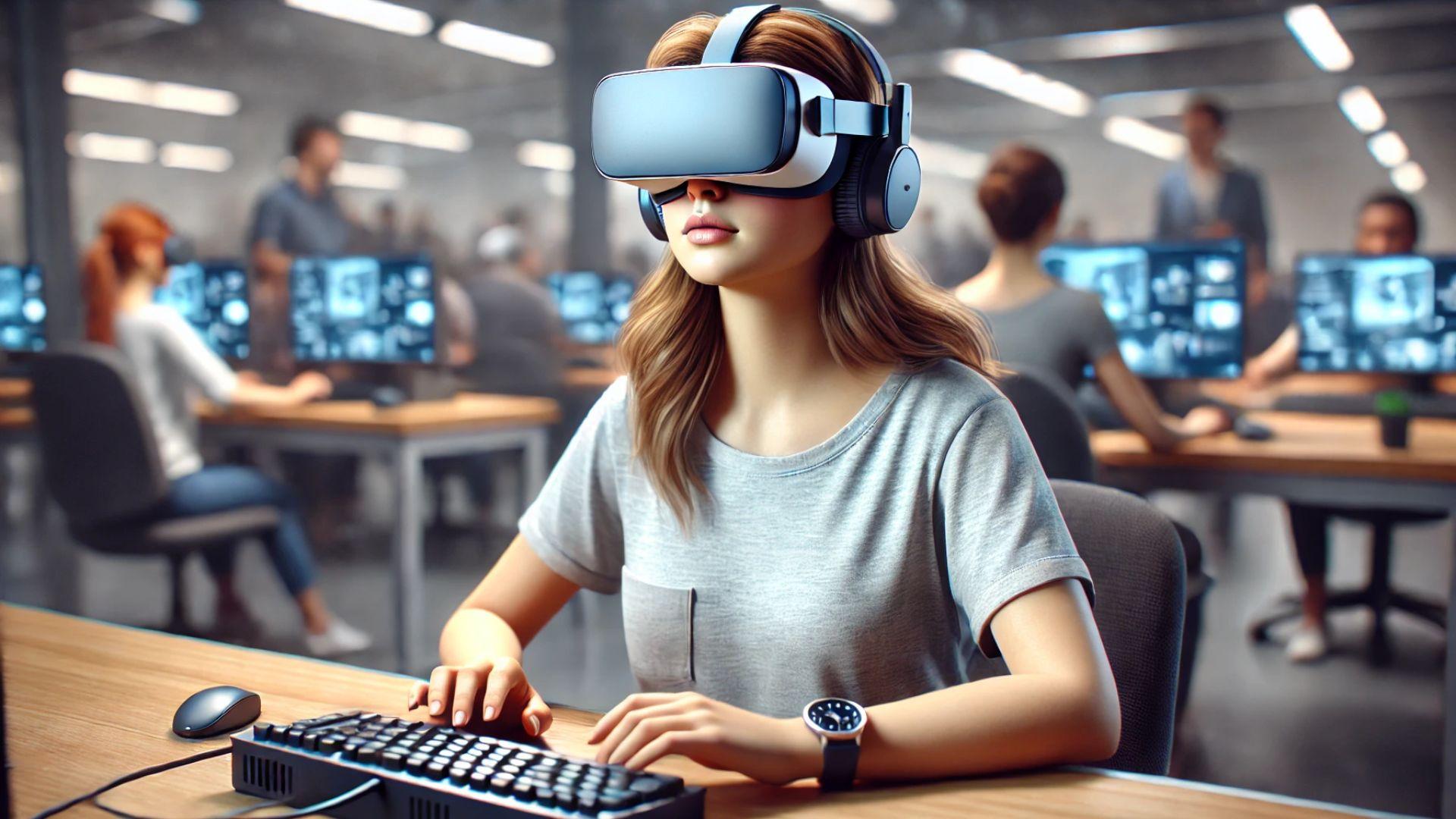
How VR Enhances Student Engagement and Boosts Retention: Exploring the Impact of virtual Reality in Education
Education in the digital age is constantly evolving, with new technologies reshaping the way students learn and interact with content. At the forefront of this change is virtual reality (VR), a powerful tool that is rapidly gaining ground in classrooms across the globe. But how exactly does VR enhance student engagement and retention? Let’s dive deep into the impact of virtual reality in education, examining its benefits, practical applications, case studies, and tips for accomplished integration.
What is Virtual Reality and How is It Used in Education?
Virtual reality is an immersive technology that places users inside a simulated,three-dimensional habitat. By wearing VR headsets, students are transported beyond the confines of traditional classrooms, engaging with digital worlds where learning becomes an experiential journey.
- Immersive Learning: VR allows learners to interact with complex subjects such as history, science, and engineering by experiencing scenarios first-hand.
- Simulations and Virtual Labs: Students can safely conduct experiments,explore historical sites,or practice language skills in simulated environments.
- Remote Collaboration: VR enables students from different locations to participate in shared, interactive lessons.
Why Engagement and Retention Matter in Education
Student engagement refers to the degree of attention, curiosity, and interest that learners show when participating in educational activities. High student engagement ofen correlates with better knowledge retention—the ability to remember and apply what’s learned. Traditional teaching methods sometimes struggle to maintain optimal engagement, leading to reduced retention and motivation.
Enter VR. With its captivating environments and active participation, virtual reality in education is proving to be a game changer for both engagement and retention.
How VR Enhances Student Engagement
Let’s take a closer look at how virtual reality captures students’ interest and fuels their desire to learn:
- Active Participation: VR shifts learners from passive recipients to active explorers, igniting curiosity and a sense of finding.
- Multi-Sensory Experiences: Engaging visuals, audio, and haptic feedback stimulate multiple senses, making lessons memorable and impactful.
- Gamification: Many VR educational applications incorporate game mechanics, such as points, challenges, and feedback, to motivate and engage students.
- Personalized Learning Paths: Students can learn at their own pace, revisiting complex concepts as needed, boosting confidence and agency.
The Impact of VR on Knowledge Retention
Traditional lectures and textbooks have their value,but VR is unique in its ability to boost retention by actively involving learners in the educational process. Numerous studies indicate a significant enhancement in knowledge retention when students learn through immersive, hands-on experiences.
Key Factors Behind Improved Retention Rates with VR:
- Contextual Learning: When students are ‘placed’ within the learning context—like walking through ancient Rome or observing molecules at work—they’re more likely to remember and understand core concepts.
- Emotional Connection: Experiencing lessons in first person invokes emotions, which have a powerful impact on memory formation.
- Repetition & Mastery: VR allows for safe repetition. Students can practice procedures, skills, or self-testing in a controlled, risk-free environment until mastery is achieved.
Key Benefits of Virtual Reality in the Classroom
Integrating VR into education yields a range of benefits for both teachers and students:
- Accessibility: Allows students to experience environments and activities that may be dangerous, expensive, or impractical in real life.
- Enhanced Collaboration: VR platforms facilitate group projects and discussions beyond physical boundaries.
- Interactive Storytelling: Students can immerse themselves in stories that bring curriculum content vividly to life.
- Increased Motivation: Fun, engaging simulations can inspire even the most reluctant learners.
Practical Tips for integrating VR in Education
thinking about bringing virtual reality into your classroom? Consider these best practices to maximize its effectiveness and ensure a smooth transition:
- Start Small: Pilot VR with a single lesson or module, then scale up as students and staff become more pleasant.
- Select Age-Appropriate Content: Choose VR applications and experiences designed for your students’ grade level and curriculum standards.
- Blend with traditional Methods: VR should complement—not replace—traditional teaching.Use it alongside discussions, readings, and hands-on projects for a balanced approach.
- Provide Clear instructions: Begin with a tutorial to help students navigate VR equipment and software confidently.
- Foster Reflection: After VR sessions, encourage students to reflect and discuss their experiences, deepening understanding and connecting virtual lessons to real-world applications.
Case Studies: Real-World Examples of VR in Education
Case Study 1: medical Training
Medical schools are leveraging VR for surgical simulations and patient care training. Immersive operations allow students to practice skills and procedures in a safe, repeatable environment—dramatically improving both engagement and knowledge retention.
Case Study 2: History and Geography Lessons
High schools and middle schools use VR to transport students to distant places and historic events. Whether exploring the pyramids of Egypt or walking through World War I battlefields, learners report higher motivation and long-term retention of facts.
Case Study 3: Language Learning
Language classrooms utilize VR to immerse students in foreign-speaking environments.Role-play simulations and interactive dialogues make vocabulary and grammar stick, as learners practice with native speakers in lifelike scenarios.
First-Hand Experience: Voices from educators and Students
Teachers implementing VR technology consistently highlight an uptick in attention spans and participation. As one high school science teacher shared:
“After introducing VR lessons, students who were previously disinterested are now leading the conversation. The excitement is contagious, and everyone wants to try the next simulation.”
Students, too, reflect positively on their VR experiences. They report that learning through virtual experiences helps complex or abstract subjects “make sense,” and that being “inside” the lesson is far more memorable than simply reading about it.
Overcoming Challenges When Using VR in Education
While the benefits are significant, schools may face hurdles when rolling out VR learning:
- Cost of Equipment: Quality VR headsets can be expensive, although prices are gradually decreasing as adoption widens.
- Technical Training: Teachers and IT staff need adequate training to troubleshoot and integrate VR tools effectively.
- Motion Sickness: Some students may initially feel discomfort during prolonged sessions. Gradual exposure and newer devices can definitely help mitigate this.
- Content Availability: Not all curriculum areas have high-quality VR content, so careful selection is essential.
Conclusion: The Future of VR in Education is Luminous
Virtual reality in education is not just a trend—it’s a transformative tool that’s redefining how teachers engage students and how students retain knowledge.By creating immersive, hands-on experiences, VR fuels curiosity, accelerates understanding, and makes lessons unforgettable.
As VR technology becomes more accessible and integrated into schools worldwide, the possibility to enhance learning outcomes will only increase. Educators who embrace VR in the classroom are equipping their students with the skills, memories, and passion needed to succeed in the 21st century and beyond.
Ready to revolutionize your teaching? Start exploring the world of virtual reality in education today,and watch your students’ engagement and retention soar!