
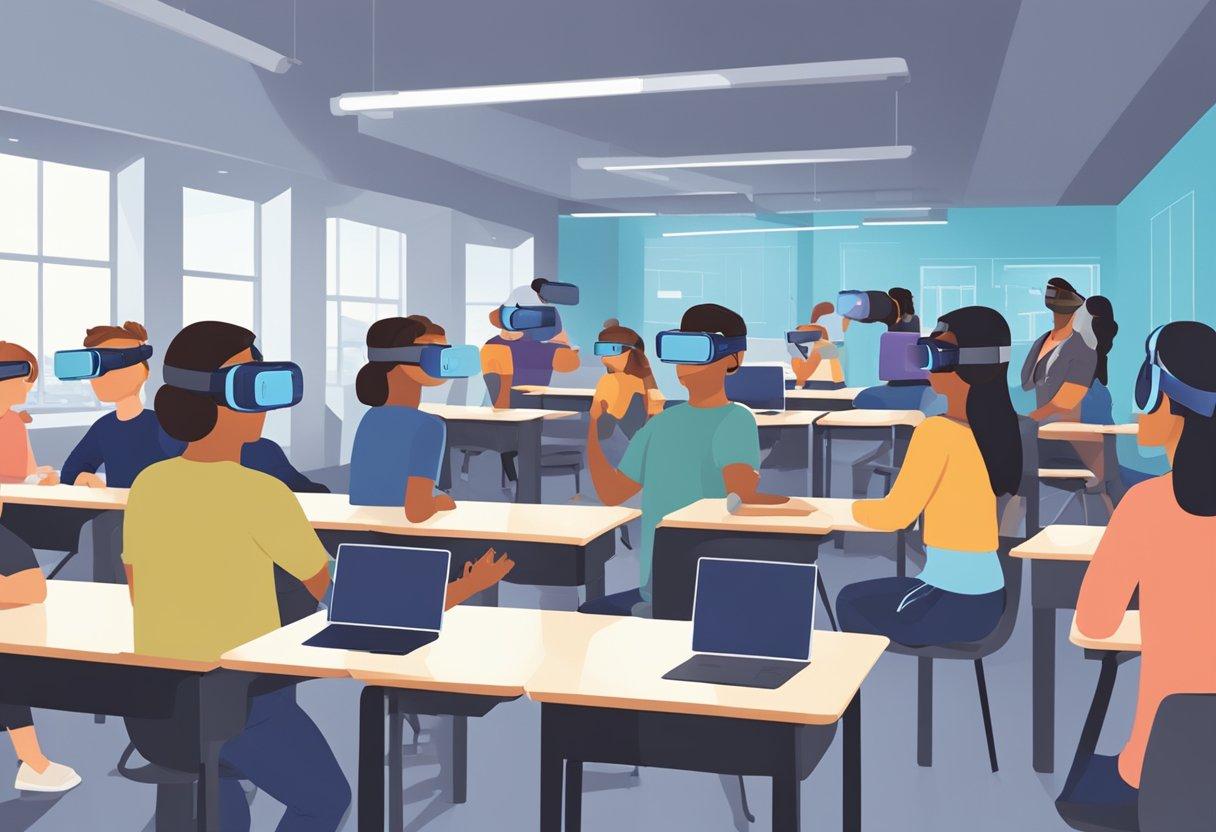
How VR Enhances Student Engagement and Improves Retention in education
Virtual Reality (VR) is no longer just the realm of gaming or entertainment—it’s rapidly transforming how students learn and retain details. By creating immersive and interactive learning environments, VR has proven to considerably enhance student engagement and improve retention in education. In this comprehensive guide,we’ll explore how VR technology is revolutionizing classrooms,increasing learning outcomes,and providing practical insights for educators considering its implementation.
Why Student Engagement and Retention Matter
Student engagement is a critical factor in effective learning. Engaged students are more likely to persist through challenges, absorb new information, and apply their learning. Retention, on the other hand, refers to a learner’s ability to remember and apply knowledge over time–a key goal in education.
Modern classrooms face challenges such as digital distractions, passive learning, and varying student attention spans. Technologies like Virtual Reality in education address these issues head-on by making learning dynamic, personalized, and memorable.
How VR Enhances Student Engagement in Education
- immersive Learning Experiences: VR environments allow students to “step inside” historical events, scientific simulations, or distant worlds. This participatory approach fuels curiosity and holds students’ attention longer than customary lectures.
- Active Participation: Instead of being passive recipients, students interact with content by manipulating objects, conducting experiments, or collaborating virtually—leading to higher engagement and motivation to learn.
- Real-World Scenarios: VR makes it possible to safely experience scenarios that would be perilous, expensive, or impractical in real life, such as working in science labs or exploring space, making learning relevant and tangible.
- Personalized and Adaptive Learning: VR experiences can adapt to a student’s pace and preferred learning style, providing instant feedback and custom challenges that nurture deeper engagement.
How VR Improves Knowledge Retention
Retention is the measure of how much students remember what they’ve learned.VR in education is proven to boost retention rates in multiple ways:
- Multi-Sensory Learning: VR engages sight, sound, and sometimes touch, allowing students to create rich mental associations that are easier to recall later.
- Learning by Doing: The experiential nature of VR lets students practise skills hands-on, which research shows leads to better long-term retention compared to passive learning.
- Contextual Understanding: By providing context and immersion, VR deepens comprehension, making abstract ideas concrete and memorable.
- Immediate Feedback: Immediate correction and reinforcement within VR environments solidify the right knowledge routes in memory.
Benefits of Integrating VR in the Classroom
- Increases Motivation: Students are more eager to participate and less likely to miss class when VR lessons are incorporated.
- Supports Diverse Learners: VR caters to various learning styles—visual, auditory, and kinesthetic, offering inclusive educational opportunities.
- Encourages Collaboration: Many VR platforms encourage teamwork and social learning, building communication and problem-solving skills.
- Safe and Controlled Environment: Simulations in VR can replicate hazardous or impossible scenarios for practice in a safe setting.
- Bridges Gaps: VR can bring field trips, expert lectures, and cultural experiences to classrooms regardless of location or budget.
Case Studies: Real-World Impact of VR on Student Engagement and Retention
Medical Training at Stanford University
Stanford’s School of Medicine implemented VR in anatomy classes, showing a 30% betterment in retention rates versus traditional methods.Students reported higher engagement and increased confidence in practical skills after practicing virtual dissections.
Smithsonian VR Expeditions
Middle school students participated in Smithsonian’s virtual field trips, reporting a 90% satisfaction rate and improved recall of historical facts and context after exploring ancient civilizations in 3D.
Immersive Language Learning
Language immersion programs using VR (like Mondly VR) enable learners to practice conversation in virtual contexts. These students typically display accelerated language acquisition and higher retention than peers in traditional settings.
Practical Tips for Implementing VR in Education
- Start Small: Begin with free or low-cost VR apps compatible with smartphones or tablets before investing in advanced hardware.
- Choose Curated content: Use reputable educational VR platforms like Google Expeditions, Nearpod VR, or Labster to ensure content quality and curricular alignment.
- integrate with Curriculum: Design VR lessons to complement—not replace—existing teaching strategies. Pair virtual experiences with discussions, assignments, and assessments.
- Train Educators: Offer professional development to help teachers feel agreeable using VR devices and troubleshooting basic issues.
- Promote Digital Citizenship: Teach students about responsible and safe technology use, including setting appropriate screen time limits.
- Monitor Accessibility: Ensure VR implementation is inclusive, considering students with disabilities or sensory sensitivities by offering alternative learning modes.
First-Hand Experiences: Educators and Students Speak
“My students are not only more engaged during VR lessons, but they consistently perform better in assessments afterwards. The ability to see and interact with concepts makes all the difference.”
– Angela P., High School Science Teacher
“I used to struggle with attention in class, but when we did the ancient Egypt VR tour, it felt like I was really there! I remember everything we learned that day.”
– Jamie L., 7th Grade Student
challenges and Future Outlook
- Access and Cost: Not all schools have the budget for advanced VR equipment, but prices are steadily declining and many resources are now accessible via smartphones.
- Learning Curve: Teacher training and IT support remain critical for accomplished integration.
- Content Quality: As educational VR grows,educators should evaluate resources to ensure accuracy and relevance.
- The Future: As technology evolves, expect to see VR paired with AR and AI for even more adaptive, immersive educational experiences—pushing engagement and retention to new heights.
Conclusion: The Transformative Power of VR in Education
Virtual Reality is redefining how students learn, dramatically enhancing student engagement and improving retention in education. By transporting learners into vibrant, interactive environments, VR transforms abstract lessons into vivid experiences, boosts motivation, and supports long-term learning. While challenges exist, practical strategies and proven benefits make VR a compelling addition to today’s classrooms.
As VR technology becomes more accessible, its potential to prepare students for a complex and dynamic world grows. Now is the perfect time for educators and institutions to embrace VR and unlock its power to inspire,educate,and empower the next generation of learners.