
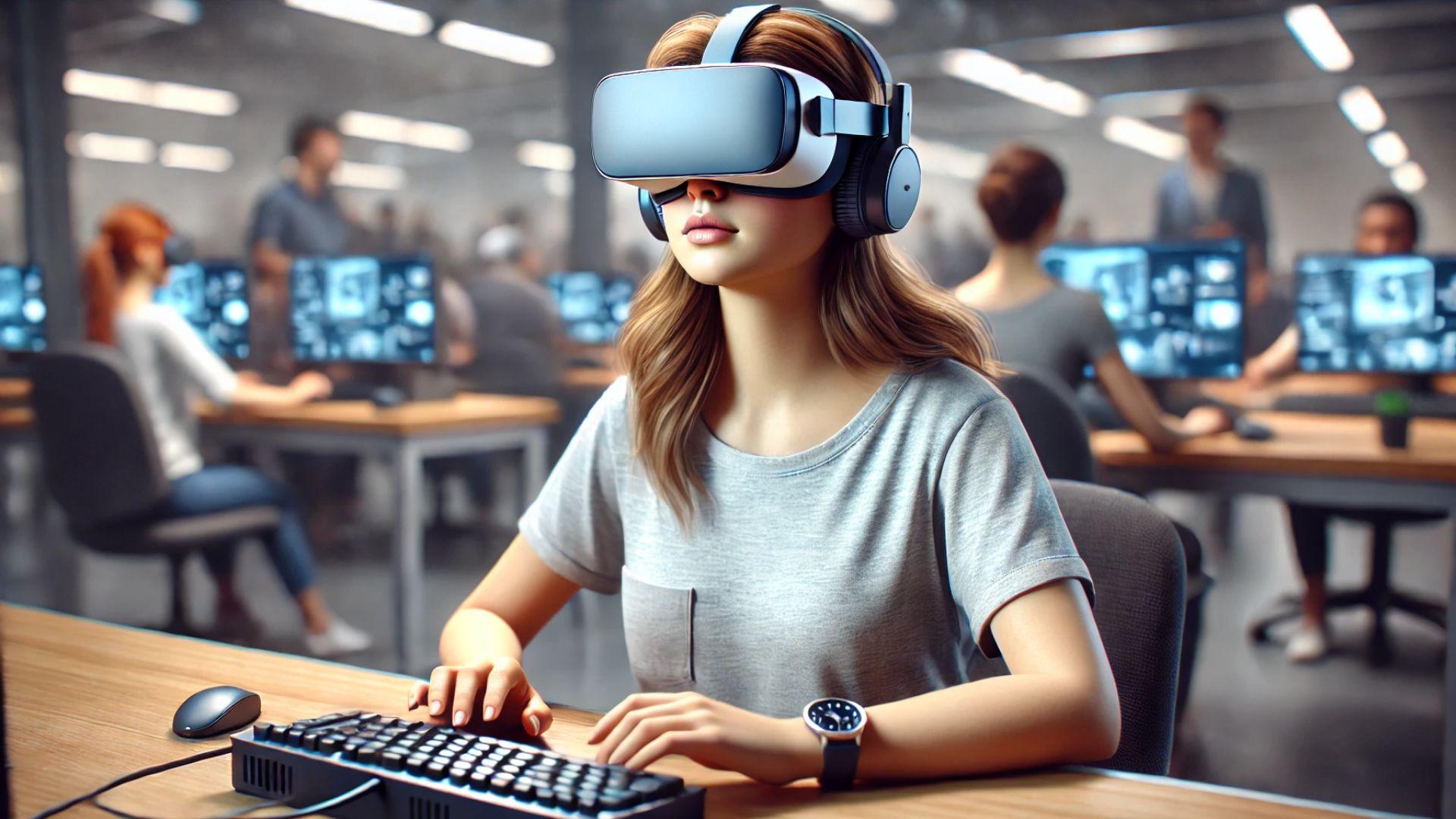
How VR Transforms Student Engagement and Boosts Retention: the Impact on Modern Education
Virtual Reality (VR) is reshaping the educational landscape by revolutionizing how teachers engage students and how learners retain facts. As schools and institutions continually seek innovative ways to improve classroom dynamics, VR emerges as a powerful ally. This article delves deep into the transformative role of VR in education, examining its impact on engagement and retention, providing practical tips, and featuring real-world case studies.
Introduction: The Dawn of Immersive learning Environments
Education is evolving at a rapid pace, and technology is at its core. Among the most promising innovations, Virtual Reality (VR) stands out for its ability to create immersive, interactive, and memorable learning experiences. Unlike traditional classroom setups,VR places students at the center of learning,allowing them to explore,interact,and experience lessons in a way that books and lectures simply cannot replicate. But how exactly does VR drive student engagement and retention? Let’s explore the transformative power of VR in modern education.
how VR Increases Student Engagement
Student engagement has always been a cornerstone of effective education. Today’s digital-native learners seek more than passive information intake—instead,they thrive on interaction,gamification,and hands-on activities.Here’s how VR meets and exceeds these expectations:
- Immersive Experiences: VR surrounds students with realistic simulations,making lessons unforgettable and fun.
- Active Participation: Unlike passive listening,VR demands action—students explore historical sites,conduct science experiments,or practice languages in virtual environments.
- Instant Feedback: Many VR platforms provide real-time feedback, enabling instant correction and deeper learning.
- Safe Learning Spaces: VR allows practice without real-world risks—think chemistry, physics, or even dangerous job simulations.
- Accessibility: students with learning disabilities may benefit from customized VR experiences tailored to their specific needs.
When students are engaged, they are more likely to participate, ask questions, and remain focused throughout lessons. Engaged learners aren’t just present; they’re actively constructing knowledge.
Boosting Knowledge Retention through VR
One of the most remarkable benefits of integrating VR in education is its positive impact on knowledge retention.Research shows that students retain up to 75% more information when engaging with immersive experiences compared to traditional methods. Here’s why:
- Multi-sensory Learning: VR incorporates visual,auditory,and kinesthetic elements,enhancing cognitive connections and memory recall.
- Emotional Engagement: VR environments provoke emotions, making experiences stick longer in long-term memory.
- Immediate Application: By practicing skills in virtual scenarios, learners move from theoretical understanding to practical mastery.
Studies find that immersive VR training leads to a 30% increase in test scores and retention rates compared to conventional study methods.
Case Studies: VR Success Stories in Education
Stanford University’s VR Classroom
At Stanford University,the Virtual Human Interaction Lab (VHIL) uses VR to teach complex subjects like climate change and empathy. Students immerse themselves in scenarios that simulate rising sea levels or social diversity issues. Surveys revealed:
- 90% of learners felt more emotionally connected to lessons in VR.
- Retention of material increased by 34% after VR-based instruction.
Medical Schools: VR for Anatomy & Surgery
Medical students at top institutions use VR to perform “hands-on” operations and study detailed 3D anatomical models.VR enables them to practice repeatedly without any risk, greatly improving confidence and understanding. Results include:
- significant reduction in errors during actual surgery.
- Faster mastery of complex medical procedures.
K-12 Schools: Bringing History and Science to Life
Several high schools across the US have adopted VR-based lessons to teach history and science. Students “walk” ancient Roman streets or witness volcanic eruptions firsthand. Engagement rates soar—students are less distracted and more eager to participate.
Benefits of Virtual Reality in Modern Education
Implementing VR technology in the classroom offers numerous benefits:
- Enhanced Collaboration: Multiplayer VR environments encourage teamwork and peer-to-peer learning.
- Personalized Learning: VR adapts to each learner’s pace, style, and abilities.
- Global Learning Experiences: Students can “visit” museums, outer space, or other countries—breaking geographical limits.
- Fostered Creativity: Creative storytelling,problem-solving,and critical thinking all flourish in immersive VR lessons.
Practical Tips for Successful VR Implementation
Thinking about adopting VR in your classroom or institution? Here are actionable tips to maximize student engagement and retention:
- Start Small: Pilot a single VR lesson to gauge engagement and collect feedback.
- Choose Age-Appropriate Content: Select VR apps and modules suitable for your students’ academic level.
- Integrate with Curriculum: Align VR experiences with learning objectives for optimal results.
- Include Debrief Sessions: Post-VR discussions cement knowledge and encourage critical thinking.
- Offer Training to Teachers: Empower educators with VR best practices and troubleshooting guidance.
- Monitor Accessibility & Safety: Ensure devices are accessible to all and follow recommended usage guidelines.
First-Hand Experiences: What Students and Teachers Say
Feedback from early adopters highlights the positive effects of VR in education:
“VR lessons make history come alive! I felt like I was actually standing in Ancient Rome—it’s way more engaging than just reading a textbook.” — sarah, Grade 10 Student
“Integrating VR helped even my most reserved students get involved. It leveled the playing field and sparked curiosity across the board.” — Mr. Chang, High School Teacher
Such testimonials reinforce VR’s promise as an engagement and retention booster in today’s digital classrooms.
Conclusion: The Future of Learning Is Immersive
Virtual Reality is not just a technological novelty—it’s a transformative tool that addresses two of education’s biggest challenges: capturing student attention and ensuring knowledge retention. As VR technology continues to become more accessible and affordable, its impact on modern education will only grow.
To summarize:
- VR significantly increases student engagement through immersive, interactive learning experiences.
- It boosts retention rates by facilitating active participation and emotional connection.
- Real-world applications and case studies demonstrate proven results across all educational levels.
- With thoughtful implementation, VR can enrich curricula and prepare students for success in a tech-driven world.
Are you ready to embrace the new frontier of immersive education? VR is already transforming classrooms—and your students deserve to be part of this engaging, future-focused journey.