
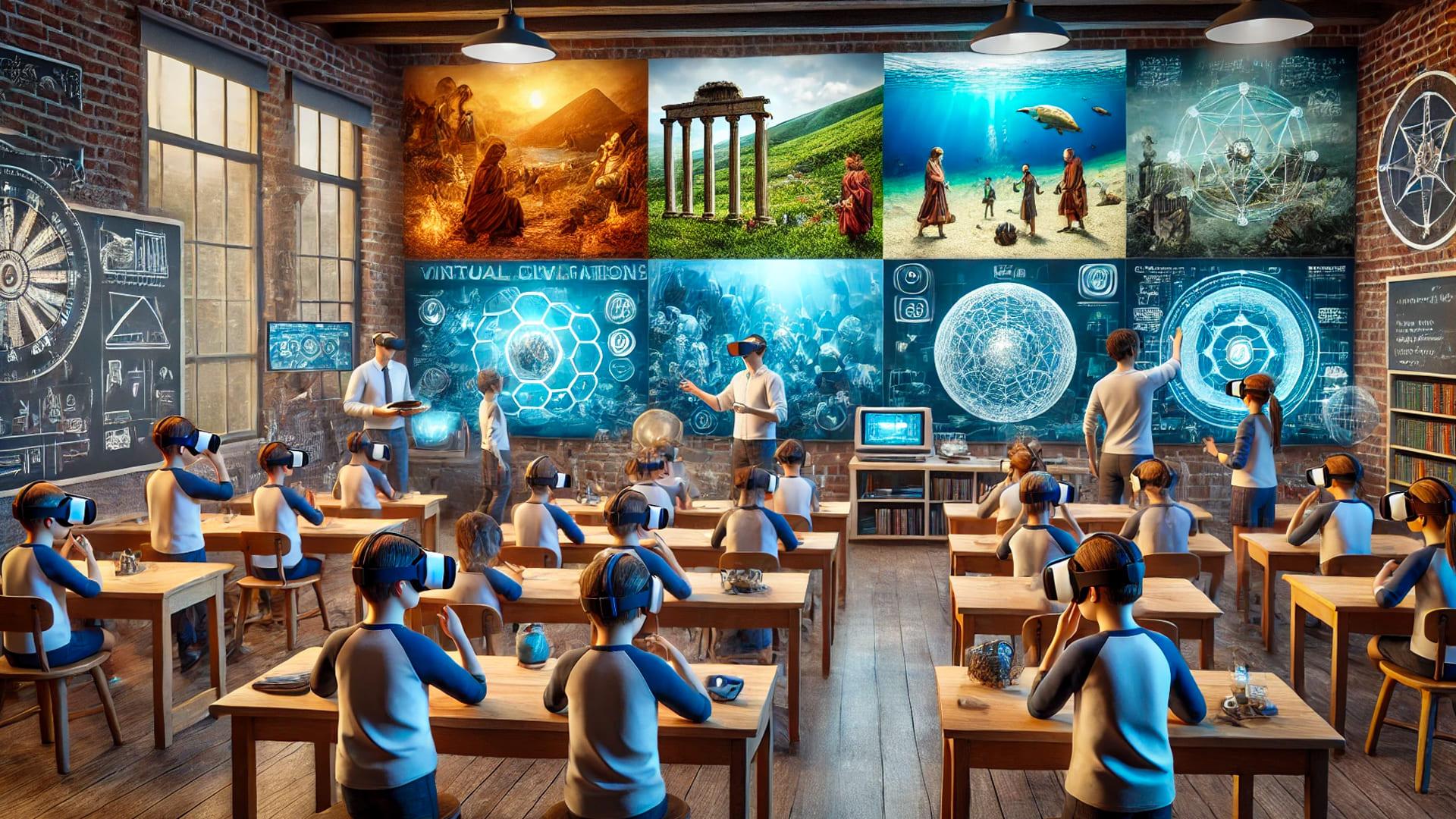
Immersive Learning in Modern Education: How VR and AR Are Transforming Classrooms
Imagine a classroom where students dissect virtual frogs, travel back in time to ancient Egypt, or walk on the surface of Mars, all from their desks. With immersive learning technologies like Virtual Reality (VR) and Augmented Reality (AR), this vision is rapidly becoming a reality. As education continues to evolve, VR and AR are at the forefront, empowering educators and engaging students like never before.
What Is Immersive Learning?
Immersive learning leverages digital technologies—chiefly VR and AR—to create engaging, interactive environments where students can deeply explore complex subjects. Unlike traditional instruction, immersive learning places students at the center of the experiance, encouraging exploration, critical thinking, and active participation.
- Virtual reality (VR): Fully digital worlds that students enter using headsets, allowing for complete immersion.
- Augmented Reality (AR): Overlays digital content on the real world, often via smartphones or tablets, enhancing physical surroundings with interactive elements.
Key Benefits of VR and AR in the Classroom
Integrating VR and AR in education brings unique advantages that address common learning challenges:
- Enhanced Engagement: Interactive experiences capture students’ attention, making learning enjoyable and memorable.
- Deeper Understanding: Complex and abstract topics are easier to grasp through 3D visualization and hands-on simulations.
- Safe and Cost-effective Simulations: Explore hazardous or expensive scenarios (e.g., chemical experiments, space travel) without risk.
- Personalized Learning: Students can learn at their own pace, repeating simulations and receiving instant feedback.
- Accessibility: Makes field trips and rare experiences possible for all students, regardless of location or resources.
The Impact of Immersive Learning: Case Studies & Real-World Examples
Schools and universities worldwide are harnessing the power of immersive learning technologies to elevate education. Here’s a look at some inspiring examples:
1. Virtual Field Trips
Organizations like Google Expeditions allow students to embark on virtual journeys to the Great Wall of China, deep sea trenches, or even outer space. Teachers report heightened curiosity and interest in subjects like history, geography, and science after such experiences.
2.Medical Training with VR
Medical schools leverage VR simulations to help students practice surgeries in lifelike environments, drastically reducing errors and improving outcomes. Platforms like Osso VR and Touch Surgery are at the forefront of this innovative training method.
3. AR in Science Lessons
Elementary schools using AR apps such as Merge Cube enable students to manipulate 3D models of the solar system, cells, or dinosaurs. This hands-on approach makes abstract scientific concepts easier to understand.
4. History Come to Life
VR experiences transport learners to historic battlefields, archaeological sites, or ancient civilizations. This immersive interaction fosters empathy and a richer contextual understanding than textbooks alone can provide.
First-Hand Experiences: What Teachers and Students Say
“In my classroom, VR headsets have transformed the way students learn about world geography. Instead of just reading about rainforests, they’re now virtually immersed in their sights and sounds.It’s learning by living the lesson!”
“Solving 3D puzzles in AR feels like a game, but I realized I was actually learning geometry. It’s a lot more fun than worksheets!”
Such positive feedback highlights why more schools are investing in immersive learning technology as part of their edtech strategy.
Practical Tips for Integrating VR and AR in the Classroom
- Start Small: Begin with low-cost AR apps accessible via tablets or smartphones.
- Train Staff: provide professional advancement sessions to help educators integrate these tools confidently.
- Align with Curriculum: Use VR and AR modules that directly support learning objectives and standards.
- Encourage Exploration: Let students create their own AR experiences or VR scenarios for deeper engagement.
- Assess and Adjust: Gather student feedback and track learning outcomes to refine your immersive learning strategy.
Recommended AR and VR Tools for Classrooms
- Google Expeditions – Virtual field trips and tours
- Nearpod VR – Interactive 3D learning modules
- Merge Cube – AR-enabled 3D object exploration
- CoSpaces Edu – Student-created VR worlds
- QuiverVision – AR coloring and learning activities
potential Challenges and How to Overcome Them
While immersive learning in modern education offers many benefits, some hurdles remain:
- Cost: High-end VR equipment can be expensive. Schools can start with cost-kind AR apps or pursue grants and partnerships for broader implementation.
- Device Management: Managing and maintaining devices requires planning—consider shared sets, device rotation, and robust IT support.
- Content Quality: Seek reputable publishers and check reviews to ensure educational value and age appropriateness.
- Accessibility: Ensure that immersive experiences are inclusive and comply with accessibility standards for all learners.
The Future of Immersive Learning
As technology continues to advance, the potential of VR and AR in education will only grow. Forthcoming innovations such as haptic feedback, enhanced collaboration tools, and AI-driven customization will make learning ever more engaging and adaptive to individual needs.
Educators and policymakers should stay informed about emerging edtech trends and be proactive in harnessing immersive learning for student success. Investment in infrastructure and staff training today will pay dividends in future-ready classrooms.
Conclusion
Immersive learning with VR and AR is not just a trend; it’s a transformative movement shaping the future of education. by harnessing these technologies, modern classrooms become portals to world-class experiences, deeper understanding, and improved engagement for students of all ages. Whether you’re an educator ready to experiment with new teaching tools or a school leader planning your next tech investment,the time to embrace immersive learning is now. The possibilities are only limited by your imagination!