
Maximizing Success: How Microlearning Boosts Corporate Training Programs
In today’s fast-paced business environment, organizations are constantly seeking innovative methods to enhance employee development and drive meaningful results. Microlearning has emerged as a powerful strategy for maximizing impact in corporate training programs. By delivering focused, bite-sized learning modules, companies can boost engagement, knowledge retention, and on-the-job performance. This comprehensive guide explores how microlearning can transform your training initiatives for greater success.
What Is Microlearning? A Swift Overview
Microlearning refers to educational content delivered in short, targeted bursts, each focusing on a specific topic or skill.These micro-modules, typically lasting between 3 to 7 minutes, are designed to be easily digestible and accessible—ofen through digital platforms such as mobile apps, e-learning platforms, and intranets.
- Short and focused: Zeroes in on one learning objective.
- Accessible on-demand: Employees can learn anytime, anywhere.
- Engaging formats: Videos, quizzes, infographics, podcasts, and more.
- Ideal for just-in-time learning: Delivers training at the point of need.
Why Microlearning Works for Corporate Training Programs
Microlearning is revolutionizing how organizations approach employee training. Here’s why it’s effective:
- Addresses Short Attention Spans: Today’s employees juggle multiple tasks.Microlearning’s brief format keeps learners engaged and reduces cognitive overload.
- Improves Knowledge retention: Breaking complex subjects into smaller pieces leverages the “spacing effect,” helping learners retain information longer.
- supports Flexible, Personalized Learning: Employees learn at their own pace, focusing on skills most relevant to their job roles.
- Facilitates Continuous Learning Culture: Frequent, incremental learning sessions embed training into daily routines.
- Enhances Mobile Learning: Microlearning modules are easily consumed on smartphones and tablets.
- Cost-Effective & Scalable: Organizations can update and scale content quickly to reach distributed teams worldwide.
Key Benefits of Microlearning in Corporate Training
Integrating microlearning into your corporate training strategy brings tangible benefits:
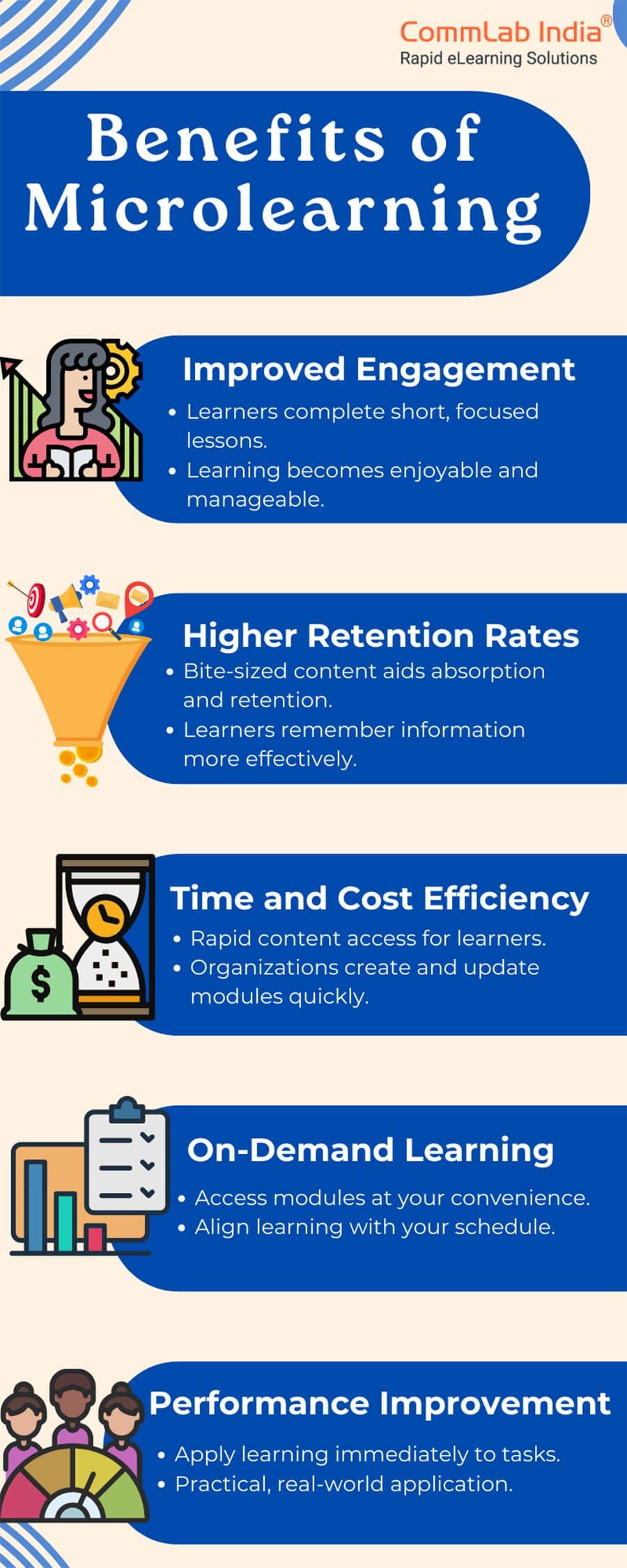
1. Enhanced Learner engagement
Short, interactive modules capture attention, making employees more likely to complete training and participate actively.
2. Improved Knowledge Transfer
Frequent reinforcement of key concepts with microlearning helps turn new information into actionable skills on the job.
3. Just-In-Time Training
Microlearning enables employees to access relevant content right when they need it—such as preparing for a sales meeting or using new software.
4. Greater ROI
Reduced time investment, faster onboarding, and improved workplace performance translate into measurable business outcomes.
Practical Tips for Implementing Microlearning in Your Organization
Ready to harness the benefits of microlearning in your corporate training programme? Here’s how to get started:
- Identify Training Objectives: Define clear, measurable goals for each microlearning module.
- Segment Content: Break down complex topics into bite-sized lessons focused on one key takeaway.
- Leverage Multimedia: Use a mix of videos, quizzes, infographics, and interactive scenarios to cater to different learning styles.
- Prioritize Mobile Compatibility: Design modules that are easy to access via smartphones and tablets for learning on the go.
- Encourage Social Learning: Enable discussions, peer sharing, and feedback through forums or chat features.
- Track & Measure Outcomes: Use LMS analytics to monitor engagement and assess knowledge gains.
- Iterate & Improve: Collect feedback continuously and update content to keep training relevant and effective.
Success stories: how Leading Companies Leverage Microlearning
Organizations across industries are seeing impressive results from implementing microlearning as part of their corporate training initiatives. here are some real-world examples:
- SAP’s Global Sales Training
-
SAP integrated microlearning into their sales enablement programs to deliver “bite-sized” updates on new products and sales strategies. Result: Sales reps reported higher confidence and faster time-to-productivity.
- Unilever’s Leadership Development
-
Unilever used microlearning modules in their global leadership programs, promoting continuous skill development and knowledge sharing across geographically dispersed teams.
- IBM’s Technical Training
-
instead of traditional lengthy courses, IBM deployed microlearning for upskilling IT professionals—leading to increased course completion rates and faster adoption of new technologies.
First-Hand Experience: Microlearning in Action
As a learning and development professional, I’ve witnessed microlearning drive real change in workplace training. For instance, rolling out a regulatory compliance training in short video bursts led to:
- Higher participation: Completion rates rose from 60% (full-length e-learning) to 95% (microlearning).
- Better retention: quizzes showed a 30% increase in knowledge retention three months after training.
- Positive feedback: Employees appreciated the flexibility and relevance of “learning in the flow of work.”
Best Practices for a Successful Microlearning Strategy
To maximize the benefits of microlearning in corporate training programs:
- Focus on One Objective Per Module: Keep modules tightly aligned with a single learning goal for maximum clarity.
- Drive Interactivity: Encourage engagement with knowledge checks, branching scenarios, or simulations.
- Maintain Consistency: Use visual and instructional design standards for a cohesive learning experience.
- Integrate Into Employee Workflow: Embed microlearning into daily business processes, such as onboarding, sales, or customer service.
- Collect and Act on Feedback: Continuously improve content by soliciting learner input and measuring effectiveness.
Conclusion: The Future of Corporate Training is Microlearning
Embracing microlearning is no longer optional—it’s a strategic advantage for organizations looking to future-proof their workforce.By delivering concise,flexible,and engaging training experiences,companies can empower employees to gain skills quickly,retain knowledge longer,and perform at higher levels.Whether you’re just beginning to explore microlearning or aiming to optimize existing programs, these insights and strategies will help you maximize your corporate training success.
Ready to transform your corporate training program with microlearning? Start small, measure results, and iterate for continual enhancement. Your employees—and your business—will thank you.