
Microlearning: Meeting Modern learner Needs with Bite-Sized Education
In a world where attention spans are shrinking and the demand for rapid upskilling is at an all-time high, traditional learning methods often fall short. Enter microlearning—a revolutionary approach that delivers educational content in small, manageable segments designed to meet the needs of today’s busy learners. In this article, we’ll explore the essentials of microlearning, its benefits, proven best practices, and real-world examples to help you harness its full potential in your organization or learning journey.
What is Microlearning?
Microlearning is an innovative educational strategy that breaks down complex topics into easily digestible, bite-sized chunks. Typically lasting between two and ten minutes, microlearning lessons are designed to be focused, flexible, and immediately applicable. This modern learning method leverages multimedia formats such as videos, quizzes, infographics, and podcasts to keep learners engaged and promote knowledge retention.
- Format: Short videos, podcasts, infographics, slides, quizzes, or textual nuggets
- Duration: 2–10 minutes per session
- Purpose: Just-in-time learning, skill refreshers, performance support
- Accessibility: Mobile-friendly, on-demand access
Why Microlearning Meets Modern Learner Needs
Today’s workforce is increasingly mobile, digitally savvy, and time-pressed. Microlearning strategies cater to these demographics by offering learning opportunities that are:
- Flexible: Allows learners to access training anytime,anywhere,and on any device.
- Focused: Delivers single or closely related learning objectives, reducing cognitive overload.
- Just-in-Time: Enables learners to acquire knowledge exactly when they need it, boosting on-the-job performance.
- Engaging: Diverse and interactive content formats make learning enjoyable and memorable.
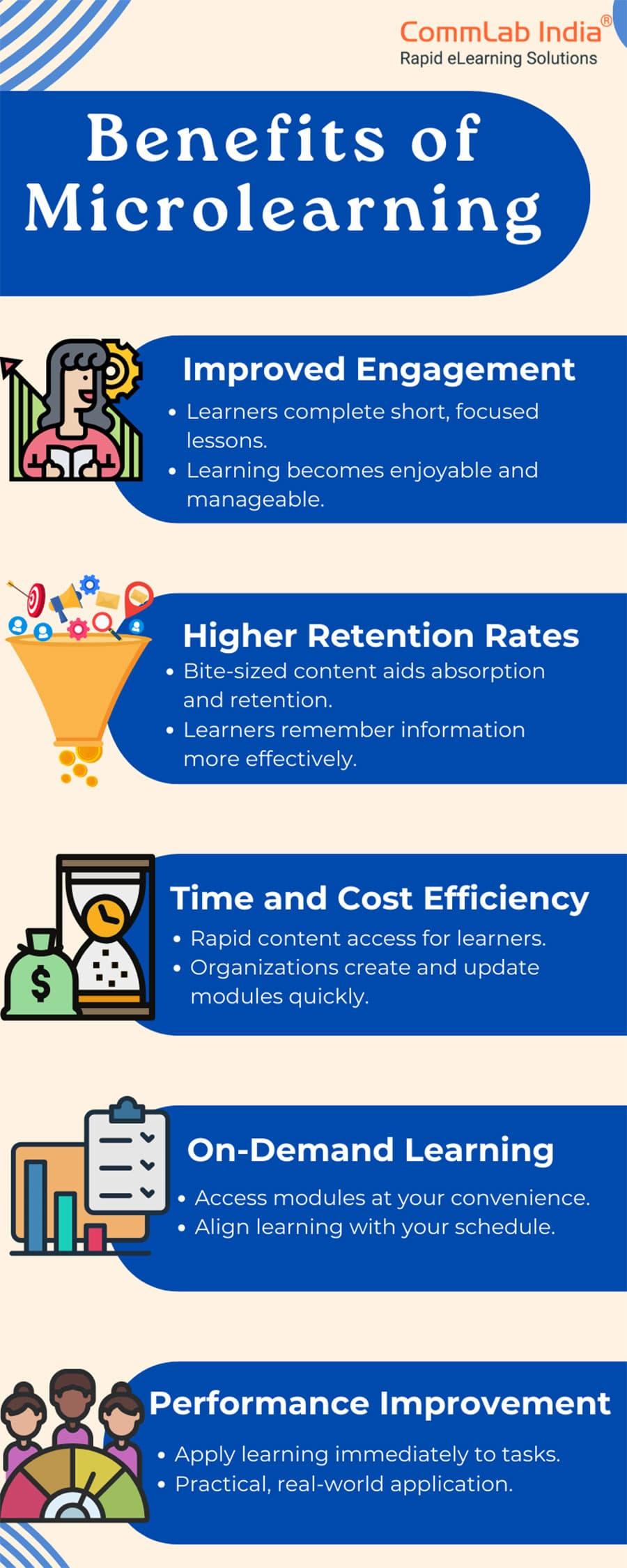
The Top Benefits of Microlearning
Integrating microlearning solutions into your training programs offers numerous advantages to both learners and organizations.
1. Improved Retention & Recall
Bite-sized learning combats information overload and leverages spaced repetition, which considerably improves memory retention and recall rates compared to traditional learning.
2. On-Demand & Mobile Learning
Microlearning is perfect for learning in the flow of work. Mobile compatibility lets learners fit training into their busy days—whether commuting, on breaks, or between meetings.
3. Higher Engagement
Shorter, focused content encourages frequent participation and completion. Gamification elements, quizzes, and interactive modules keep learners motivated and invested.
4. Cost-Effective & Scalable
Microlearning content is faster and less expensive to produce, update, and deploy at scale—making it ideal for organizations of all sizes.
5. Personalized Learning Experiences
Analytics can track progress and adapt to individual learning needs, allowing for personalized pathways and targeted skill development.
How to Design Effective Microlearning content
Creating impactful microlearning modules doesn’t happen by accident. Follow these best practices to maximize the power of your microlearning initiatives:
-
Define a Single Learning objective:
Focus each microlearning unit on one clear, actionable objective.
-
Keep It Short and Simple:
Maintain a duration of under 10 minutes and use concise language and visuals.
-
Use Multimedia Wisely:
Diversify formats (videos, infographics, flashcards) to increase engagement.
-
Make it Mobile-Ready:
Ensure seamless access on smartphones and tablets by using responsive design.
-
Incorporate interactivity:
Include quizzes, scenarios, or interactive exercises to reinforce learning.
-
Leverage Spaced Repetition:
Present key points at intervals to solidify retention.
-
Provide Just-in-Time Support:
Allow learners to access microlearning modules as performance aids on the job.
Real-world Case Studies: Microlearning in Action
Organizations across the globe—from tech giants to healthcare providers—are embracing microlearning as a core corporate training solution. Consider these inspiring case studies:
Case Study #1: Google’s Whisper Courses
Google deployed “Whisper Courses”, a microlearning program focused on manager training. Managers received short prompts and scenarios delivered directly to their inboxes. Completion rates shot up,and follow-up evaluations showed enhanced team performance and manager effectiveness.
Case Study #2: unilever’s Mobile Learning
Unilever introduced a mobile microlearning app to train its global workforce. Bite-sized learning modules—delivered in local languages and personalized to employees’ roles—cut onboarding time by 50% and improved employee satisfaction scores.
Case Study #3: Healthcare Compliance at St. John’s Hospital
St. John’s Hospital implemented microlearning quizzes and video snippets to reinforce compliance policies. This approach resulted in a 35% improvement in quiz scores and boosted overall compliance rates, all while reducing the time spent in mandatory training sessions.
First-Hand Experience: Microlearning in Action
“I used to struggle with long online courses. Since my company switched to microlearning, training feels less overwhelming. I watch a 5-minute video between tasks or during my commute. It’s practical, easy to remember, and I’m actually applying what I learn immediately.”
– Alex, Customer Support Specialist
This experience is echoed by countless learners who appreciate the flexibility and effectiveness of microlearning, especially when compared to conventional, time-consuming eLearning modules.
Tips for Effective Microlearning Implementation
Ready to adopt microlearning in your organization? Here are some actionable tips:
- Assess Needs: Identify knowledge or skill gaps best addressed by swift, focused lessons.
- Start Small: Pilot microlearning with a single department or process before scaling up.
- Gather Feedback: Ask learners for input to refine content and delivery methods.
- Analyze Impact: Use analytics to evaluate engagement, completion rates, and real business outcomes.
- Integrate with LMS: Incorporate microlearning modules into your Learning Management System (LMS) for seamless deployment and tracking.
The Future of Microlearning
Microlearning is not just a trend—it’s shaping the future of online education and workplace training. As technology advances, expect greater personalization, adaptive learning paths, and real-time analytics that further align with learners’ preferences and organizational goals.
Combining microlearning with artificial intelligence and gamification will only make content more engaging and effective, ensuring that learners gain the skills they need—when they need them most.
Conclusion: Embrace Microlearning for Modern Learner Success
In today’s fast-paced, digital-first world, microlearning stands as a powerful, scalable solution for meeting the education needs of modern learners. By offering flexible, personalized, and highly engaging training, microlearning empowers individuals and organizations to achieve more—faster and with greater retention.
Ready to transform your training strategy? start small, stay focused, and watch your learning outcomes soar with microlearning. Explore new tools, invest in quality content, and make learning a seamless part of everyday work and life.
If you’ve found success with microlearning,share your experience in the comments below,or reach out to learn more about how to integrate microlearning solutions into your organization today!