
Microlearning Revolution: How Bite-Sized Training Meets Modern Learner Needs
Introduction: The Rise of Microlearning in Modern Education
In today’s digital era, microlearning has emerged as a game-changer in workplace training and educational sectors. With rapid technological advancements and shrinking attention spans, the conventional approach to learning is no longer as effective. Learners crave information that’s relevant, accessible, and easy to digest. The microlearning revolution is transforming how organizations, educators, and individuals approach skill growth and knowledge acquisition.But what exactly is microlearning, and why is it so powerful? Let’s dive in and explore how bite-sized training content is meeting the evolving needs of the modern learner.
What is Microlearning?
Microlearning refers to delivering educational content in short, focused bursts that are easy to consume and act upon. Typically, microlearning modules last anywhere from a minute to fifteen minutes and concentrate on a single concept or skill. These bite-sized training elements can be videos, quizzes, infographics, podcasts, or interactive tools designed for rapid consumption.
- Short duration, usually 1-15 minutes per lesson
- Focused on a single learning objective
- Uses varied formats: video, quiz, podcast, infographic, SCORM packages
- Often mobile-pleasant and accessible on any device
- Designed for just-in-time learning
Microlearning is uniquely positioned to cater to the fast-paced workflow and information overload that characterize the modern workplace and educational environments.
The Benefits of Microlearning: Why Bite-Sized Training Works
The advantages of microlearning make it an essential part of any modern training strategy. Here are some of the top reasons why organizations and educators are embracing microlearning:
1. Increased Engagement and Retention
- Microlearning utilizes multimedia elements to keep content interactive and engaging.
- Iinformation chunks are easier to remember and recall, helping learners retain information longer.
- Short, focused lessons eliminate cognitive overload and improve focus.
2. Flexible and On-Demand Learning
- Learners can access content anytime, anywhere, fitting learning seamlessly into their schedules.
- Mobile compatibility ensures training is available on the devices learners use most.
- On-demand modules provide support at the exact moment it is needed — just-in-time learning.
3. Cost-efficient and Scalable
- Microlearning enables organizations to roll out training quickly and cost-effectively.
- Updating or replacing outdated modules is straightforward, further reducing costs.
- Scalability means new content can be created to address emergent needs rapidly.
4. Supports Continuous Learning Culture
- Short courses promote ongoing development rather than one-off training sessions.
- Continuous access to microlearning fosters a culture of lifelong learning and self-improvement.
How Microlearning Meets Modern Learner Needs
Traditional learning methods, such as lengthy in-person workshops or hours-long eLearning sessions, often fail to keep up with the expectations and lifestyles of modern learners. The microlearning revolution offers strategic advantages that make it the ideal solution for today’s workforce and student populations:
- Digital Natives: most learners today are comfortable with mobile devices and expect training that is digital, interactive, and on-the-go.
- Short Attention Spans: Research shows average attention spans have declined, making short learning modules far more effective.
- Just-In-Time Support: Employees and students often need answers or guidance at the point of need, which is perfectly supported by bite-sized lessons accessible on demand.
- Personalization: Microlearning platforms allow for customized learning paths that match individual needs and career goals.
- Gamification & interactivity: Engaging formats such as quizzes, flashcards, and scenario simulations foster active involvement and motivation.
Practical tips for Designing Effective Microlearning Modules
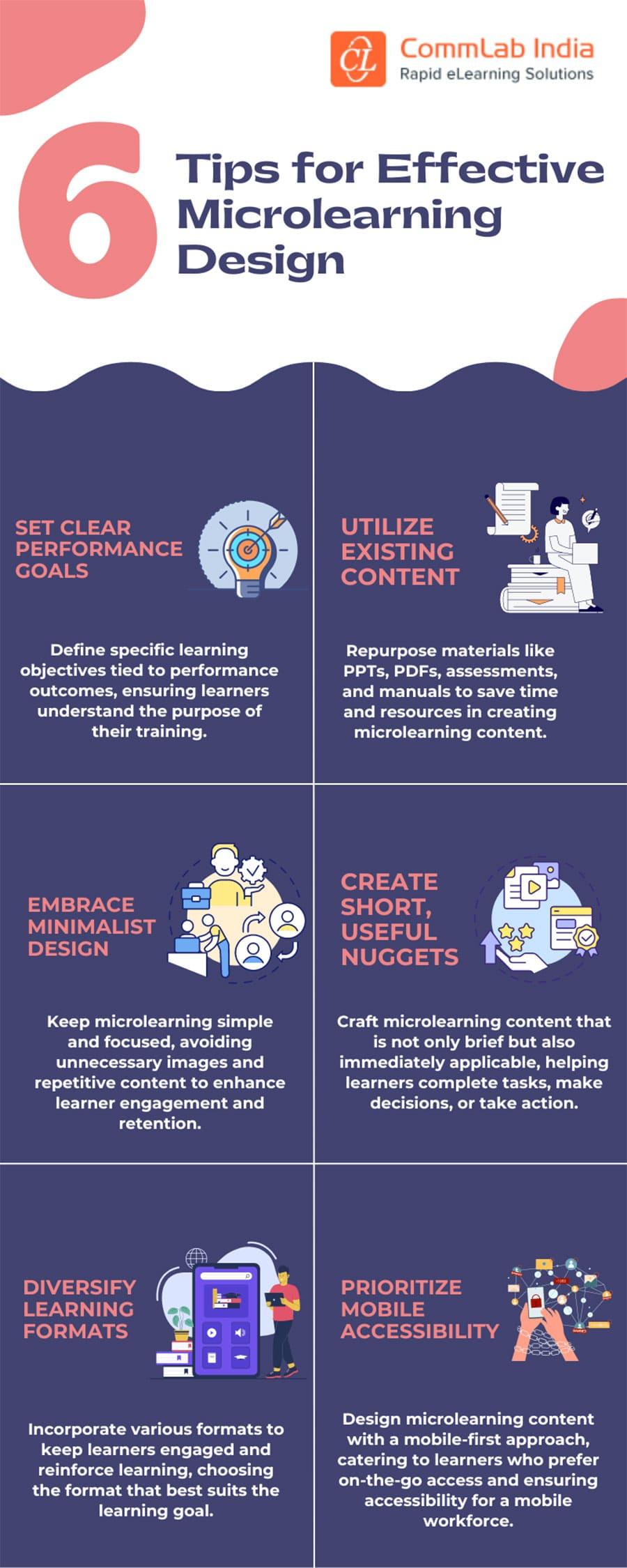
Building effective microlearning experiences takes thoughtful planning. Here are actionable best practices for organizations and course creators:
- Define Clear Learning Objectives: Each micro lesson should focus on a single, measurable goal.
- Choose the Right Format: Video, animation, infographics, audio, and interactive scenarios all lend themselves well to microlearning.
- Optimize for Mobile: Use responsive design and keep navigation simple for seamless access anywhere.
- Provide Immediate Feedback: Incorporate quizzes and rapid knowledge checks to reinforce learning.
- Make Content Searchable: Use strong keyword optimization, relevant tags, and metadata to help learners find what they need instantly.
- Integrate Social Learning Elements: Enable sharing, discussion forums, and collaborative tasks.
- Track Progress and Analytics: Use LMS or LXP analytics to monitor engagement, performance, and learning impact.
Investing in user-friendly and visually appealing microlearning solutions can foster better adoption and success rates.
Case Studies: Real-World Impact of Microlearning Strategies
Case Study 1: Healthcare Industry
A leading hospital system transitioned from traditional training to microlearning modules for medical staff. By delivering interactive, 10-minute lessons on new protocols and policies via mobile apps, they saw a 30% improvement in adherence to updated procedures and a significant decrease in retraining costs.
Case Study 2: Retail and Customer Service
A national retail chain incorporated scenario-based microlearning programs to reinforce customer service best practices. The result? In-store associates scored 25% higher on service satisfaction surveys, and training completion rates increased to nearly 100%.
Case Study 3: Technology & Development Teams
A global tech company launched microlearning thru chatbots integrated in their project management apps. Employees received short lessons and guides on new software features, reducing support desk queries by 40% and boosting productivity.
First-Hand Experience: Learning Leaders Speak Out
“Microlearning has changed how our teams build skills. Before, everyone dreaded annual training days. Now, staff complete modules at their own pace, right on their phones, and actually look forward to learning.”
– Alexandra Mills, HR Director, FinTech Corp.
“We use microlearning for onboarding remote employees. it’s fast, efficient, and keeps new hires connected without information overload.”
– Rahul Mehta, Head of L&D, StartUpNest
Getting Started With Microlearning: Essential Tools & Platforms
Ready to launch your own microlearning programs? Consider these popular microlearning platforms and tools for rapid course creation and deployment:
- EdApp: Mobile-first microlearning with template-based lesson creation.
- TalentCards: Specializes in flashcard-style bite-sized training.
- LearnAmp: Social and collaborative microlearning solution.
- Axonify: Adaptive microlearning for employee training and knowledge reinforcement.
- wordpress + LMS plugins: Use plugins like LearnDash or LifterLMS to build and host microlearning modules directly on your site.
The key to success lies in aligning your platform choice with your learners’ habits and your organizational goals.
Conclusion: Microlearning Revolutionizes Training For The Modern Learner
The microlearning revolution is not just a passing trend — it’s a fundamental shift in how we deliver and consume educational content.Bite-sized learning addresses the needs of today’s learners by providing accessible, engaging, and actionable knowledge that fits effortlessly into busy lives. Organizations that embrace microlearning strategies report higher learner engagement, faster skill development, and stronger ROI from their training investments.
As the way we work and learn continues to evolve, microlearning will remain at the forefront of effective education. The time to adopt this innovative approach is now — unlock the full potential of your learners with microlearning.