
Microlearning: The Key to Engaging and Empowering Today’s Modern Learners
In the fast-paced digital landscape of today, the need for flexible, engaging, and impactful learning solutions is more critical than ever. Traditional training methods frequently enough fall short in capturing the attention of modern learners, who crave quick, accessible, and personalized experiences. Microlearning—an instructional strategy focused on delivering content in small, bite-sized units—has emerged as the game-changer in corporate training, education, and professional growth. But what makes microlearning so effective, and how can organizations implement it to empower their workforce? In this article, we explore the power of microlearning, its unique advantages, practical tips for success, and compelling case studies demonstrating real-world impact.
What is Microlearning?
Microlearning is an educational approach that delivers information in concise, focused bursts. Each learning session typically lasts between 3 to 7 minutes and targets a single learning objective or skill. By breaking down complex topics into digestible segments, microlearning makes knowledge acquisition quicker, more engaging, and easier to retain.
- Short,targeted content modules
- Interactive elements (quizzes,videos,infographics)
- Mobile-compatible for learning on-the-go
- Self-paced,learner-driven format
Why Microlearning Matters for Modern Learners
Today’s learners are busier than ever. Whether they’re juggling work, family, or personal development, attention spans are shorter and expectations are higher. microlearning meets these needs by providing:
- Instant Accessibility: Learners can access materials anytime, anywhere, using their desktops or mobile devices.
- Personalization: Content can be tailored to individual learning paths, roles, or skill levels.
- Just-in-Time Learning: Microlearning supports on-the-job application by delivering relevant information exactly when it’s needed most.
- Higher Engagement: Interactive and visually-rich modules keep learners motivated and focused.
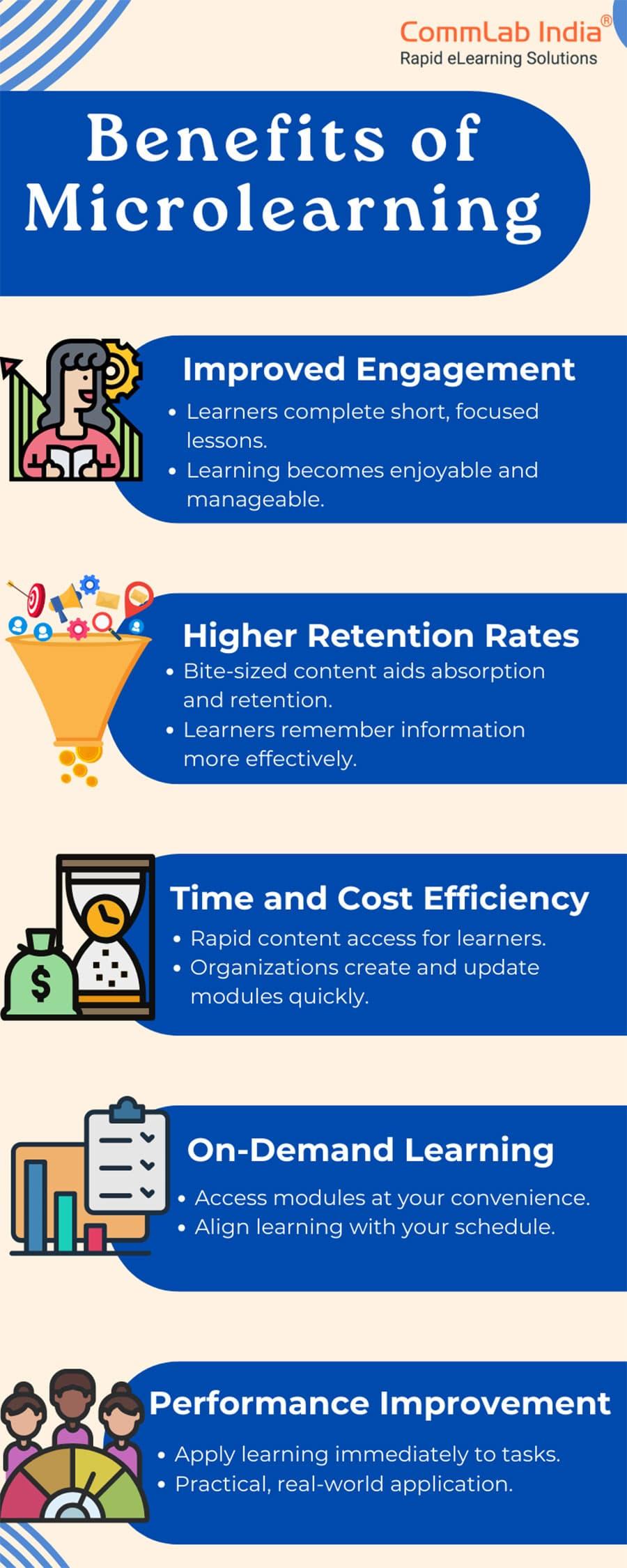
The Benefits of Microlearning
Implementing a microlearning strategy can offer a wide range of tangible advantages for organizations and learners alike:
- Improved Knowledge retention: Short, focused lessons boost memory and recall, reducing information overload.
- Cost-effective Training: Shorter courses mean reduced development and delivery expenses, especially when content is repurposed or updated.
- Enhanced Learner Autonomy: Employees are empowered to choose when, how, and what to learn, fostering lifelong learning habits.
- Agility and Scalability: Organizations can quickly launch or update learning modules to keep up with industry changes and compliance requirements.
- Increased Completion Rates: Microlearning’s bite-sized format reduces drop-off, driving higher completion and engagement metrics.
How to Implement Microlearning Effectively
To maximize the impact of your microlearning initiatives, follow these proven best practices:
- Identify Clear Learning Objectives: Before creating content, define specific, measurable goals for every microlearning module.
- Keep Content Bite-Sized: limit each module to one topic or concept, ideally less than 10 minutes in duration.
- Leverage Multiple Formats: Use a mix of videos, podcasts, infographics, interactive scenarios, and quizzes to cater to diverse learning preferences.
- Focus on practical Application: Include real-life examples, case studies, or scenario-based questions to encourage on-the-job learning.
- Enable mobile Learning: Ensure all microlearning content is mobile-kind to support anytime, anywhere access.
- Gather Feedback and Iterate: Continuously seek learner feedback through analytics and surveys to refine and improve modules.
Microlearning in Action: Real-World Case Studies
the effectiveness of microlearning is not just theoretical—many forward-thinking organizations have achieved measurable results by adopting this approach:
Case Study 1: Global technology Company
A leading tech enterprise implemented microlearning to support a company-wide software rollout. By replacing traditional day-long workshops with short video tutorials and interactive Q&A modules,they saw a 30% reduction in time-to-competency and a 40% increase in application accuracy.Employees reported greater confidence using the new tools and appreciated the ability to revisit content as needed.
Case Study 2: Healthcare Provider Network
To keep pace with evolving patient care protocols, a multisite healthcare network launched a series of mobile-based microlearning courses. Nurses and clinicians were able to complete mandatory training during shift breaks, leading to a 95% course completion rate and meaningful improvements in patient care quality scores.
First-Hand Experience: An Employee’s Perspective
“Microlearning has changed the way I approach professional development. Rather of cramming information during long seminars, I now spend a few minutes each day learning something new. The short, focused lessons fit perfectly into my busy schedule, and I find that I remember what I learn much better than before.”
— Maria, Sales Executive
Practical Tips for Enhancing Microlearning Engagement
- Utilize Gamification: Incorporate badges, leaderboards, and rewards to boost motivation and healthy competition among learners.
- Design for Micro-Moments: Structure lessons for consumption during short breaks, commutes, or between meetings.
- Deliver Push Notifications: Use reminders or learning nudges to encourage regular engagement with new modules.
- Promote Social Learning: Enable comments and community discussions to support peer-to-peer learning and knowledge exchange.
Conclusion: The Future of Learning is Micro
As work environments evolve and attention spans shrink, microlearning stands out as the key to engaging and empowering today’s modern learners. Its adaptability, focus, and adaptability make it ideal for organizations seeking to boost knowledge retention, streamline training, and foster a culture of continuous improvement. By embracing microlearning and leveraging the latest eLearning technologies, you can unlock stronger performance, higher engagement, and a more empowered workforce.
Ready to revolutionize your training program? Start small, iterate often, and make learning a seamless, enjoyable part of every employee’s day.