
Microlearning: The Key to Meeting Modern Learner Needs Effectively
In a fast-paced digital era where facts overload is the norm and attention spans are shorter than ever, customary learning approaches are struggling to keep modern learners engaged. Microlearning has rapidly emerged as a powerful solution for organizations and educators seeking to deliver targeted, flexible, and on-demand training. By breaking learning content into bite-sized, easily digestible modules, microlearning perfectly aligns with the preferences and habits of today’s learners.
This comprehensive guide explores why microlearning is the key to meeting modern learner needs, delves into its essential benefits, offers practical implementation tips, provides real-world case studies, and looks ahead to the future of microlearning in workforce growth and education.
What is Microlearning? Understanding the Concept
Microlearning refers to an instructional strategy that delivers educational content in short, focused bursts, typically lasting between 3 to 7 minutes. Rather than overwhelming learners with hour-long modules,microlearning provides concise lessons that focus on specific objectives or skills.
- Duration: Short sessions, usually 2–10 minutes each
- Content Type: videos, quizzes, flashcards, infographics, podcasts, and mini-articles
- Format: Mobile-pleasant and accessible anytime, anywhere
- Goal: Target singular learning outcomes or answer just-in-time knowledge needs
“Microlearning meets learners where they are—on their devices, in their moments of need, and within the context of their real work.” – Jane Hart, Modern Workplace Learning Specialist
Why Microlearning Appeals to Modern Learners
Today’s learners are overwhelmed by competing priorities, information overload, and a deluge of distractions. Microlearning caters directly to these challenges:
- On-Demand Learning: Learners want instant access to relevant information, right when they need it.
- Mobile-First Habits: Over half of eLearning is now consumed on mobile devices—microlearning fits this trend perfectly.
- Short Attention Spans: Studies show the average attention span has dropped to about eight seconds, making brief learning modules more effective.
- Desire for autonomy: Microlearning empowers learners to manage their pace and path independently.
Google reports that 70% of people turn to their smartphones to find answers on the go—demonstrating the demand for microlearning-style resources.
Core benefits of Microlearning in Education and Corporate Training
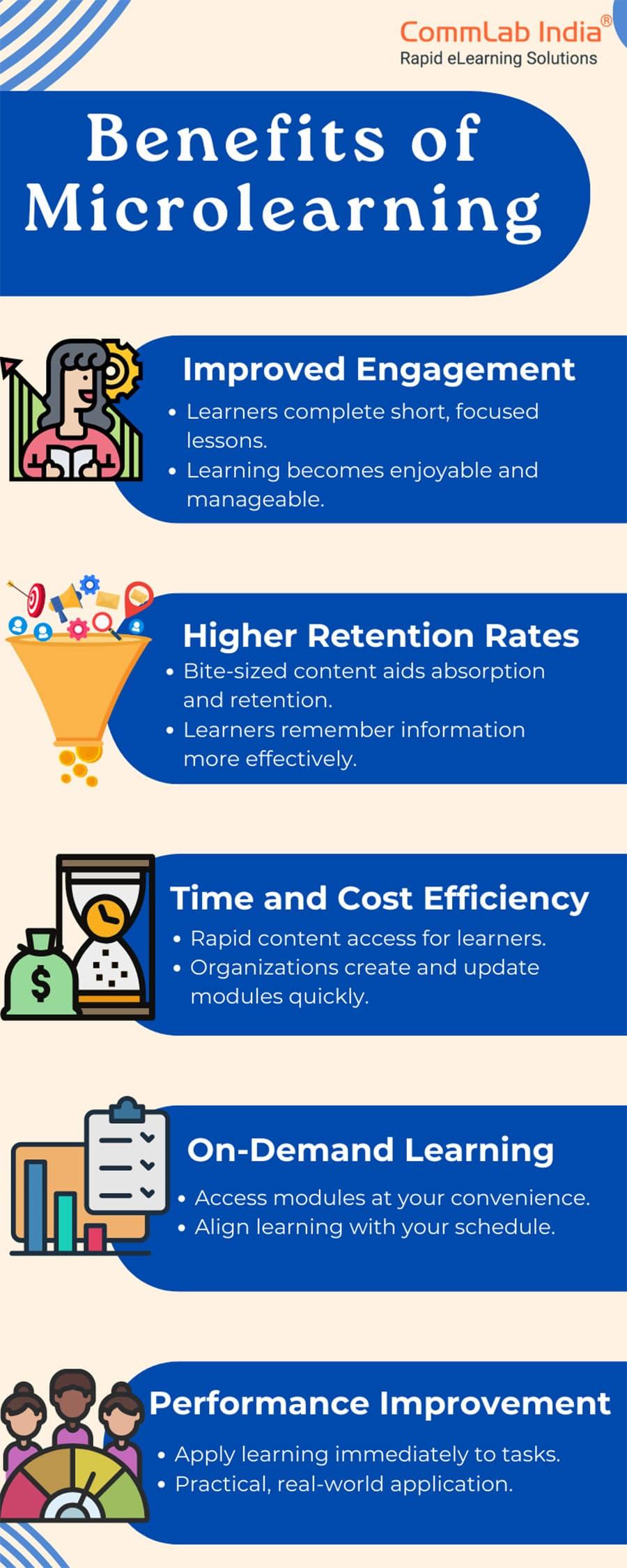
Microlearning delivers significant advantages that make it a game-changer for employee training, skill development, compliance, and academic learning:
- Improved retention: Spaced repetition and short sessions help reinforce learning, combatting the “forgetting curve”.
- Higher Engagement: Bite-sized content prevents cognitive overload and encourages regular participation.
- Increased Completion Rates: Learners are more likely to finish short modules than hour-long courses.
- Cost-Effective: Efficient content creation and delivery reduce overall training expenses.
- Rapid Deployment: New or updated content can be launched quickly to address emerging needs.
- Personalized Learning: Content can be tailored for different roles, industries, or skill levels with ease.
| Traditional Training | Microlearning |
|---|---|
| Long, scheduled sessions | Short, flexible modules |
| One-size-fits-all approach | Personalized, targeted content |
| Classroom/eLearning heavy | Mobile and accessible anywhere |
| Slow to update | Rapid content refresh possible |
Practical Tips for Implementing Microlearning Successfully
- Define Clear Objectives: Focus each microlearning module on a single, actionable goal.
- Use Varied Formats: Incorporate short videos, podcasts, interactive quizzes, infographics, and scenario-based exercises.
- Optimize for Mobile: Ensure content is easy to consume on smartphones and tablets.
- Emphasize Interactivity: Include drag-and-drop elements, branching scenarios, or rapid decision points to boost engagement.
- Integrate with LMS: Use your learning Management System to track microlearning progress and completion.
- Leverage Spaced Repetition: Reinforce crucial concepts with periodic reviews or recap activities.
- Encourage Social Learning: Embed discussion forums, leaderboards, or sharing features to foster collaboration.
Pro Tip: Start small by converting existing long-form training into micro-sized modules, and gather feedback from learners for continuous improvement.
Microlearning in Action: Case Studies
Case Study 1: Global Tech Company Improves Compliance Training
A leading technology enterprise faced costly compliance gaps due to poor retention from traditional training courses. By breaking modules down into five-minute microlearning videos, completion rates soared from 53% to 89% and post-training assessments improved by 35%. Employees reported higher satisfaction, spending less desk time while meeting regulatory requirements more effectively.
Case Study 2: Healthcare Provider Boosts Clinical Skills
Nurse educators used microlearning to deliver “just-in-time” clinical tips and procedures via mobile devices. Staff could refresh essential skills before patient interactions, resulting in higher confidence, reduced errors, and improved patient outcomes.
Case Study 3: Retail Chain Enhances Customer Service
A major retailer adopted microlearning quizzes and scenario videos for customer-facing teams. Employees accessed training during shift changes, leading to a 47% increase in positive customer feedback scores within three months.
First-Hand Experience: Insights from a Learning Manager
“Rolling out microlearning in our institution was a game-changer. Our staff appreciated the adaptability, and the data showed immediate gains in retention and real-world request. Even the most reluctant learners engaged more, and we’ve seen a steady uptick in voluntary learning module completion rates month-over-month.”
– Maria S., Learning & Development Manager, Financial Services
The Future of Microlearning: Trends to Watch
- AI-Driven Personalization: Microlearning platforms are increasingly leveraging artificial intelligence to create customized learning paths and adaptive challenges.
- Gamification: Leaderboards, badges, and challenges boost motivation and accountability.
- Microcredentials: Short, stackable credentials and digital badges validate microlearning achievements for career growth.
- Integration with Performance Support: Microlearning is paired with real-time, on-the-job resource libraries for instant access to knowledge.
As digital transformation accelerates, microlearning will continue to be the cornerstone of agile, effective learning strategies for organizations of all sizes.
Conclusion: Why Microlearning is Essential for Modern Learning
The demands of the modern workplace and evolving learner preferences require innovative solutions. Microlearning rises to the challenge by offering engaging, relevant, and flexible learning experiences that support on-the-go knowledge acquisition. Whether you’re an HR manager seeking to upskill your team or an educator adapting to digital realities, embracing a microlearning strategy can boost engagement, knowledge retention, and business outcomes.
Ready to revolutionize your training approach? Integrate microlearning into your organization and help your learners succeed in today’s fast-moving world!