
Microlearning: The Key to Meeting modern Learner Needs in Today’s Fast-Paced World
In our hyper-connected and fast-paced world, the way we learn has evolved dramatically. With facts overload,shrinking attention spans,and busy schedules,modern learners seek fast,relevant,and easily digestible knowledge. Enter microlearning: a learning approach designed to keep up with the demands of today’s digital age. But what exactly is microlearning, and why has it become a game-changer for learners and organizations alike? Let’s explore how microlearning is redefining education and training to fit seamlessly into our lives.
What is Microlearning?
Microlearning is an educational strategy that delivers content in small,focused bursts—typically lasting between 2 to 10 minutes. Unlike traditional learning methods, which frequently enough involve long lectures or complete training sessions, microlearning breaks down information into bite-sized modules. Thes modules can take various forms, including:
- Short videos or animations
- Interactive quizzes or games
- Infographics and quick reference guides
- Podcasts and audio snippets
- Micro-articles or flashcards
This condensed and targeted format allows learners to absorb information quickly and apply it promptly, making microlearning an ideal solution in today’s fast-paced learning environments.
Why Microlearning Matters for Modern Learners
Modern learners are tech-savvy, performance-oriented, and constantly on the move. Here’s why microlearning fits their needs perfectly:
- Short Attention Spans: Studies indicate that humans now have an average attention span of just 8 seconds. Microlearning aligns with this trend by offering concise, laser-focused lessons.
- Mobile Learning: with the proliferation of smartphones and tablets, learners expect on-the-go access to training materials. Microlearning modules are usually mobile-friendly, ensuring learning can happen anytime, anywhere.
- Just-In-Time Learning: Rather than sifting thru hours of training to answer a single question, microlearning enables learners to find the exact information they need, precisely when they need it.
- Personalization and Flexibility: Microlearning allows users to select modules relevant to their roles, knowledge gaps, or interests, offering a highly personalized learning experience.
The Key Benefits of Microlearning
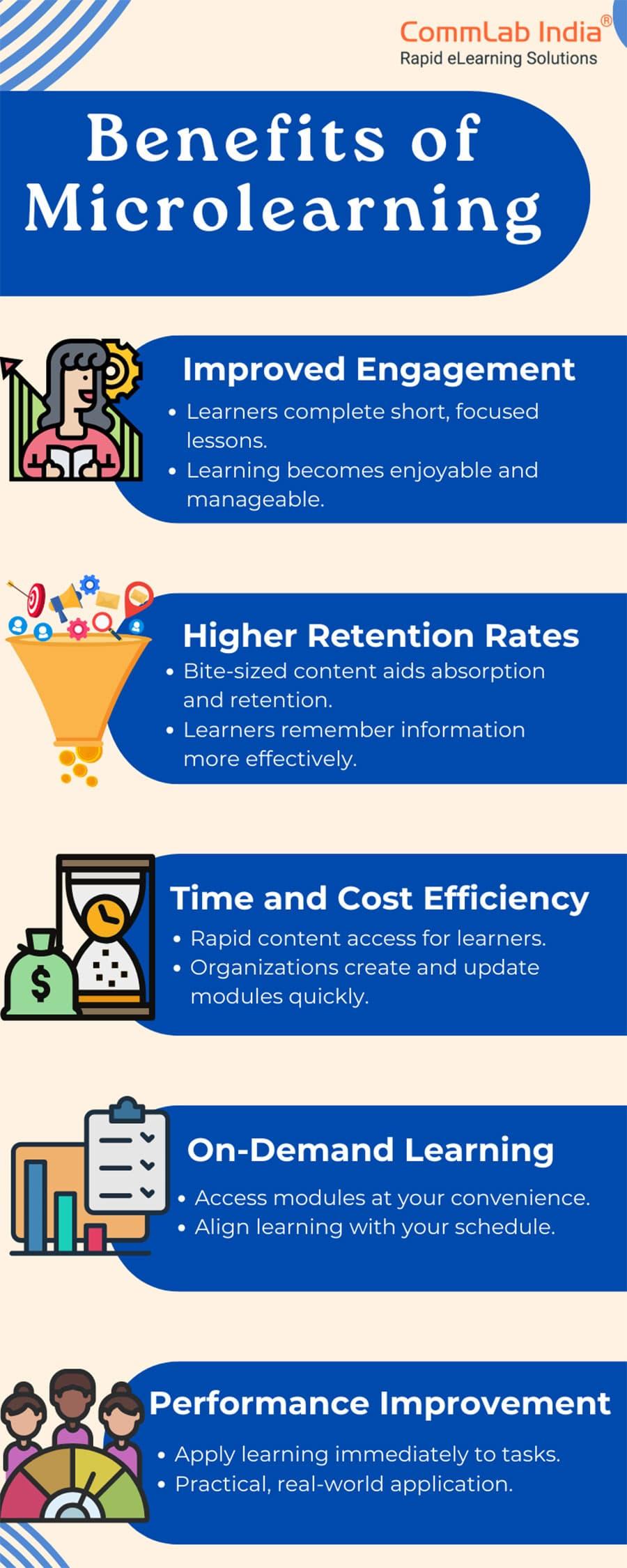
- Boosts Knowledge Retention: Bite-sized lessons reduce cognitive overload and repetition, making it easier for learners to recall and apply concepts.
- Enhances Learner Engagement: The interactive, multimedia-driven nature of microlearning keeps users active and interested.
- Cost-Effective and Scalable: Creating and updating microlearning modules is frequently enough faster and less expensive than traditional e-learning.
- Improves Performance: Immediate submission of skills and knowledge can directly impact productivity.
- Supports Continuous Learning: Organizations can use microlearning to foster a culture of ongoing professional development without disrupting daily workflows.
Did You Know?
The Journal of Applied Psychology found that learning in short, focused chunks improved information transfer by 17% compared to traditional learning approaches.
Effective Strategies for implementing Microlearning
Transitioning to microlearning doesn’t have to be complicated. Here are proven strategies to ensure a smooth and successful implementation:
- Identify Core Learning Objectives: Break larger topics into clear, actionable objectives suitable for short lessons.
- Choose Engaging Formats: Select content types—videos, infographics, micro-quizzes—that resonate with your audience and suit your objectives.
- Leverage Mobile Platforms: Use responsive design to ensure access from any device.
- Incorporate Interactivity: Gamified elements, quick assessments, and real-life scenarios make learning memorable and fun.
- Provide Seamless Accessibility: Make microlearning modules available on-demand within your LMS, mobile app, or intranet.
- track and Iterate: Use analytics to monitor learner progress, engagement, and knowledge retention, and adjust modules accordingly.
Microlearning in Action: Real-World Case Studies
Case Study 1: Accelerating Employee Onboarding
Global Tech Firm XYZ transformed its onboarding process by integrating microlearning modules into its LMS. Rather of long presentations, new hires access short video explainers and interactive quizzes, enabling them to become productive in half the time. Retention rates increased by 30% and engagement soared, as new employees could learn at their own pace.
Case Study 2: Continuous Sales Training
At a leading retail corporation, ongoing product and sales training is delivered via mobile-friendly microlearning videos and scenario-based quizzes. Sales staff complete modules during their breaks, resulting in a 22% increase in sales performance and higher knowledge retention compared to conventional classroom sessions.
Best Practices: Tips for Successful Microlearning
- Keep Lessons Short: Aim for content segments no longer than 5–10 minutes.
- Focus on Single Learning Objectives: Each module should cover one concept or skill for clarity and impact.
- Use Visuals and Interactivity: Mix multimedia, such as imagery, animation, and clickable content, to enhance learning.
- Update Regularly: Microlearning content should reflect the latest knowledge and trends in your field.
- Gather Feedback: Ask learners for input after each module to refine content and improve outcomes.
FAQs: Common Questions About Microlearning
Is microlearning effective for all types of learners?
Microlearning works well for most learners, notably for knowledge reinforcement and skill development.Though, complex or foundational topics may require supplementary in-depth training.
Can microlearning replace traditional e-learning?
Microlearning often complements and enhances traditional e-learning but may not entirely replace it, especially for comprehensive or certification-based programs.
What tools are available for creating microlearning content?
Popular microlearning platforms include TalentLMS, Axonify, EdApp, and even wordpress with LMS plugins. Many authoring tools offer templates for easy content creation.
First-Hand Experience: Microlearning in Everyday Practice
“As a project manager in a remote team, adopting microlearning has revolutionized our training approach. Rather of overwhelming our staff with dense manuals, we share short video tutorials and quick-reference guides. Team members report feeling more confident and empowered, and our project error rates have considerably decreased. Microlearning was the missing link to engaging and upskilling our diverse, global workforce.”
— Sarah L., Project Manager
Conclusion: Embrace Microlearning for success in a Rapidly Changing World
Microlearning isn’t just a trend—it’s an essential response to the evolving needs of today’s busy, digital-native learners. With its flexibility,focus,and effectiveness,microlearning bridges the gap between knowledge and application,making education accessible and engaging for everyone. Whether you’re an educational institution, corporation, or individual lifelong learner, now is the perfect time to embrace microlearning and unlock the transformational benefits it offers in our fast-paced world.
Want to Get Started?
Ready to boost your training and learning outcomes? Explore microlearning platforms,start small with a pilot project,and gather feedback from your learners. microlearning could be the key to unlocking your association’s full learning potential!