
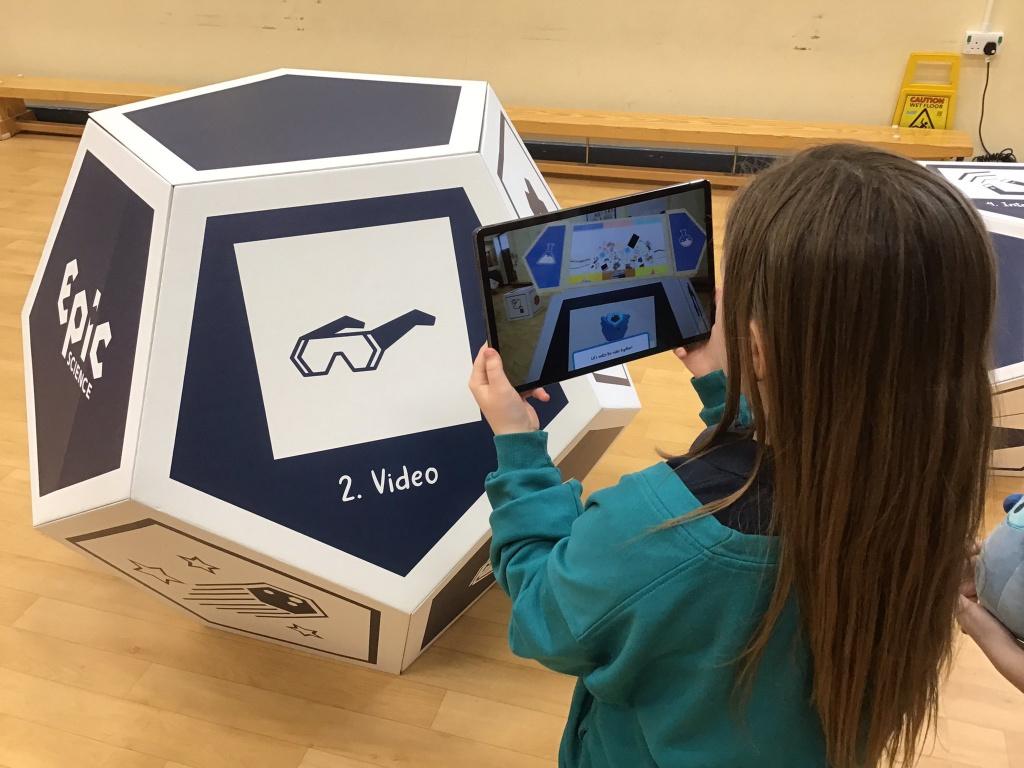
Proven Success: Real Case Studies of VR/AR Implementations in Schools
The advent of Virtual Reality (VR) and Augmented Reality (AR) has profoundly transformed the educational landscape. Today, VR/AR in schools is more than just a buzzword; it’s a proven method to boost engagement, retention, and student outcomes. This article explores real case studies of accomplished VR/AR implementations in schools and provides actionable insights for educators looking to bring immersive learning into their classrooms.
Why VR/AR in Education Matters
Deploying virtual and augmented reality technologies in the classroom bridges the gap between theoretical learning and real-world application. Here’s why schools are rapidly adopting these immersive methods:
- Enhances Engagement: Simulations and interactive experiences captivate students’ attention.
- Improves Retention: Immersive lessons make abstract concepts tangible and memorable.
- Promotes Inclusion: VR/AR allows students of varying abilities to access learning tailored to their needs.
- Encourages Collaboration: Multi-user environments foster teamwork and communication skills.
Benefits of VR/AR in Schools
Beyond novelty, the integration of VR/AR in schools delivers measurable benefits:
- Real-World exploration: Students can virtually travel to ancient sites, distant planets, or inside the human body with VR and AR apps.
- Accessible Learning: AR overlays can assist students with learning disabilities or language barriers.
- Safe Experimentation: Complex lab experiments or field trips can be safely simulated with minimal resources.
- Cost-Effective Resources: Digital labs and assets reduce the need for expensive, recurrent physical materials.
- Personalized Learning: Adaptive VR/AR environments cater to individual learning paces and styles.
Proven Success: Real Case Studies of VR/AR Implementation in Schools
Let’s delve into concrete examples where schools have successfully implemented VR/AR and reaped tangible results.
1. Increasing Engagement at Franklin Middle School (USA)
Franklin Middle School in Illinois introduced an AR-based science curriculum in 2019. By using AR-enabled tablets, students interacted with 3D models of the solar system, allowing for hands-on exploration.
- Outcomes: Teachers observed a 30% increase in student participation and a 20% improvement in science test scores within a single semester.
- Feedback: “Our students are more excited about science than ever before,” remarked science teacher Emily Carter.
2. Immersive History Lessons at Newlands Primary (UK)
Newlands Primary School in london adopted VR headsets to teach history. Students ‘walked’ through ancient Rome and Revolutionary Paris, experiencing historical events firsthand.
- Outcomes: Teachers reported increased empathy and understanding. Evaluation showed students retained 35% more information compared to traditional lessons.
- Feedback: Student Anna, aged 10, said, “It felt like I was really there with Julius Caesar!”
3. Special Needs Education at Sunrise School for Autism (Canada)
Sunrise School for Autism in Vancouver uses AR and VR simulations to teach life skills, such as navigating public transport or managing money in a store environment.
- outcomes: Students demonstrated increased confidence and independence, with one-on-one teachers noting quicker skill mastery than with conventional methods.
- Feedback: Teacher Melissa Gray shared, “VR takes the anxiety out of real-world situations by allowing students to practice in a safe, controlled environment.”
4. STEM Innovation at Daegu Science High School (South Korea)
Daegu Science High School uses advanced VR laboratories for chemistry and physics. Students simulate complex experiments, saving on material costs and eliminating safety risks.
- Outcomes: The school cut supply costs for science labs by 40% and increased student enrollment in advanced science courses.
- Feedback: Principal Lee Jae-sun stated, “VR is not just a tool—it has become integral to how we inspire tomorrow’s scientists.”
5. Collaborative Learning at Westfield High (USA)
Westfield High School integrated multi-user VR platforms enabling students across disciplines to collaborate on projects in immersive environments. Art and biology students developed a virtual anatomy museum together.
- Outcomes: Teachers noted stronger cross-curricular understanding and deeper peer-to-peer collaboration.
- Feedback: Student Brian R. shared, “Working in VR made me see connections between art and science I never noticed before.”
First-Hand Experiences: Voices from the Classroom
“VR has given my students an entirely new way to learn. They’re not just memorizing facts—they’re experiencing them. Engagement is through the roof!”
– Karen T., 6th-grade teacher, USA
“Augmented reality makes abstract concepts visible to all my students,irrespective of their reading level.”
– Simon L., Math Teacher, UK
Practical Tips for Implementing VR/AR in Schools
- Start Small: Pilot programs in one class or subject before scaling up.
- Choose User-Friendly Tools: Opt for VR/AR platforms with a gentle learning curve, especially for younger students and less tech-savvy teachers.
- Involve Stakeholders: Engage teachers, parents, and administrators to foster buy-in and support.
- Ensure Accessibility: Consider the diverse needs of your students, including language support and special needs accommodations.
- Focus on content: The most effective use of VR/AR in education comes from integrating it with curriculum goals, not just using flashy technology for its own sake.
- Assess and Iterate: Gather student feedback and monitor learning outcomes to refine your approach.
Conclusion: The Future of VR/AR in Education is Now
From increased engagement and improved test scores to newfound confidence and collaborative breakthroughs, these real case studies of VR/AR in schools prove the transformative power of immersive technology in education. As hardware becomes more affordable and platforms more accessible, there’s never been a better time for schools to embrace virtual and augmented reality.
Whether you’re an educator looking for inspiration or a school administrator considering next steps, the evidence is clear: VR/AR in education works. By learning from proven success stories and following practical tips, your institution can unlock the next level of learning—and better prepare students for the world of tomorrow.