
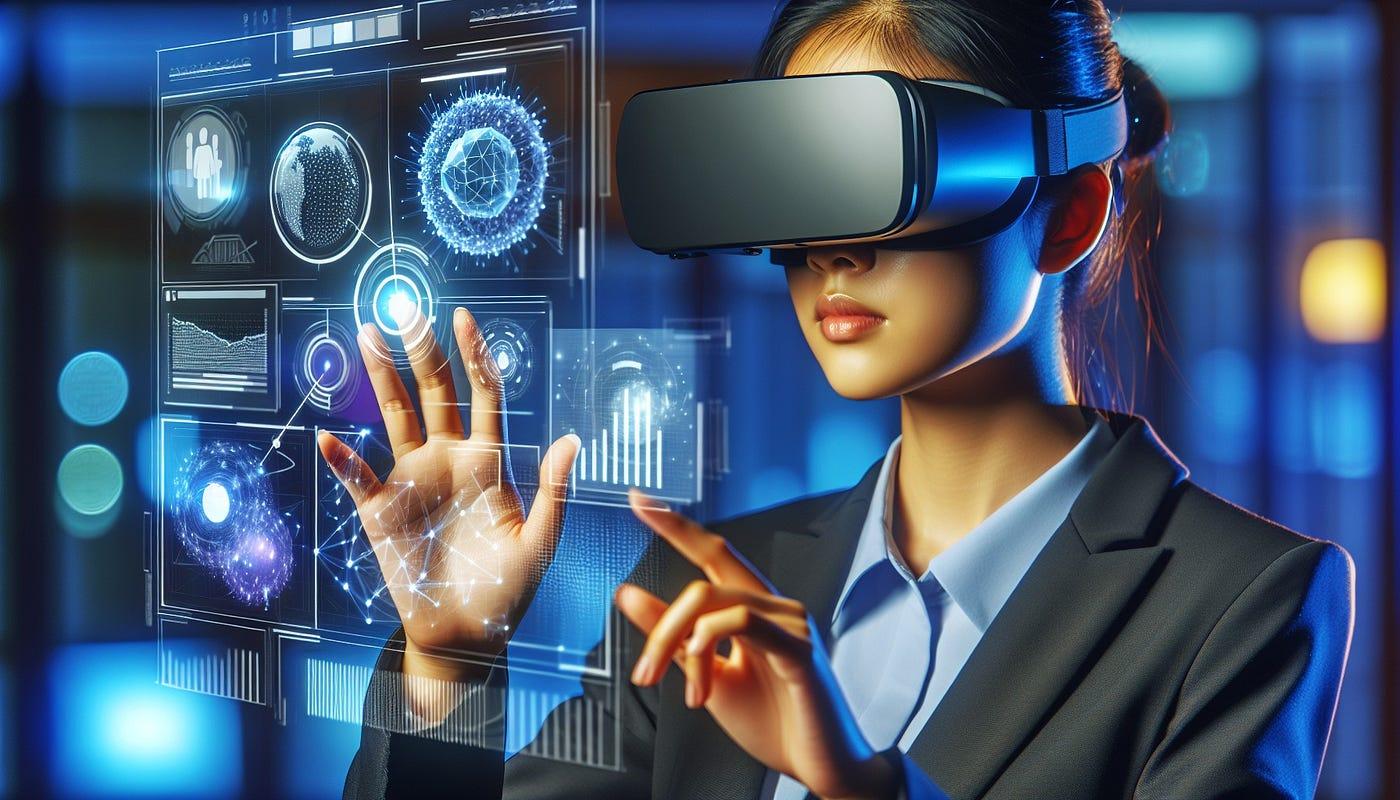
Real-Life Case Studies: Successful VR/AR Implementations Transforming Schools
Introduction: the New Era of Immersive Learning
In recent years, Virtual Reality (VR) and Augmented Reality (AR) have taken center stage as transformative technologies in education.By offering immersive and interactive learning experiences,VR/AR implementations are revitalizing classrooms across the globe. Harnessing these technologies, schools are enhancing student engagement, driving better learning outcomes, and preparing students for the digital future. In this article,we delve into compelling real-life case studies,highlight the benefits of VR and AR in education,and provide practical tips for schools considering these innovative solutions.
The Educational Benefits of VR and AR Technology
Why Schools Are Embracing Immersive Technology
- Enhanced Engagement: VR/AR make abstract concepts tangible, creating a dynamic learning habitat.
- Improved Retention: Studies indicate that students remember up to 90% of experiences through VR, compared to 30% with traditional reading.
- Accessibility: Students can virtually explore remote locations, past events, or scientific phenomena without leaving the classroom.
- Personalized Learning: Interactive lessons cater to diverse learning styles, allowing students to progress at their own pace.
- Collaboration and Creativity: AR applications encourage teamwork and innovative problem-solving.
- STEM Focus: VR/AR tools strengthen skills in science, technology, engineering, and mathematics.
Real-Life Case Studies: VR/AR Success Stories in Schools
Across continents, pioneering schools are leading the way in immersive education. Let’s explore a selection of inspiring VR/AR case studies in educational settings:
1. Newton Primary School, United Kingdom: Bringing History to Life
- Implementation: Newton Primary integrated ClassVR headsets to augment history lessons. Students experienced the sights and sounds of ancient Rome, the Great Fire of London, and Victorian Britain through realistic simulations.
- Impact: Engagement scores rose by 50%. Teachers reported richer classroom discussions and enhanced comprehension of historical contexts.
- Firsthand Testimony: “It’s like stepping into a time machine. I learned so much more about the Romans than from books alone,” shared Year 6 student Emily.
2. Eastlake High School, USA: Exploring STEM with AR Sandbox
- Implementation: As part of their science curriculum, Eastlake adopted an Augmented Reality Sandbox.This tool uses Microsoft Kinect and a projector to visualize real-time terrain changes and watershed processes.
- Impact: Student understanding of geological and hydrological concepts improved measurably, with test scores up 35%.STEM club membership increased by 20%.
- Firsthand Testimony: “Building mountains and rivers made geography feel like a living subject, not just lines on paper,” commented student Alex.
3. Colegio Montserrat, Spain: Interactive Language Learning through VR
- Implementation: With the help of Google Expeditions VR kits, Montserrat introduced Spanish and English lessons within virtual city tours, role-playing activities, and simulated real-life scenarios.
- Impact: Students exhibited higher levels of fluency and confidence in conversational skills. Teachers found VR especially beneficial for shy learners.
- Firsthand Testimony: “VR made me more willing to speak up, as I was ‘inside’ the city, not just reading about it,” said student Sofia.
4. Shanghai Experimental School, China: Virtual Science lab
- Implementation: Amid pandemic restrictions, Shanghai Experimental School built a fully virtual chemistry lab accessible via VR headsets.
- Impact: Lab participation increased by 100%. Students safely performed complex experiments and built foundational science skills.
- Firsthand Testimony: “I love that I can experiment without fear of mistakes—and see real reactions instantly,” explained student Li Wei.
Practical tips: Implementing VR/AR in Your School
How to Start Your Immersive Learning journey
- Assess Readiness: Consider the age group, curriculum needs, and available technical support within your school.
- Select the Right Platforms: Popular VR/AR educational apps include ClassVR, Google Expeditions, Matterport, and ZSpace.
- Begin with Pilot Projects: Start small—implement in one classroom, evaluate, and expand gradually.
- Staff Training: Teachers need dedicated time to understand both hardware and software tools.
- Student Safety & Inclusion: Be mindful of physical safety and digital accessibility for all learners.
- Engage Stakeholders: Regularly communicate progress with parents, students, and administrators to secure ongoing support.
The Future of VR/AR in Schools
as VR/AR technologies continue to advance, the realm of possibilities in education is expanding rapidly. From virtual field trips to global collaboration, immersive technology is poised to become an integral part of every modern classroom. The World Economic Forum predicts that immersive learning will be a core element in developing 21st-century skills.
- Remote Learning: Bridging gaps for students in rural and underserved areas.
- Gamified Assessments: Fun, interactive quizzes and learning environments boost motivation.
- Career Prep: Realistic simulations for healthcare, engineering, and vocational training.
- Global Connection: Students collaborate across borders in shared virtual spaces.
Conclusion: Embracing immersive Learning for Lasting conversion
Real-life case studies show just how transformative VR and AR implementations can be for schools. By breaking down barriers, enhancing learning, and fostering creativity, immersive technology is redefining what’s possible in education. For school leaders and educators, investing in VR/AR isn’t just about technology—it’s about unlocking each student’s potential and empowering the next generation.
Are you ready to bring the benefits of immersive learning to your school? Start small, stay curious, and watch as new worlds of revelation open for your students.