
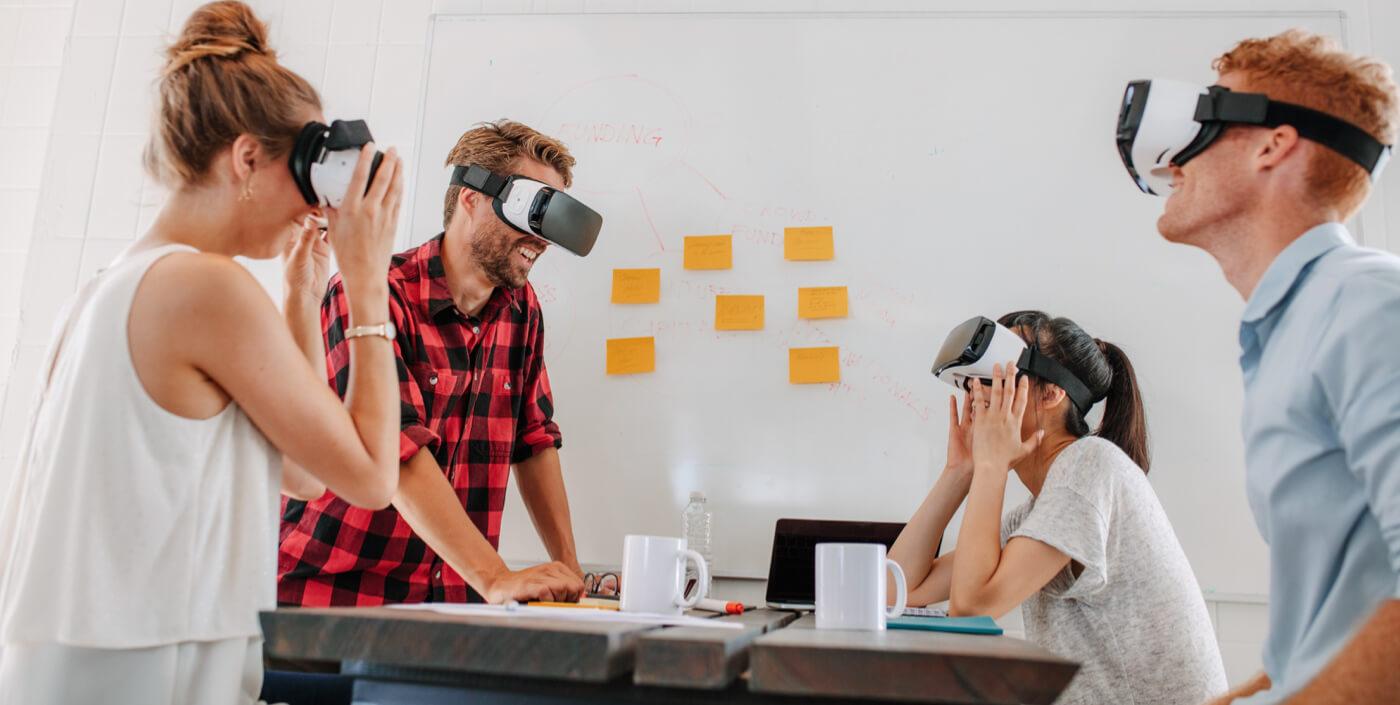
Real-Life Success: VR/AR Case Studies Transforming Education in Schools
Technology in education is rapidly evolving, but the integration of VR (Virtual Reality) and AR (Augmented Reality) stands out as one of the most transformative trends. across the globe, schools are harnessing these immersive technologies with remarkable outcomes. In this comprehensive article,we’ll dive into real-life success stories,share practical tips for educators,highlight the benefits of VR/AR in classrooms,and provide actionable insights for those looking to implement these cutting-edge tools.
- Introduction to VR/AR in Education
- Benefits of VR/AR in Schools
- Real-Life VR/AR Case Studies
- First-Hand Experiences from Educators & Students
- Practical Tips for Accomplished Implementation
- Conclusion
Introduction to VR/AR in Education
Imagine walking through ancient Rome, dissecting a human heart, or exploring the solar system—all without leaving the classroom. Virtual Reality (VR) and Augmented Reality (AR) technologies are making this possible in today’s schools, reshaping how students learn and engage. By blending digital experiences with real-world contexts, these immersive technologies are bridging knowledge gaps, boosting engagement, and enabling active learning that goes well beyond textbooks.
Not surprisingly, the use of VR and AR in education is trending in major keywords like EdTech, immersive learning, and STEM education.Let’s explore the core benefits,actual case studies,and practical guidance for implementing VR/AR in schools.
Benefits of VR/AR in Schools
The adoption of VR/AR in schools offers a diverse range of benefits for students,teachers,and administrators. Here are some of the top advantages:
- Enhanced Engagement: Immersive experiences stimulate curiosity, making learning more enjoyable and memorable.
- Interactive Learning: Students can engage with 3D models and simulations, supporting hands-on, experiential learning.
- Increased Retention: Research shows students remember more when learning through VR/AR environments compared to conventional methods.
- Accessibility: Students of different abilities can benefit from tailored content and scenarios, reducing barriers to learning.
- Safe Exploration: VR allows exploration of hazardous or inaccessible environments—think chemistry labs or volcanoes—without any risk.
- Collaboration & Social Skills: Multi-user VR/AR platforms foster teamwork and interaction among students.
- Cost Savings: Virtual field trips and lab simulations reduce the need for expensive travel or physical equipment.
Let’s see how these benefits play out in real-world school environments.
Real-Life VR/AR Case Studies
Here are three compelling case studies that demonstrate the transformative impact of VR/AR in schools across different regions.
Case Study #1: Mel Science Labs in UK Secondary Schools
Mel Science, a leading VR/AR education provider, partnered with secondary schools across the United Kingdom to introduce virtual chemistry labs. using low-cost VR headsets and mobile devices, students could conduct complex experiments safely and repeatedly.
- Results: test scores in chemistry improved by an average of 12% after six months of VR-assisted lessons.
- Teacher Feedback: “Students not only understood the reactions but enjoyed the experimentation—without any real-world mess,” shared a science teacher from London.
- Highlight: VR enabled mixed-ability classrooms to learn at their own pace, with real-time feedback and interactive challenges.
Case study #2: The Franklin Institute AR STEM Project — USA
In partnership with several Philadelphia schools, The Franklin Institute deployed AR apps within STEM classes. The apps brought science concepts to life—students pointed tablets at worksheets to see 3D molecules forming or circuit boards activating.
- Outcome: STEM participation rose by 25% among previously disengaged students.
- Student Testimonial: “It felt like the atoms were jumping off the page. I finally got what my teacher was explaining!”
- Highlight: AR tools proved especially valuable for visual learners and supported differentiated instruction.
Case Study #3: Educational Field Trips with Google Expeditions — India
Google Expeditions operates worldwide, but its impact in urban and rural Indian schools has been game-changing. With affordable cardboard VR viewers, entire classrooms traveled virtually to world landmarks, historic sites, and biological ecosystems.
- Impact: Students reported a 30% higher rate of “sense of connection” to global cultures and history topics.
- Teacher Perspective: “Our students would never have the prospect to visit such places. VR brought the world to us.”
- Highlight: Teachers found that pre- and post-expedition discussions deepened critical thinking and retention.
These real-life examples show how VR/AR technology is not just an EdTech trend—it’s fundamentally changing how subjects are taught and experienced in schools worldwide.
First-Hand Experiences from Educators & Students
Bringing VR/AR to the classroom is more than deploying devices; it’s about fostering new mindsets and approaches to learning. Here are first-hand insights from those leading (and benefitting from) the charge:
Such testimonials illustrate the profound benefits for both learning outcomes and classroom culture.
Practical Tips for Successful VR/AR Implementation in Schools
Are you excited about bringing VR/AR to your school? Here’s a practical checklist to get started and ensure a smooth rollout:
- Start Small: pilot programs with a single subject or grade allow for easier troubleshooting and feedback collection.
- Choose Scalable Hardware: Consider low-cost VR viewers, tablets, or AR-enabled mobile devices for budget-amiable launches.
- Engage Teachers Early: Professional development and training workshops help teachers feel confident and inspired to use new tools.
- Curate Quality Content: Leverage reputable VR/AR apps with curriculum-aligned lessons and interactive simulations.
- Ensure Accessibility: check device compatibility and offer extra support for students with special needs.
- Collect Feedback & Measure impact: Use surveys, quizzes, and classroom observations to track progress and refine your approach.
- involve Parents & Community: Showcase VR/AR lessons at open houses so families understand its educational value.
Many schools also collaborate with EdTech providers and local universities to source tailored expertise and content.
Conclusion
VR and AR technologies are reshaping the very fabric of classroom learning.real-life case studies from around the world illustrate their potential to boost engagement, accelerate knowledge retention, and democratize access to quality education. Whether it’s running virtual science labs, interacting with dynamic AR objects in STEM, or embarking on virtual field trips, immersive learning is no longer a futuristic concept—it’s the reality of modern education.
Schools looking to innovate should leverage these proven success stories, practical tips, and community feedback to pave the way for a transformative learning journey. Join the movement, invest in VR/AR solutions for education, and unlock the full potential of every learner in your school!
Interested in more articles about VR/AR education technology? Browse our site for the latest EdTech news, expert interviews, and in-depth guides to immersive learning in schools!