
Real-World Case Studies: Successful VR/AR Implementation Transforming Schools
With the rapid advancement in technology, VR (Virtual Reality) and AR (Augmented Reality) are revolutionizing the educational landscape. Schools across the globe are embracing immersive technology to foster interactive learning environments,enrich curricula,and boost student engagement. This article explores compelling case studies and shares actionable insights on how VR/AR implementation is truly transforming schools.
Introduction to VR/AR in Education
Virtual Reality and Augmented Reality are more than just buzzwords in today’s classrooms. These educational technologies deliver hands-on, experiential learning, making complex topics simpler and more engaging. as educators search for effective ways to prepare students for a tech-driven future, VR/AR provide innovative solutions for personalized learning and collaboration.
- VR: Creates an entirely digital, immersive habitat.
- AR: Overlays digital content onto the real world.
Both VR and AR open new possibilities for interactive experiences—from historical site tours to in-depth science simulations—reshaping what it means to learn in school.
Benefits of VR/AR Implementation in Schools
Successful integration of VR/AR in classrooms has yielded a myriad of benefits:
- Enhanced engagement: Students are drawn into lessons via immersive experiences.
- Improved understanding: Complex concepts become accessible with visual and practical demonstrations.
- Personalized learning: Customizable content caters to diverse learning preferences.
- Collaboration opportunities: Students can work together in virtual or augmented settings.
- Safe experimentation: Virtual labs allow risk-free experimentation in science and engineering.
- Inclusivity: VR/AR can help special needs students engage at their own pace.
Teacher and Student Perspectives
“VR allows my students to ‘visit’ places they could never go, making learning memorable and meaningful.”
— Science Teacher, UK
Real-World Case Studies: VR/AR Success Stories in Schools
Let’s explore real-world examples where VR/AR implementation has transformed the educational experience.
Case Study 1: VR Science Labs at Charles Darwin High School
Charles Darwin High School in Australia integrated virtual reality into their science curriculum to address limited access to physical lab equipment. Using platforms like Labster, students performed chemistry and biology experiments in a safe, virtual setting.
- Results: Increased student engagement and understanding of scientific principles.
- Impact: Students scored 23% higher on assessments compared to previous years.
- Testimonial: “Virtual labs allowed us to try experiments we could never afford or safely attempt in real life.” – Chemistry Student
Case Study 2: AR History Lessons at Boston Public Schools
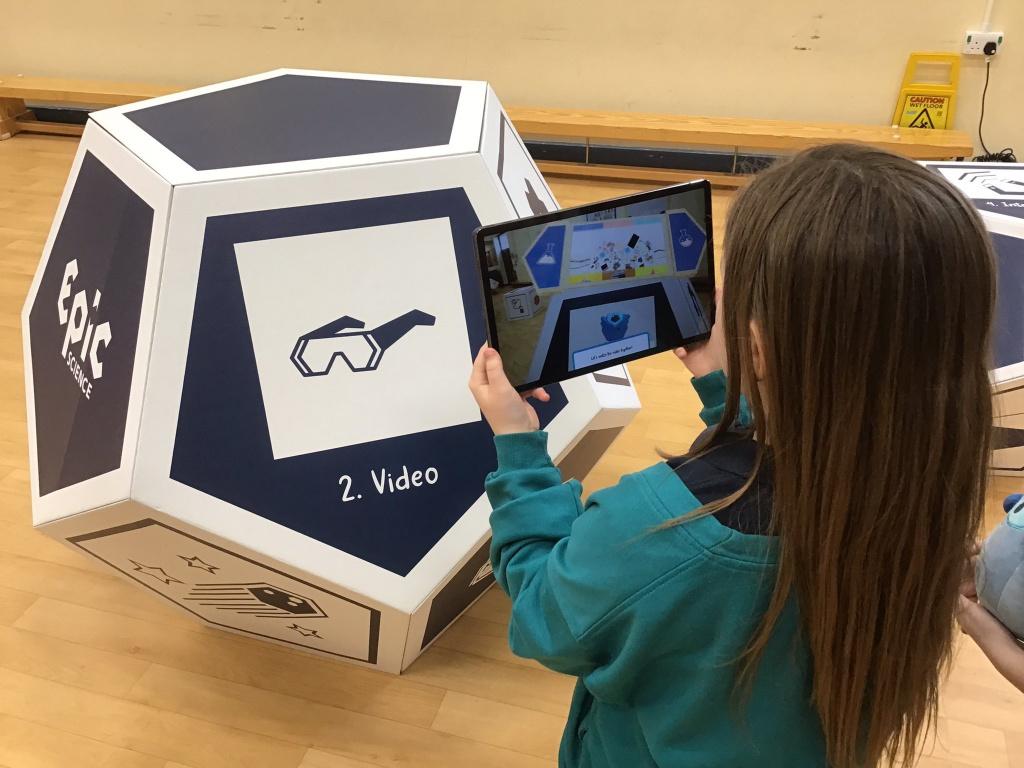
Boston Public Schools deployed AR apps to bring historical events to life. With tablets and smartphones, students could visualize battles, ancient monuments, and artifacts right in their classroom.
- Results: Students reported higher retention rates for history facts.
- Impact: Teachers noticed a 35% rise in class participation.
- testimonial: “Learning history by seeing it in 3D made it feel real and exciting.” – 7th Grade Student
Case Study 3: Immersive Language Learning at Colegio Inglés, Mexico
To enhance language immersion, Colegio Inglés introduced VR headsets, allowing students to ‘travel’ virtually to English-speaking countries. Roleplay scenarios and interactive games facilitated practical language acquisition.
- Results: Faster language proficiency and improved speaking confidence.
- Impact: 40% increase in oral exam scores after implementation.
- Testimonial: “I felt like I was actually speaking English abroad.” – 5th grade Student
Case Study 4: Special Needs Education with AR at Elmwood School, UK
Elmwood School, catering to students with learning disabilities, leveraged AR for personalized instruction. Teachers used AR flashcards and interactive apps to reinforce concepts at an individualized pace.
- Results: Higher motivation and improved learning outcomes for special needs students.
- Impact: Reduction in behavioral incidents by 27%.
- Testimonial: “AR helped my child engage in ways conventional methods couldn’t.” – Parent
How VR/AR Implementation Is Transforming Schools
the above examples highlight key transformations in education through VR/AR integration:
- Breaking Geographic Barriers: Students visit remote places and access global resources without leaving their classroom.
- Active Learning: Passive lecture formats are replaced with interactive, student-centered pedagogy.
- Real-World Skill Growth: Simulated environments help students practice soft and technical skills relevant to future careers.
- Continuous Assessment: Data derived from VR/AR platforms assists teachers in tailoring instruction.
Best Practices & Practical Tips for VR/AR adoption
Implementing VR/AR in schools requires thoughtful planning and support. Here are practical tips for a smooth transition:
- Start small: Pilot programs in select subjects before scaling up.
- Ensure accessibility: Choose hardware and apps that are easy to use and maintain.
- Train teachers: Professional development helps educators maximize technology benefits.
- Solicit feedback: Regularly survey students and teachers to refine implementations.
- Integrate with curriculum: Align VR/AR experiences with learning goals and standards.
- Monitor progress: Use analytics to measure outcomes and adjust strategies.
challenges and Solutions in VR/AR Implementation
While the advantages are compelling, schools face certain challenges with VR/AR implementation:
- Costs: VR headsets and AR-enabled devices can be expensive.
- technical issues: Hardware compatibility and connectivity may cause interruptions.
- Content availability: Developing or sourcing relevant VR/AR educational content can be difficult.
solutions: Schools can pursue grants, partner with tech companies, and leverage open-source or low-cost VR/AR apps to mitigate barriers.
First-Hand Experience: Voices from VR/AR Classrooms
“My students’ enthusiasm soared after our first VR module. They asked for more virtual field trips and even began collaborating on their own AR projects.”
— 5th Grade Teacher, USA
“Using AR helped me better understand geometry.I could see the shapes in 3D before working on my homework.”
— Student, India
Conclusion: The Future of VR/AR in Schools
The successful implementation of VR/AR in schools is ushering in a new era of education—one where immersive learning environments support student engagement, deep understanding, and holistic skill development. As real-world case studies demonstrate, these technologies can transform classrooms into vibrant hubs of curiosity and creativity.
Educators looking to integrate VR/AR should focus on strategic planning, ongoing training, and continuous feedback to maximize impact. With careful adoption, virtual and augmented reality can unlock limitless possibilities, preparing students for the challenges of tomorrow.
Ready to explore VR/AR in your own school? Start with a pilot project and witness firsthand how technology can ignite a passion for learning!