
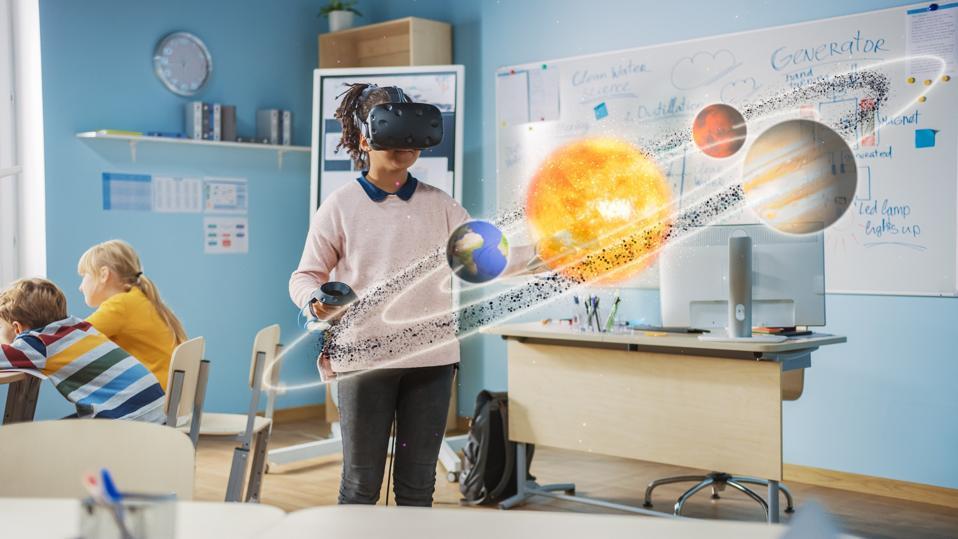
Real-World Success: Case Studies of VR/AR Implementations Revolutionizing Education in Schools
Virtual reality (VR) and Augmented Reality (AR) are rapidly transforming how students engage with learning materials, visualize complex concepts, and connect with real-world scenarios. As education technology evolves, VR/AR in schools is paving the way for a more immersive, interactive, and effective classroom experience. In this article, we’ll delve into compelling case studies of VR/AR implementations in education, highlight their benefits, and share practical insights for integrating these technologies in schools.
Why are VR and AR Revolutionizing Education?
The advent of virtual and augmented reality in education has enabled schools to bridge the gap between theoretical knowledge and hands-on experience. VR plunges students into a fully simulated environment, while AR layers digital enhancements over the physical world. This dynamic combination is fostering:
- Deep engagement: Students interact with lifelike simulations rather than passive textbooks.
- Enhanced retention: Visualizing abstract ideas boosts memory recall and understanding.
- Collaboration: Real-time, shared experiences encourage teamwork and problem-solving.
Key Benefits of VR/AR in Schools
Implementing VR/AR technology in schools is not just a trend but a strategic investment in enhanced learning outcomes.Here are some of the proven benefits:
- Immersive learning experiences – Students can conduct virtual science experiments or explore the cosmos.
- Safe practice spaces – Simulate hazardous experiments or ancient events in a risk-free environment.
- Special education support – VR/AR can engage students with various learning needs, adapting to different paces and styles.
- global connectivity – Virtual field trips connect classrooms worldwide, breaking geographic barriers.
- Cost-effectiveness – Reduce expenses related to equipment, travel, and physical learning materials in the long run.
Case Studies: Real-World VR/AR Implementations enhancing Education
Let’s explore standout examples of schools using VR and AR to create unforgettable educational experiences.
Case Study 1: Immersive Science Labs – Franklin High School, Texas
facing limited access to chemical supplies and lab facilities, Franklin High School turned to a VR lab simulation platform in 2022. Science teachers incorporated virtual reality experiences in their curriculum, enabling students to perform complex experiments in a digital space.
- Students participated in virtual dissections and chemical reaction experiments.
- Labs could be repeated until concepts were mastered—without added costs or risks.
- Teachers reported a 30% increase in student retention and test scores.
“I never thought I’d enjoy a chemistry lab until I could see atoms moving and reactions happening right in front of me,” shared a 10th-grade student.
Case Study 2: Augmented History Lessons – Lincoln Middle School,UK
in 2023,Lincoln Middle School piloted an AR history app allowing students to bring historical figures and battles to life right on their desks.
- Historical artifacts and events were visualized through students’ tablets and AR glasses.
- role-playing in AR environments made learning history highly interactive.
- Homework completion and engagement rose by over 40% during the pilot period.
“History feels so much more real when I can see it happen,” said one student. Teachers observed notably enhanced empathy and critical thinking.
Case Study 3: Special Education Success – Spectrum School, Canada
Spectrum School implemented custom AR modules designed for students with Autism Spectrum Disorder (ASD). the modules offered sensory-regulated environments and step-by-step social scenarios.
- Tailored AR experiences reduced student anxiety during learning transitions.
- Speech therapists leveraged VR/AR exercises for language skill advancement.
- parents and teachers noted significant improvements in social participation.
“AR storytelling helped my child express thoughts in ways that weren’t possible before,” explained a parent participant.
Case Study 4: Global Virtual Field Trips – Westlake Academy, Australia
to overcome geographical limits, Westlake Academy introduced VR field trips as part of its geography and earth science programs.
- Students explored the Amazon rainforest and Great Barrier Reef from the classroom.
- Collaborative VR sessions promoted peer discussions and team projects.
- Surveys revealed a 95% student satisfaction rate with VR-based excursions.
“Our students are traveling the world without ever leaving the classroom, and it’s igniting a passion for revelation,” said a lead educator.
First-Hand Experiences from Teachers and Students
Teachers who have embraced VR/AR in education agree on its transformative potential:
- Increased student motivation: Lessons feel more like interactive adventures.
- Personalization: Students progress at their own pace, revisiting VR modules as needed.
- Immediate feedback: VR simulations offer real-time results, helping students learn from trial and error.
Students report:
- A stronger grasp of intricate topics, especially in sciences and maths.
- Opportunities for creative self-expression, especially when using AR to present projects.
- Reduced anxiety and increased enthusiasm, especially for those who struggled with customary methods.
Practical Tips for Schools: Integrating VR and AR Effectively
- Start small: Pilot a single subject or module (e.g., VR science labs or AR history markers) before wider implementation.
- Invest in teacher training: Provide workshops so educators are cozy and creative with VR/AR tools.
- Leverage affordable hardware: Many AR experiences onyl need tablets or smartphones; VR kits are becoming increasingly cost-friendly due to educational discounts.
- Encourage student feedback: Regularly survey students to refine VR/AR activities based on their experiences and suggestions.
- Foster inclusivity: Choose VR/AR solutions that cater to diverse learning needs and ensure all students can participate equally.
Future Trends and the Expanding Role of VR/AR in Education
The future of VR and AR in schools is luminous. As the technology becomes increasingly affordable and content libraries expand, more schools will embrace these innovative tools for subjects ranging from literature and languages to STEM.AI-driven adaptive learning in VR/AR may soon personalize instruction even further, while collaboration with industry experts will connect classroom learning to real-world careers.
Schools that invest in VR/AR now are positioning their students to thrive in a technology-rich, global society.
Conclusion: VR/AR – A Real-World Revolution in School Education
VR and AR implementations in education are no longer theoretical—they are producing measurable improvements in student engagement,comprehension,and skills. The inspiring case studies above highlight how schools worldwide are harnessing VR/AR technologies to deliver memorable and impactful learning experiences.
As you consider introducing VR/AR into your school or classroom, remember that the journey can start small but lead to a transformative shift in how knowledge is shared and absorbed. The revolution is already under way, and schools that adapt early are shaping the future of education for generations to come.