
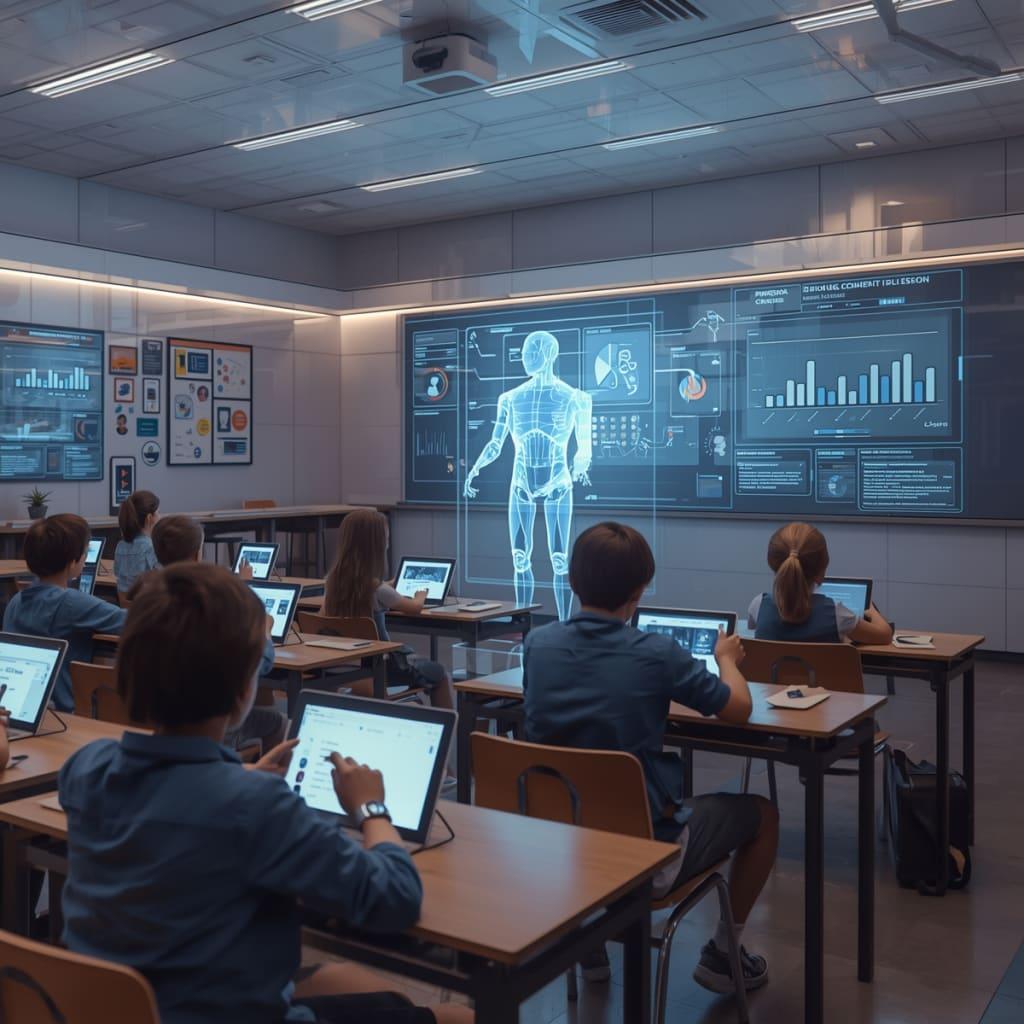
Revolutionizing Education: How AI in Classrooms Is Transforming Teaching and Learning by 2025
Artificial Intelligence (AI) is ushering in a new era in education. By 2025, AI-powered tools and platforms are expected to redefine classroom learning and teaching methodologies across the globe. From personalized learning experiences to streamlined administrative processes, AI is revolutionizing education by bridging gaps, fostering creativity, and boosting overall academic achievement.In this thorough guide, we’ll explore the transformative impact of AI in classrooms, its benefits, real-world case studies, and actionable tips for educators and institutions.
- The Impact of AI in Education
- Benefits of AI in Classrooms
- Real-World Case Studies: AI Transforming Classrooms
- Practical Tips for Integrating AI in Teaching and Learning
- Firsthand Experiences: Teachers and Students share Insights
- The Future of AI in Education: What to Expect by 2025 and Beyond
- Conclusion: Embracing the AI-Powered Education Revolution
The Impact of AI in Education
Artificial Intelligence is rapidly influencing every facet of classroom dynamics, from curriculum design to student engagement.By 2025,the proliferation of AI in classrooms is set to make learning more adaptive,inclusive,and interactive. AI’s influence is not only reshaping traditional pedagogies but also emphasizing data-driven decision-making for educators.
How AI Is Changing the Classroom Experience
- Personalized learning: AI algorithms analyze individual student data to reccommend tailored courses, assignments, and study plans.
- Smart tutoring systems: Virtual tutors offer instant feedback, clarify doubts, and monitor progress dynamically.
- Automated grading: AI tools streamline assessment processes, freeing teachers for more interactive activities and project-based learning.
- Accessibility: Voice recognition, translation, and text-to-speech technologies enable inclusive learning for students with disabilities or language barriers.
Benefits of AI in Classrooms
The integration of AI in education brings myriad advantages to both teachers and students. Let’s explore the top benefits:
Key Benefits at a Glance
- Enhanced Student Engagement: Gamified lessons and adaptive quizzes captivate learners and cater to diverse learning styles.
- Efficient Resource Management: AI assists in scheduling, curriculum optimization, and managing administrative tasks, reducing workload for educators.
- Early Detection of Learning Challenges: Predictive analytics identify struggling students early, enabling timely intervention and support.
- Scalable Learning: AI platforms accommodate large numbers of students,making quality education accessible beyond geographical boundaries.
- Continuous Feedback: Automated formative assessments provide instant insights on performance, guiding ongoing advancement.
“AI is like having a teaching assistant who never tires and always adapts to the needs of each student.”
Real-World Case Studies: AI Transforming Classrooms
Across the world, schools are experimenting with and benefitting from artificial intelligence in education. Here are some inspiring stories:
Case Study 1: Adaptive Learning in singapore
Singapore public schools adopted an AI-enabled learning platform that customizes math and science exercises in real-time. results include:
- Improved test scores by 20% in piloted classrooms.
- Student satisfaction rates soared,with 87% reporting a better understanding of concepts.
Case Study 2: AI Tutors in the United States
In California, high schools integrated AI-powered tutors to help with homework and exam preparations. Outcomes:
- Successful reduction in teacher workload by 25%.
- Increased homework completion rates and deeper student engagement.
Case study 3: Accessibility Solutions in Europe
European institutions use AI to provide real-time translation and text-to-speech solutions for multilingual classrooms, supporting migrant and refugee students’ integration.
practical Tips for Integrating AI in Teaching and learning
Thinking about leveraging AI for your classroom? here are actionable steps:
- Start Small: Begin with AI-powered tools for grading, classroom management, or language learning before scaling to adaptive platforms.
- Choose the right Tools: Evaluate AI products for ease of use, privacy standards, and compatibility with existing curriculum needs.
- Encourage Professional Advancement: Organize workshops and training sessions to equip teachers with the necessary AI skills.
- foster Student Curiosity: Use AI-enabled simulations and educational games to inspire inquiry-based learning.
- Monitor and Evaluate: Collect regular feedback from students and staff to ensure AI tools are driving positive outcomes.
Firsthand Experiences: Teachers and Students Share Insights
Teacher Perspective: Ms. Kapoor, STEM Instructor
“Introducing AI to my classroom transformed assessment and personalized learning. Students received instant feedback, and I could focus more on creative teaching, while AI handled repetitive tasks.”
Student Perspective: Javier, Grade 9
“AI-based learning games made math fun and easier to understand. I appreciate having my own pace — AI recommendations help me catch up or advance, depending on how I’m doing.”
The Future of AI in Education: What to Expect by 2025 and Beyond
What does the next chapter hold for AI in education? Industry leaders anticipate several exciting developments:
- Greater Personalization: Deep learning algorithms will offer learning paths unique to each student, considering emotional and behavioral data.
- Global collaboration: AI platforms will connect classrooms worldwide, promoting cross-cultural projects and language learning.
- Assessment Revolution: AI-driven formative and summative assessments will eliminate bias and reflect real-world skills.
- Ethical and Responsible AI Usage: Enhanced transparency and privacy protocols will ensure data security and ethical implementation.
A recent World Economic Forum report emphasizes that by 2025, up to 85% of educational institutions will have adopted at least one AI-powered solution for management or learning.
Conclusion: Embracing the AI-Powered Education Revolution
AI is indisputably revolutionizing education. By 2025,classrooms worldwide will be smarter,more flexible,and more inclusive,thanks to the power of artificial intelligence. Teachers and students alike stand to benefit from adaptive learning environments, enhanced accessibility, and streamlined processes — enabling a focus on creativity, deeper understanding, and lifelong learning.
As we embrace these technological advancements, staying informed and proactive about AI integration is key. Whether you’re an educator seeking new avenues to engage, or a student ready to shape your own learning trajectory, the future is shining — and AI is paving the way for a truly transformative educational experience.
Ready to elevate your classroom with AI-powered learning? explore the latest educational technology solutions and start your journey to smarter teaching and learning today!