
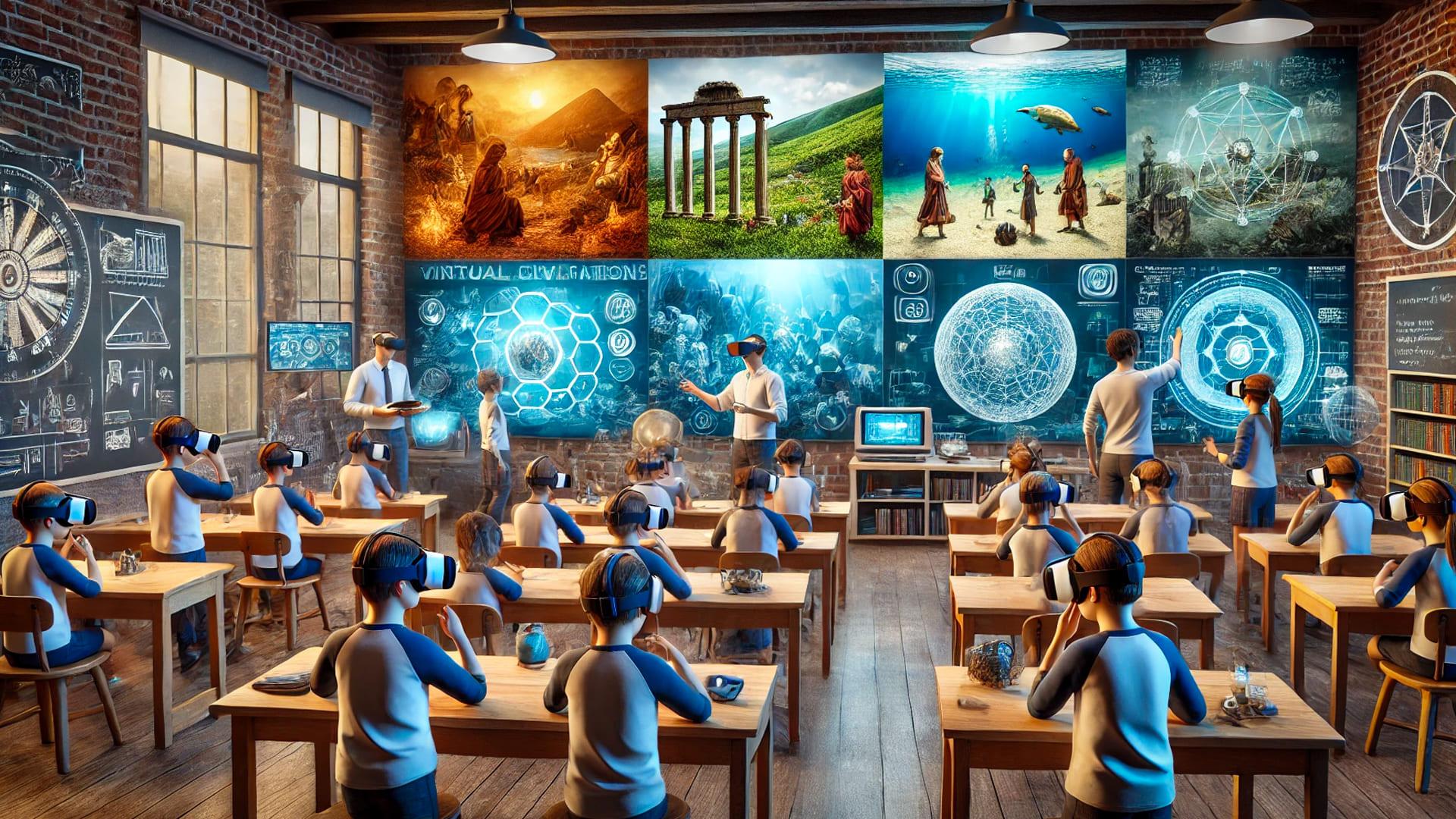
Revolutionizing Education: How Immersive Learning with VR/AR Transforms the Classroom
Immersive learning powered by Virtual Reality (VR) and Augmented Reality (AR) is reshaping education, making the classroom a hub of innovation, engagement, and real-world experiences.In today’s digital era, the fusion of these transformative technologies is empowering educators and igniting students’ curiosity like never before. This article explores the impact of immersive learning on modern classrooms, its benefits, practical implementation tips, and real-life case studies showing the future of education.
What Is Immersive Learning with VR/AR?
Immersive learning refers to educational experiences where students interact with content in a simulated environment—often using VR or AR devices. Virtual Reality (VR) creates completely digital worlds that transport students to new places or scenarios. Augmented reality (AR), on the other hand, enhances the real-world setting by overlaying digital information through devices like tablets or AR glasses.
- VR in education: Delivers 360-degree environments for deeper engagement.
- AR in the classroom: Projects 3D models or information onto real-world objects.
- Mixed Reality: Blends both VR and AR for interactive, engaging experiences.
Both VR and AR are becoming critical components of educational technology, helping students learn through active participation rather than passive memorization.
The Benefits of Immersive Learning with VR/AR
Key Advantages at a Glance
- Enhanced Engagement: Interactive VR/AR lessons captivate students’ attention.
- Improved Retention: Experiential learning increases information recall.
- Realistic Practice: Students gain hands-on experience without real-world risks.
- Accessible Learning: VR/AR can provide opportunities for all learning styles and abilities.
- Global Exposure: Virtual field trips expose students to world cultures, history, and science.
By leveraging immersive technologies, teachers create memorable lessons that go beyond conventional textbooks or static presentations. for instance, a student studying ancient Egypt can virtually walk through the pyramids, interact with historical artifacts, or even participate in a pharaoh’s court—all in real time.this level of engagement not only excites students but also deepens their understanding and retention of complex concepts.
How VR/AR Transforms the classroom Environment
The traditional classroom has long centered on lectures, reading, and two-dimensional visuals. Immersive learning with VR and AR alters this landscape by:
- Facilitating Active Participation: Students “learn by doing”, such as conducting virtual science experiments or historical reenactments.
- Bridging Learning gaps: AR can overlay translations or extra info to help ESL students, while VR can allow students with physical disabilities to engage in experiences otherwise unreachable.
- Fostering Collaboration: Many VR platforms support group activities,nurturing teamwork and problem-solving skills.
- immediate Feedback: Interactive quizzes and simulations provide real-time data, enabling personalized learning paths.
with immersive technologies, the role of educators shifts from being mere information providers to learning facilitators, guiding students through dynamic, interactive journeys.
Immersive Learning use Cases and Success Stories
Institutions around the globe are already harnessing VR and AR to drive student achievement and curriculum modernization. Explore these noteworthy case studies:
Case Study: medical Training Revolution at Stanford University
Stanford integrates VR simulation platforms in its medical curriculum, enabling students to practice complex surgeries in a risk-free virtual setting. This not only reduces costs but also boosts student confidence and surgical skill before entering real operating rooms.
Case Study: Google Expeditions in K12 Classrooms
Schools using Google Expeditions offer VR-based virtual field trips, allowing students to explore the Great Barrier Reef, Mars, or even microscopic cells. Teachers report increased engagement and an eagerness to delve deeper into curriculum content following these immersive experiences.
Case Study: AR Science Lab at Thomas Jefferson High school
By integrating AR apps for science experiments, educators bring abstract chemistry concepts to life. Students visualize molecular structures in 3D, leading to improved comprehension and higher test scores in STEM subjects.
Firsthand Experience: A Teacher’s Viewpoint on Immersive Learning
“When I introduced VR headsets for a lesson on World War II, students were able to walk through historic battlefield simulations. The sense of presence was unparalleled.Even those usually disengaged found themselves eager to participate and discuss what they saw and felt. It’s a game-changer for both teaching and learning.”
—Laura Chen,High School History Teacher
Practical Tips for Implementing VR/AR in Education
Ready to Start? Follow These Steps:
- Begin with Clear Learning Objectives: Define what you want your students to experience or achieve using VR/AR.
- Choose User-Kind Platforms: Start with established educational VR/AR apps like Google Expeditions, cospaces, or labster for science.
- ensure Accessibility: Have a mix of VR headsets, AR-enabled tablets, or even smartphone solutions to accommodate diverse student needs.
- Integrate Across the Curriculum: Consider subjects like science, history, geography, and art for immersive learning modules.
- Train Educators: Provide regular workshops and support so teachers can confidently use immersive technology in their lesson plans.
- Encourage Reflective Learning: After each VR/AR module, host group discussions or written reflections to enhance comprehension.
Overcoming Challenges in Immersive Classroom Integration
While VR/AR in education delivers immense benefits, it also presents challenges, such as cost, technical issues, and the need for digital literacy. Solutions include:
- Leveraging Grants & Funding: Many nonprofits and ed-tech companies offer grants or affordable solutions for schools.
- Pilot Programs: Start small, test effectiveness, and scale gradually.
- Technical Support: Partner with vendors to ensure installation and troubleshooting support.
The Future of Education: What’s Next for Immersive Learning?
As VR/AR technology evolves, expect even more interactive, realistic, and widespread educational applications. Advances like AI-driven adaptive learning and haptic feedback will further personalize and deepen educational experiences.Education systems that embrace immersive,technology-driven approaches will prepare students for not just academic success,but for thriving in a rapidly changing,digital-first world.
Conclusion: Why VR/AR Is Essential for Modern Classrooms
Immersive learning with VR/AR is not a passing trend—it’s the future of education. By transforming classrooms into vibrant, interactive spaces and empowering both teachers and students, these tools foster engagement, collaboration, and lifelong curiosity. Whether you’re an educator, policymaker, or parent, now is the time to explore how immersive technologies can open new frontiers and inspire every learner.
Ready to revolutionize your classroom? Explore VR/AR resources, attend ed-tech workshops, and join the global movement towards immersive education today.