
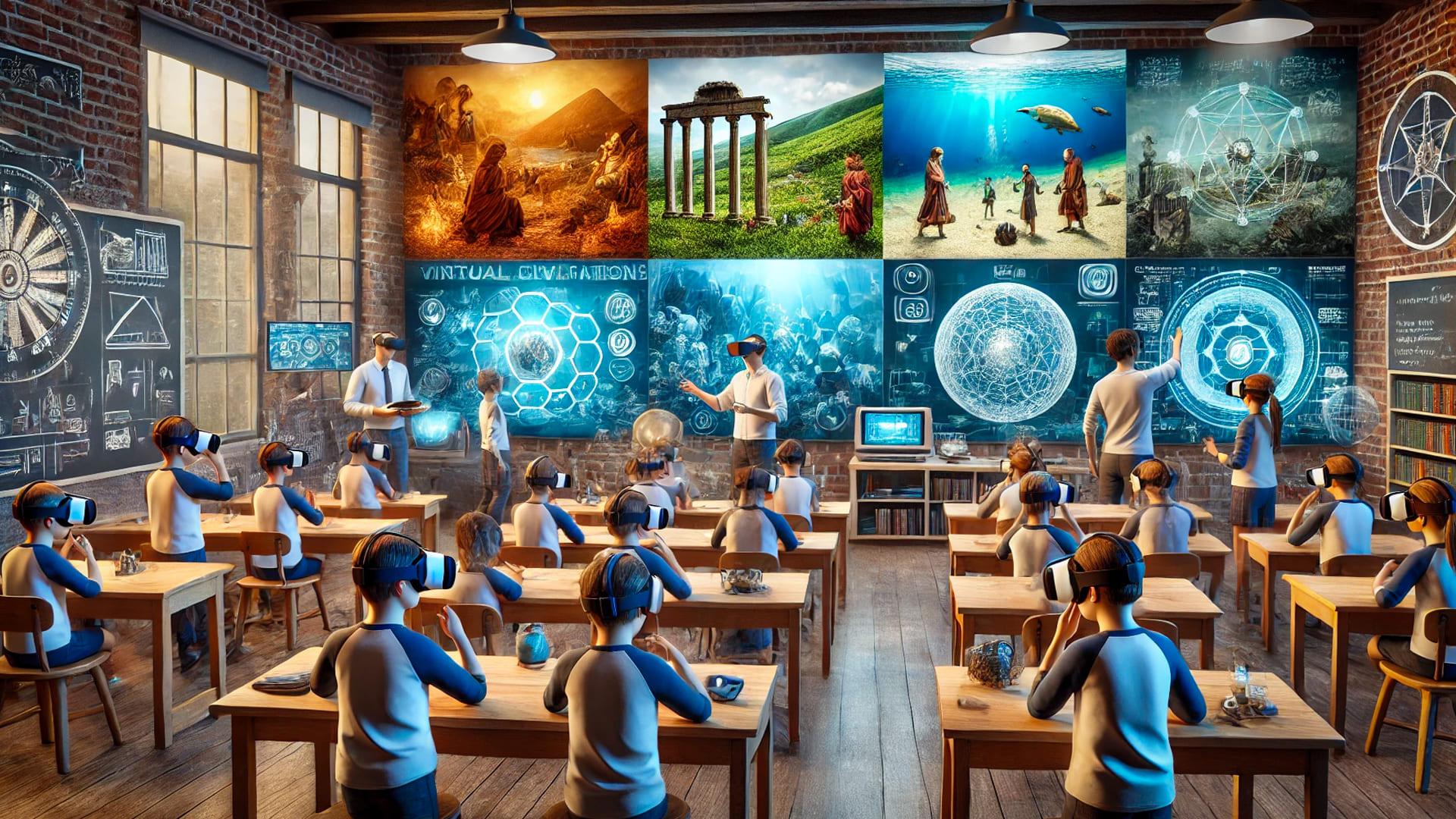
revolutionizing Education: How VR and AR Are Powering Immersive Learning in Modern Classrooms
Virtual Reality (VR) and Augmented Reality (AR) are transforming the landscape of modern education. These immersive technologies are not only making lessons more engaging and interactive but also helping students learn more deeply and effectively. In this article, we’ll dive into how VR and AR are powering immersive learning in classrooms, explore the compelling benefits, examine inspiring case studies, and offer practical tips for integrating these cutting-edge tools into your educational setting.
Introduction: The Dawn of Immersive Learning
Education is undergoing a digital renaissance. Conventional methods—chalkboards, textbooks, and even basic multimedia presentations—are quickly being augmented (and, in many cases, outperformed) by more interactive, engaging innovations. Immersive learning with VR and AR is at the forefront of this change, allowing students to step inside the world of atoms, travel back in time, conduct complex science experiments, and practice real-world skills in a risk-free habitat. Schools and universities globally are beginning to adopt these technologies, recognizing their immense potential in improving engagement, retention, and educational outcomes.
Understanding VR and AR in Education
Before delving into the impact of these technologies, let’s quickly define them for clarity:
- Virtual Reality (VR): A fully immersive digital environment, accessed through specialized headsets (like Oculus Rift, HTC vive, or Google Cardboard), where users can interact with 3D worlds and simulations.
- Augmented Reality (AR): Enhances the real-world environment by overlaying digital elements—such as images, information, or 3D models—through devices like tablets, smartphones, or AR glasses.
When integrated into modern classrooms, both VR and AR bridge the gap between theoretical knowledge and practical experience, making learning not just passive but profoundly interactive.
The Benefits of VR and AR in Modern Classrooms
1. Active and Experiential Learning
Rather of merely memorizing information, students interact with concepts through simulations and 3D models. Such as, VR can take students inside a human heart or to the surface of Mars, allowing them to immerse themselves in subjects like never before.
2. Accessibility and inclusivity
- VR/AR tools can adapt lessons for students with diverse learning needs.
- Provides access to experiential learning that may or else be unfeasible due to location, cost, or safety—such as, virtual field trips to distant countries or dangerous environments.
3. Improved Engagement and Motivation
Gamified lessons, interactive challenges, and hands-on problem-solving activities make students more eager about attending and participating in class, resulting in higher retention rates and overall better performance.
4. enhanced collaboration and Communication
AR and VR tools frequently enough include real-time collaboration features, enabling students to work together on group projects and interact within digital classrooms, even when learning remotely.
5. Better Visualization of Complex Concepts
- Allows students to manipulate and explore objects or systems that are invisible, too large, or too small to observe in real life (think of molecular structures, historical civilizations, or planetary motion).
- Makes abstract or tough topics more concrete and understandable.
Case Studies: VR and AR in Action
Case Study 1: Stanford Virtual Heart
Stanford University developed a Virtual Heart project,using VR to teach medical students about congenital heart defects. Instead of studying static diagrams or models, students can now walk through and interact with a beating 3D heart, deepening their understanding of anatomy and disease.
Case Study 2: Google Expeditions and Augmented Reality field Trips
Thousands of schools worldwide have embraced Google Expeditions, an AR and VR platform where students can take virtual field trips to the Great Wall of china, outer space, or the bottom of the ocean. These virtual journeys break down classroom walls and encourage inquiry-based learning.
Case Study 3: Labster’s Virtual science Labs
Many high schools and universities are using Labster’s VR simulations to give students hands-on experience in science labs—without the cost or safety risks of real experiments. Students can practice chemistry, biology, and physics experiments as many times as needed, building confidence and mastery.
Practical Tips for Implementing VR and AR in Classrooms
- Start Small: Pilot a single lesson or project using AR apps or affordable VR viewers before committing to larger investments.
- Select Age-Appropriate Content: Make sure content is tailored to students’ developmental stages and learning objectives.
- Train Educators: Invest in professional development to ensure teachers are pleasant and creative with the technology.
- Focus on Learning Outcomes: Use VR/AR as tools to achieve specific curriculum goals, not just to impress with novelty.
- Ensure Accessibility: Consider the hardware and connectivity needs for all students, and provide options for those with disabilities.
- Evaluate and Iterate: Collect feedback, measure engagement, and be ready to adapt lessons and tools accordingly.
First-Hand Experience: Testimonials from the Classroom
“Using virtual reality in my history class brought ancient Rome to life for my students. For the first time,thay could actually ‘walk’ around the Colosseum.Their excitement—and the depth of their questions—showed me just how valuable immersive learning can be.”
– Sarah T.,Social studies Teacher,Ohio
“We use augmented reality flashcards in the science lab. Kids light up when their textbook diagrams suddenly become 3D models they can manipulate. It bridges the gap between theory and real understanding.”
– Daniel L., STEM Coordinator, New York
Challenges and Considerations
While the promise of VR and AR in the classroom is immense, thoughtful implementation is key. Cost remains a barrier for some schools, especially with high-end VR headsets. However, affordable options like Google Cardboard or AR smartphone apps are lowering the entry threshold. Ensuring content is educationally sound and age-appropriate is crucial, as is ongoing support for teachers.
Privacy and student data security are additional concerns as more lessons go online and data-driven. Schools should partner with reputable providers and follow best practices to protect students’ information.
The Future of VR and AR in Education
The future of immersive learning looks incredibly radiant. As hardware becomes cheaper and content libraries expand, VR and AR will become as common in classrooms as laptops and projectors are today. the next generation of spatial computing—including mixed reality (MR) and AI-driven adaptive learning environments—promises even deeper engagement and personalization.
Global education is being transformed one headset at a time, breaking down barriers and unlocking human potential. VR and AR are not just trends—they are the next evolution of teaching and learning.
Conclusion: embracing the Immersive Learning Revolution
From virtual field trips to interactive 3D science labs, VR and AR are revolutionizing education. These immersive technologies are making learning more engaging, inclusive, and effective, equipping students with the skills and curiosity they need for the future.School leaders, educators, and parents alike should explore the possibilities of VR and AR in classrooms—not as flashy add-ons, but as powerful tools for deeper understanding and lifelong learning.
Ready to bring immersive learning into your classroom? With careful planning, targeted investment, and an open mind, the future of education is here—and it’s more exciting than ever.