
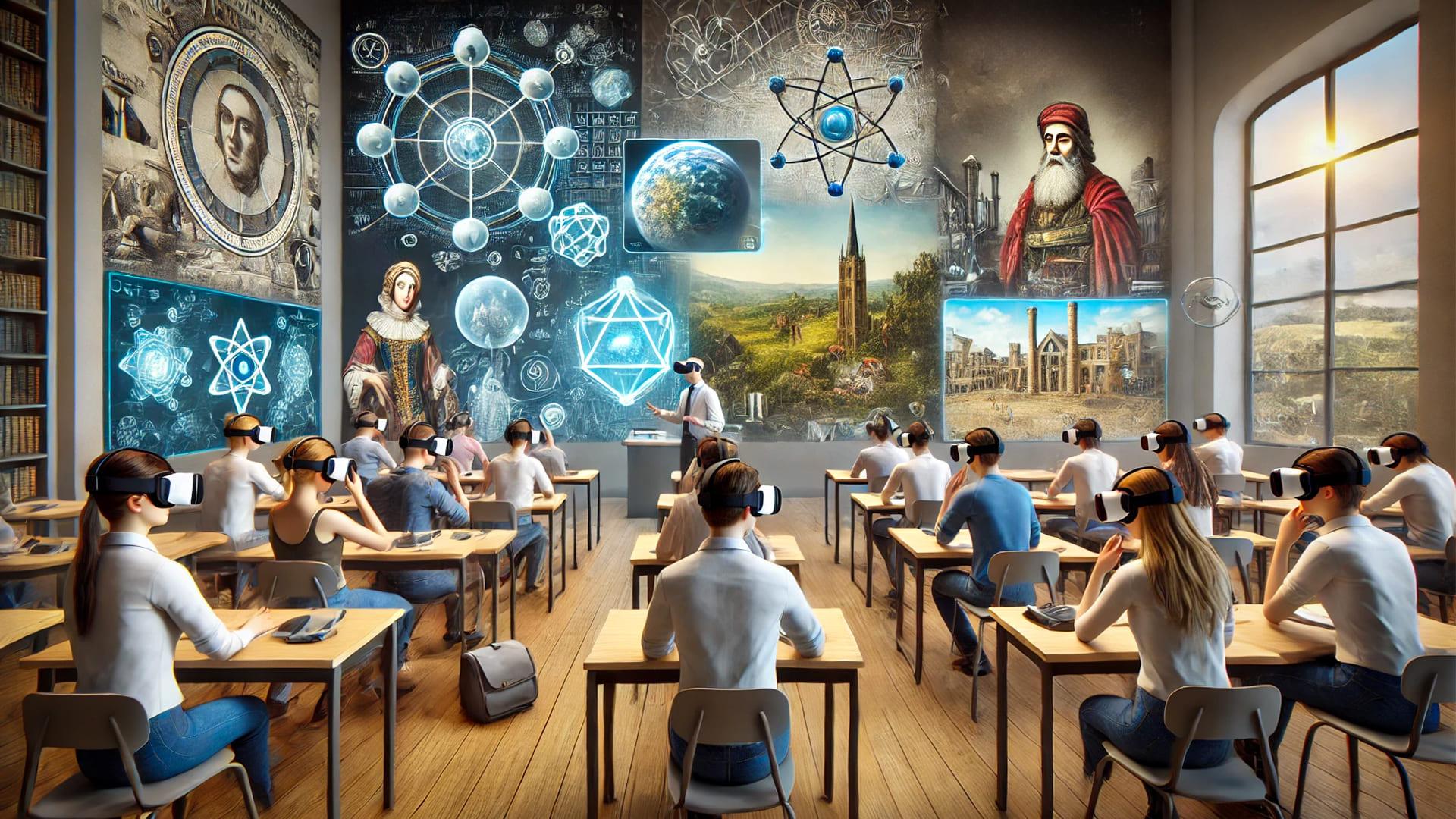
Revolutionizing Education: How VR and AR Empower Immersive Learning in the Classroom
Introduction
in an ever-evolving digital landscape, the education sector is continuously seeking modern approaches to engage students and enhance their learning experiences. Enter Virtual Reality (VR) and Augmented Reality (AR)—two groundbreaking technologies that are not onyl capturing the imagination of educators and learners but also transforming traditional classrooms into dynamic, interactive environments. in this article,we’ll explore how VR and AR are revolutionizing education by fostering immersive learning,boosting engagement,and improving knowledge retention. Whether you’re an educator, administrator, or parent, discover how these powerful tools can reshape the future of learning.
Understanding VR and AR in Education
What is Virtual Reality (VR)?
Virtual Reality creates a fully immersive, computer-generated habitat that users can interact with using specialized equipment such as VR headsets and controllers. Within educational contexts, VR can transport students to historical landmarks, inside the human body, or even to distant planets—making learning truly experiential.
What is Augmented Reality (AR)?
Augmented Reality overlays digital information—images, animations, or data—onto the real world through devices such as tablets, smartphones, or AR glasses. With AR, students can see 3D models emerge from their textbooks or interact with interactive visualizations right on their desks.
Top Benefits of VR and AR for Immersive Classroom Learning
- Enhanced Engagement: Interactive VR and AR content motivates students by turning lessons into interactive adventures, capturing their attention and sparking curiosity.
- Improved Knowledge Retention: Learning in immersive environments helps students retain information longer by tapping into experiential, hands-on learning methods.
- Accessibility for Diverse Learners: AR/VR provides personalized learning paths, accommodating students with different learning styles, abilities, and needs.
- safe Exploration: Simulate dangerous experiments, field trips, or scenarios in a controlled digital environment, enabling risk-free exploration.
- Global Learning Opportunities: Break physical and financial barriers—students can visit world-renowned museums, explore natural wonders, or collaborate with peers across the globe.
- Increased collaboration: Many VR and AR platforms promote teamwork, enabling students to solve problems and complete tasks together in a virtual setting.
Practical Applications: How VR and AR Empower the Modern Classroom
1. virtual Field Trips
with VR, students no longer need to leave the classroom to explore world heritage sites, walk through ancient civilizations, or dive into the depths of the ocean. Apps like google Expeditions and Discovery VR make these immersive experiences widely accessible.
2.Science and Math Visualization
AR models allow students to manipulate complex molecules, solve 3D geometry puzzles, or observe chemical reactions up close and personal—deepening understanding and making abstract concepts tangible.
3. Interactive History Lessons
Bring historical events to life with VR reenactments. Step into battles, witness famous speeches, or explore lost civilizations, boosting empathy and contextual understanding.
4. Language Learning
Augmented Reality flashcards and VR conversations immerse students in real-world scenarios, helping them practice pronunciation, vocabulary, and conversational skills in authentic environments.
5. special Education Supports
VR environments can be tailored for students with autism or sensory challenges, providing gradual, controlled exposure to new situations or teaching vital life skills in a risk-free manner.
Case Studies: VR and AR in Action
- Franklin Regional School District, Pennsylvania:
Teachers used Google Expeditions to take elementary students on virtual tours of the solar system. Engagement went up by 65% and test scores in science topics improved markedly.
- Kings College London:
Medical students practiced complex surgical procedures using VR simulations, reducing their learning curve and increasing confidence before performing on real patients.
- Chicago’s Lane Tech High School:
Integrated AR tools into biology classes to model cells and DNA structures, helping students visualize microscopic details unachievable to see with conventional classroom tools.
First-Hand Experiences: Teachers & Students Speak Out
“When my students put on VR headsets, their excitement is palpable. They’re not just memorizing facts—they’re living the lesson!”
— Ms. Jennifer R.,High School History Teacher
“AR makes science fun! I can see atoms and molecules on my desk and move them around. It’s so much easier to understand complex ideas.”
— Daniel L., Grade 8 Student
Getting Started: Practical Tips for Integrating VR and AR in Your Classroom
- Start Small: Pilot simple AR apps on tablets or smartphones. Try interactive worksheets or flashcards to boost lessons before investing in VR headsets.
- Select Age-appropriate Content: Ensure platforms and simulations match curriculum goals and your students’ developmental stages.
- Leverage Free Resources: Many AR and VR educational tools offer free trial versions or classroom packs. Explore EdTech platforms like ClassVR, Merge EDU,or Google for Education VR/AR.
- Plan for Accessibility: Make sure all students can participate. Consider offering alternatives or support for students with motion sensitivity or vision issues.
- Encourage Collaboration: Use collaborative VR/AR environments to foster teamwork and problem-solving.
- Involve Families: Showcase at-home AR assignments or share VR experiences during open houses to build enthusiasm and understanding among parents.
Challenges and Considerations
- Cost and Accessibility: High-quality VR headsets and compatible devices can be expensive. Check for grants, discounted educational bundles, or start with affordable AR solutions.
- Teacher Training: Ongoing professional development ensures educators use immersive technology effectively and safely.
- Health and safety: Supervise students to prevent motion sickness or disorientation during VR sessions, and follow recommended usage limits.
- Curriculum Integration: Ensure AR and VR learning experiences align with educational standards and learning objectives for maximum impact.
The Future of Learning: What’s Next for VR and AR in Education?
With rapid advancements in artificial intelligence, user-generated content, and cloud-based collaboration, immersive learning experiences powered by VR and AR will continue to evolve. Expect smarter, more personalized virtual tutors, real-time language translation in virtual classrooms, and expanded access for underserved communities. As hardware becomes more affordable and content libraries grow, immersive technology will become a mainstream staple in classrooms worldwide.
Conclusion
VR and AR technologies are redefining what’s possible in education. by transforming passive lessons into immersive adventures, they bridge the gap between theory and practice, engaging students on a deeper level and preparing them for the complexities of tomorrow’s world. For educators eager to foster creativity, enhance outcomes, and spark a lifelong love of learning, embracing immersive learning through VR and AR isn’t just an option—it’s essential for revolutionizing the classroom experience.
Start your journey today. Explore, experiment, and watch as your students’ curiosity—and achievement—soar to new heights!