
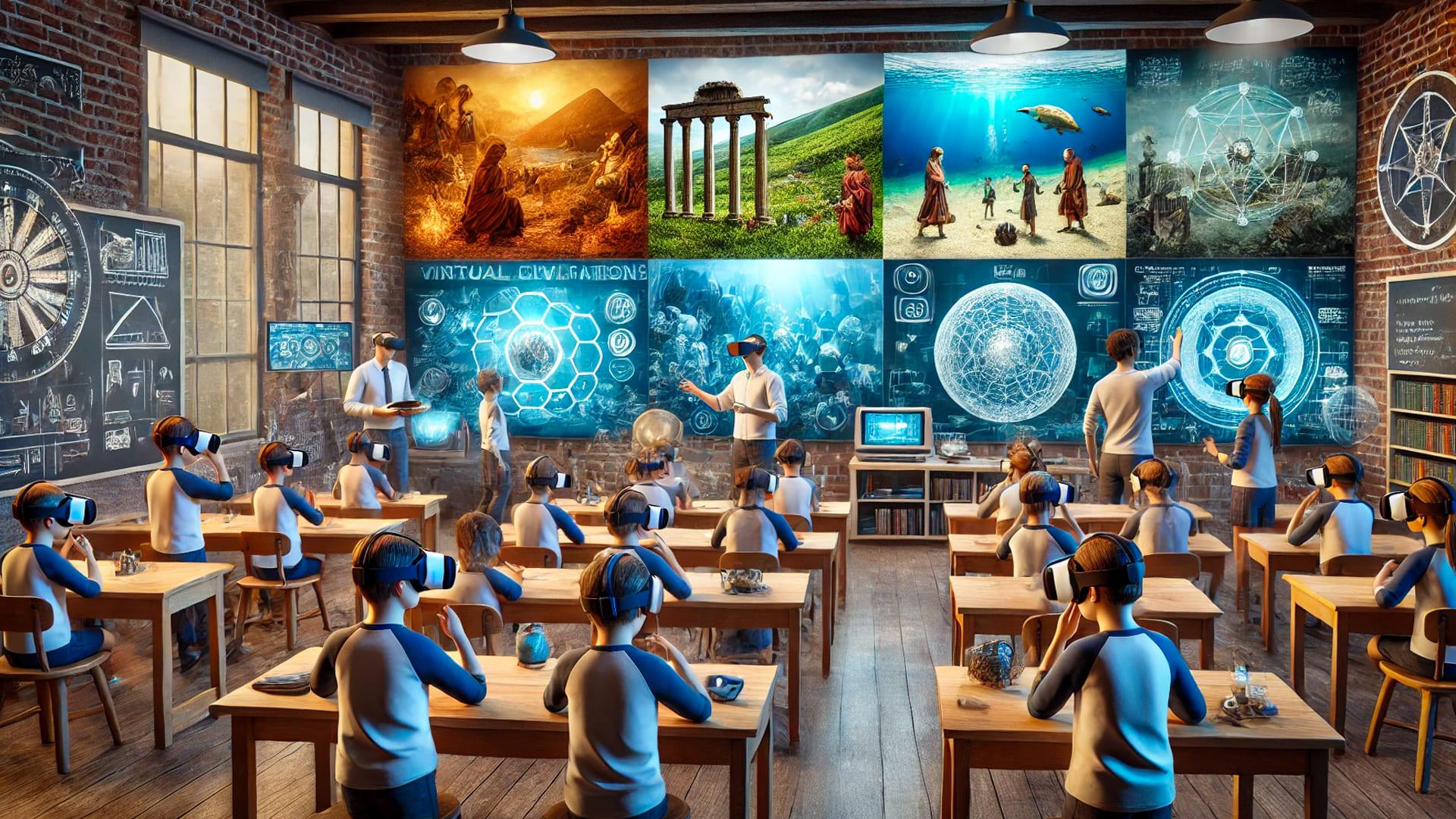
Revolutionizing Education: How VR and AR Power Immersive Learning Experiences
Education is undergoing a paradigm shift, driven by technological advancements that break the mold of conventional classrooms. Virtual Reality (VR) and Augmented Reality (AR) are leading this revolution, powering immersive learning experiences that captivate, engage, and propel students toward deeper understanding. As these innovative technologies gain momentum, educators and institutions worldwide are reimagining what’s possible in modern learning environments.
Introduction: The Dawn of Immersive Learning
Over the past decade,educational technology has expanded far beyond simple smartboards or online quizzes. Today, immersive learning experiences powered by VR and AR are capturing the attention of learners and educators alike. By blending the digital and physical worlds, VR and AR offer opportunities for hands-on, interactive education that were previously unimaginable.
- Understanding VR & AR in Education
- Key Benefits of VR and AR in Education
- Case Studies: VR & AR Transforming Classrooms
- Practical Tips for implementing Immersive Learning
- First-Hand Experiences: Voices from the Classroom
- What’s Next? The Future of Immersive Learning
- Conclusion: Embracing the Future of Education
Understanding VR & AR in Education
before diving into thier applications, it’s crucial to clarify what Virtual Reality and Augmented Reality mean within an educational context:
- Virtual Reality (VR): An entirely computer-generated environment where learners can interact with content using headsets and controllers. VR creates an immersive world, disconnected from physical reality, where complex concepts become tangible.
- Augmented Reality (AR): Overlays digital details onto the real world—enabled by smartphones, tablets, or AR glasses. AR enriches physical surroundings, allowing students to visualize models or animations directly within their environment.
Both VR and AR are supporting new approaches in STEM education, medical training, language learning, history, geography, and much more.
Key Benefits of VR and AR in Education
Integrating VR and AR into teaching unlocks a myriad of advantages that transform passive learning into a dynamic and engaging adventure. Here are some impactful benefits:
1. Enhanced student Engagement
- Immersive content sparks curiosity and motivation
- Interactivity keeps learners actively involved rather of consuming information passively
2. Improved Retention and Understanding
- Experience-based learning helps students retain complex concepts more effectively
- Visualizing abstract ideas (like molecular structures or historical events) makes learning memorable
3. Safe Environment for Skill Practice
- Simulated labs and scenarios allow learners to practice risky or expensive procedures without real-world risks
- Medical students can rehearse surgeries; engineering students can build and test virtual models
4. Personalized, self-Paced Learning
- Immersive learning platforms adapt to individual needs, supporting differentiated instruction
- Students can repeat simulations or assessments as needed, encouraging mastery
5. Collaborative and Social Learning
- VR and AR can facilitate remote group projects and interactions in shared digital spaces
- Builds communication, teamwork, and problem-solving skills
6. Increased Accessibility
- Breaks down physical and geographical barriers, bringing rare resources and experiences to any classroom
- Helps students with special needs access customized learning environments
Case Studies: VR & AR Transforming Classrooms
Real-world applications of VR and AR in education demonstrate the profound impact of these technologies:
- Medical Training at Stanford University
Stanford’s medical students utilize VR simulations for surgical practice, enabling risk-free repetition.The VR scenarios provide tactile feedback, visual guidance, and real-time assessments, significantly improving learning outcomes.
- google Expeditions in K-12 Classrooms
Google Expeditions offers over 900 VR and AR tours, allowing students to explore the ocean floor, outer space, or ancient ruins—without leaving their classroom rails. These journeys make history,science,and geography come alive,fueling enthusiasm and deep understanding.
- ZSpace for Hands-On STEM Learning
ZSpace’s AR-enabled workstations enable students to dissect virtual frogs, manipulate DNA models, and build 3D circuits.This approach bridges gaps in school resources and ensures all students get practical, hands-on experiences in science and engineering.
- language Learning with Mondly VR
Mondly’s VR platform immerses learners in realistic conversations with AI-driven characters in diverse scenarios. Learners practice foreign languages in authentic contexts, boosting confidence and conversational skills.
Practical Tips for Implementing Immersive Learning
Ready to bring VR and AR into your classroom or training program? Here are some tips for a successful launch:
- Start Small and Scale Up
Pilot a single VR/AR lesson or activity before adopting a comprehensive program. Gather feedback to refine your approach.
- Invest in Appropriate Technology
Choose VR headsets or AR-compatible devices that align with your needs and budget.Many applications offer affordable solutions for schools.
- Select High-Quality Content
Use reputable educational platforms and apps (like Nearpod VR, Google Expeditions, or CoSpaces EDU) with strong teacher reviews and curriculum alignment.
- focus on Pedagogy
Integrate VR and AR as tools to enhance—not replace—solid teaching practices. Set clear learning objectives and connect immersive lessons to standards.
- Ensure Safety and Accessibility
Train both teachers and students in hardware safety and digital citizenship. Provide accommodations for learners with special needs.
- Promote Collaboration
Design group activities that encourage teamwork,critical thinking,and reflection on immersive experiences.
First-Hand Experiences: Voices from the Classroom
What do teachers and students say about learning with VR and AR? Here are some direct quotes and survey findings:
- “Using VR simulations in my biology class has turned abstract topics into visceral, memorable lessons. Engagement and test scores have noticeably improved.” – High School Science Teacher
- “I traveled to Mars and inside the human heart. It was so real, I forgot I was in school!” – 7th Grade Student
-
A Pew Research Center study found that 88% of educators believe immersive learning technologies make lessons more engaging and effective, while 74% report increased student participation.
Challenges remain, particularly around ensuring equitable access and teacher training. However, the overwhelming feedback is that VR and AR make learning more exciting, accessible, and impactful.
What’s Next? The Future of Immersive Learning
Rapid advances in VR and AR technology continue to expand what’s possible in education.Here’s what the future may hold:
- Haptic Feedback: Enhanced tactile sensations will enable medical, arts, and engineering students to ‘feel’ their way through lessons, bridging the gap between virtual and physical learning.
- AI Integration: AI-driven analytics and adaptive feedback will personalize learning pathways and provide real-time support.
- Remote and Lifelong Learning: VR/AR-powered courses can democratize access to world-class education for learners of all ages and geographies.
- Emergence of the Metaverse: Virtual campuses and social learning spaces may redefine collaboration, offering global learning communities without walls.
Conclusion: Embracing the Future of Education
VR and AR are no longer just buzzwords—they’re powerful agents of change in the world of education. As immersive learning becomes more accessible and affordable, schools and training providers have an unprecedented chance to engage every student, nurture curiosity, and build essential skills for tomorrow’s world.
By embracing VR and AR, educators empower learners to step into their lessons—making education not just something you receive, but something you truly experience.